

• Skip to primary navigation
  • Skip to main content
  • Skip to primary sidebar
  • Skip to secondary sidebar
  • Skip to footer
  • NEWS:
  • SatNews
  • SatMagazine
  • MilSatMagazine
  • SmallSat News
  • |     EVENTS:
  • SmallSat Symposium
  • Satellite Innovation
  • MilSat Symposium
  • SmallSat Europe

SatNews

Satellite Industry Intelligence Since 1983

Subscribe
  • LATEST
  • SatNews Events
  • Magazines
  • Calendar
  • Subscribe
  • Missions & Constellations
    • Exploration & Science Missions
    • In-Orbit Servicing & Orbital Operations
    • LEO Constellations
    • Mission Autonomy & Onboard Systems
    • Mission Deployments & Manifests
    • Navigation & PNT
    • SmallSat
    • Spacecraft & Payload Technology
    View All in Missions & Constellations →
    NASA Shuts Off Instrument on Voyager 1 to Extend Interstellar MissionNASA Shuts Off Instrument on Voyager 1 to Extend Interstellar Mission
    Starlink Outages Disrupt Navy Drone Tests as Pentagon Dependency GrowsStarlink Outages Disrupt Navy Drone Tests as Pentagon Dependency Grows
    Iridium Unveils Role in Artemis II and Next-Gen PNT at Space Symposium 2026Iridium Unveils Role in Artemis II and Next-Gen PNT at Space Symposium 2026
    Boeing and Millennium Unveil Resolute Mid-Class Satellite PlatformBoeing and Millennium Unveil Resolute Mid-Class Satellite Platform
  • Business
    • Contracts & Commercial Deals
    • Earnings & Financial Reporting
    • Events & Conferences
    • Funding & Venture Capital
    • Market Forecasts
    • Mergers & Acquisitions
    • Personnel Moves & Appointments
    View All in Business & Finance →
    SmallSat Europe Speaker Focus: Carsten Drachmann, GomSpaceSmallSat Europe Speaker Focus: Carsten Drachmann, GomSpace
    Meink: Space Force Programs Ready to Execute Once FY27 Budget LandsMeink: Space Force Programs Ready to Execute Once FY27 Budget Lands
    SDA’s Sandhoo: Tranche 1 Launches Resume in May or JuneSDA’s Sandhoo: Tranche 1 Launches Resume in May or June
    Gen. Stephen Whiting: First USSPACECOM Operational Staff Arrive at Redstone This WeekGen. Stephen Whiting: First USSPACECOM Operational Staff Arrive at Redstone This Week
  • Defense
    • Counterspace & ASAT
    • Defense Budgets & Procurement
    • ISR & Reconnaissance
    • MILSATCOM
    • Missile Warning & Defense
    • National Security Programs
    • Space Domain Awareness
    View All in Military & Defense →
    USSF Finalizes GPS III Constellation with Successful SV-10 DeploymentUSSF Finalizes GPS III Constellation with Successful SV-10 Deployment
    Saltzman Rolls Out Space Force Objective Force, Flags CR as Top RiskSaltzman Rolls Out Space Force Objective Force, Flags CR as Top Risk
    GMV Secures Lead Role in Seven 2025 European Defence Fund InitiativesGMV Secures Lead Role in Seven 2025 European Defence Fund Initiatives
    SmallSat Europe Speaker Focus: Gen. Michel Friedling, Look Up SpaceSmallSat Europe Speaker Focus: Gen. Michel Friedling, Look Up Space
  • Gov
    • Export Controls & Compliance
    • International Space Agreements
    • National Space Policy
    • Space Law & Treaties
    • Space Sustainability & Debris Policy
    • Space Traffic Management / Debris Removal
    View All in Government & Regulation →
    FCC Grants AST SpaceMobile Authority for 248-Satellite Constellation and Direct-to-Cell ServiceFCC Grants AST SpaceMobile Authority for 248-Satellite Constellation and Direct-to-Cell Service
    SmallSat Europe Speaker Focus: Col. Marcin Mazur, Polish Space AgencySmallSat Europe Speaker Focus: Col. Marcin Mazur, Polish Space Agency
    SmallSat Europe Speaker Focus: Chris Quilty, Quilty SpaceSmallSat Europe Speaker Focus: Chris Quilty, Quilty Space
    NRL to Showcase Sovereign Space Capabilities at 41st Space SymposiumNRL to Showcase Sovereign Space Capabilities at 41st Space Symposium
  • Launch
    • Launch Providers
    • Launch Schedule & Calendars
    • Launch Sites & Infrastructure
    • Rocket Technology & Vehicles
    View All in Launch →
    Blue Origin Achieves First Booster Reuse but Satellite Enters Off-Nominal OrbitBlue Origin Achieves First Booster Reuse but Satellite Enters Off-Nominal Orbit
    Ensign-Bickford Hardware Supports Successful Artemis II Lunar MissionEnsign-Bickford Hardware Supports Successful Artemis II Lunar Mission
    China Accelerates Orbital Internet Deployment with Successful Smart Dragon-3 Sea LaunchChina Accelerates Orbital Internet Deployment with Successful Smart Dragon-3 Sea Launch
    What the SpaceX IPO Changes for Every Satellite OperatorWhat the SpaceX IPO Changes for Every Satellite Operator
  • Software
    • Autonomous Ground Operations
    • Data Processing & AI/ML
    • Digital Twins & Modeling
    • Ground Segment & Teleports
    • Mission Planning & Simulation
    • Space Systems Software Engineering
    • Spectrum & Licensing
    View All in Software Automation & Ground Systems →
    RF-Design Launches FiberLink CompactLine FCLR1811S4 for Ground Segment OptimizationRF-Design Launches FiberLink CompactLine FCLR1811S4 for Ground Segment Optimization
    Sat-Lite Technologies adds  Richard Rader to Spearhead Sales ExpansionSat-Lite Technologies adds Richard Rader to Spearhead Sales Expansion
    Blue Origin Unveils Project Quartz Global Ground Station NetworkBlue Origin Unveils Project Quartz Global Ground Station Network
    Cloudcomputing Targets 1.5M Identities in Spain and Finalizes Innovate IT AcquisitionCloudcomputing Targets 1.5M Identities in Spain and Finalizes Innovate IT Acquisition
  • Services & Apps
    • Climate & Environmental Monitoring
    • Disaster Response & Security Mapping
    • Earth Observation & Imaging
    • Maritime & Aviation Satcom
    • Satellite Communications
    View All in Services & Applications →
    ISS National Lab Launches 2026 Orbital Edge Accelerator to Scale Space-Based R&DISS National Lab Launches 2026 Orbital Edge Accelerator to Scale Space-Based R&D
    Kymeta Chief Scientist Discusses Metamaterial Antenna Evolution and Orbital SustainabilityKymeta Chief Scientist Discusses Metamaterial Antenna Evolution and Orbital Sustainability
    SmallSat Europe Speaker Focus: Martin Langer, OroraTechSmallSat Europe Speaker Focus: Martin Langer, OroraTech
    SmallSat Europe Speaker Focus: Jaume Sanpera, SateliotSmallSat Europe Speaker Focus: Jaume Sanpera, Sateliot

Successful Launch Of Northrop Grumman’s Resupply and NASA Science Mission

August 10, 2021

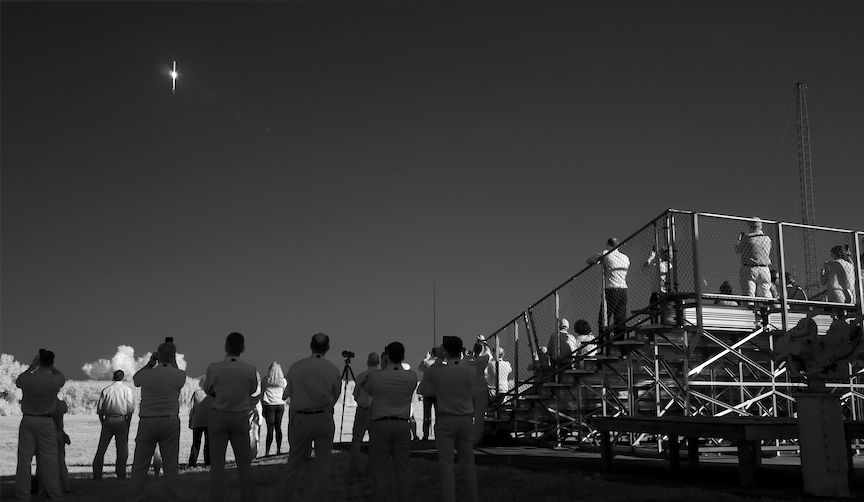
In this black and white infrared image, a Northrop Grumman Antares rocket carrying a Cygnus resupply spacecraft launches from Pad-0A of the Mid-Atlantic Regional Spaceport, Tuesday, Aug. 10, 2021, at NASA’s Wallops Flight Facility in Virginia. Northrop Grumman’s 16th contracted cargo resupply mission with NASA will deliver nearly 8,200 pounds of science and research, crew supplies and vehicle hardware to the International Space Station and its crew.
Credits: NASA/Joel Kowsky

A successful evening launch, 6:01 p.m. EDT, took place on Tuesday, August 10 from NASA’s Wallops Flight Facility in Virginia. The launch was of a Northrop Grumman Cygnus resupply spacecraft now on its way to the International Space Station with more than 8,200 pounds of science investigations and cargo. At 8:46 p.m., the spacecraft’s solar arrays successfully deployed to collect sunlight to power Cygnus on its journey to the station.

Cygnus is scheduled to arrive at the space station around 6:10 a.m. Thursday, August 12. NASA Television, the NASA app, and agency’s website will provide live coverage of the spacecraft’s approach and arrival beginning at 4:45 a.m.

NASA astronaut Megan McArthur will use the space station’s robotic Canadarm2 to capture Cygnus upon its arrival, while ESA (European Space Agency) astronaut Thomas Pesquet monitors telemetry during rendezvous, capture, and installation on the Earth-facing port of the Unity module.

This is Northrop Grumman’s 16th cargo flight to the space station and is the fifth under its Commercial Resupply Services 2 contract with NASA. Cygnus launched on an Antares 230+ rocket from the Virginia Mid-Atlantic Regional Spaceport’s Pad 0A at Wallops.

The resupply flight will support dozens of new and existing investigations. Included in the scientific investigations Cygnus is delivering to the space station are:

From dust to dwelling
Using resources available on the Moon and Mars to build structures and habitats could reduce how much material future explorers need to bring from Earth, significantly reducing launch mass and cost. The Redwire Regolith Print (RRP) study demonstrates 3D printing on the space station using a material simulating regolith, or loose rock and soil, found on the surfaces of planetary bodies such as the Moon. Results could help determine the feasibility of using regolith as the raw material and 3D printing as a technique for on-demand construction of habitats and other structures on future space exploration missions.
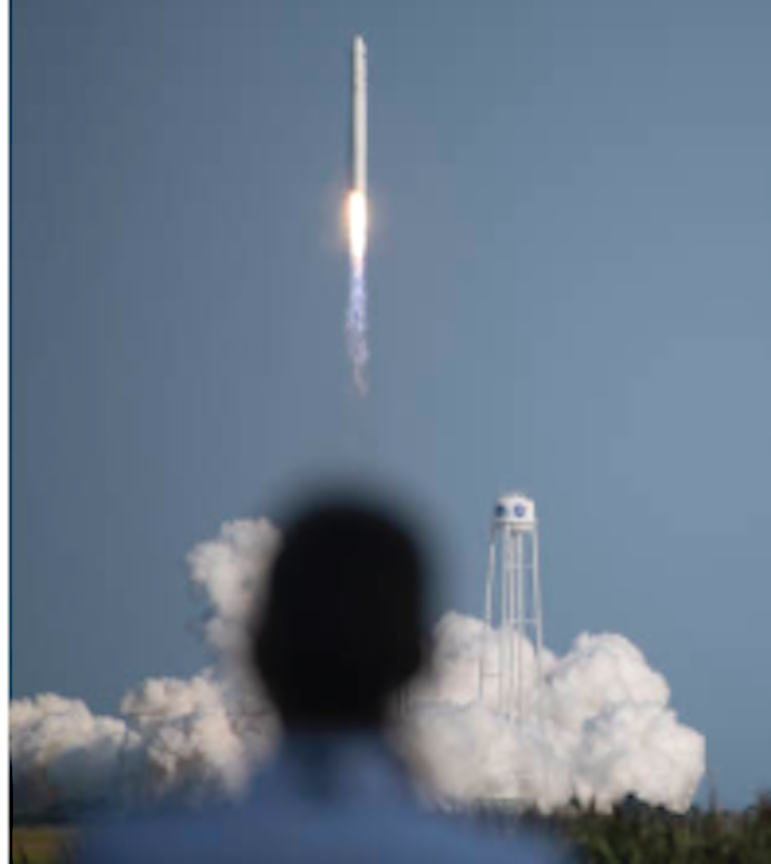
A Northrop Grumman Antares rocket carrying a Cygnus resupply spacecraft launches from Pad-0A of the Mid-Atlantic Regional Spaceport, Tuesday, Aug. 10, 2021, at NASA’s Wallops Flight Facility in Virginia. Northrop Grumman’s 16th contracted cargo resupply mission with NASA will deliver nearly 8,200 pounds of science and research, crew supplies and vehicle hardware to the International Space Station and its crew.
Credits: NASA/Joel Kowsky

Maintaining muscles
As people age and become more sedentary on Earth, they gradually lose muscle mass, a condition called sarcopenia. Identifying drugs to treat this condition is difficult because it develops over decades. Cardinal Muscle tests whether microgravity can be used as a research tool for understanding and preventing sarcopenia. The study, funded by the National Science Foundation in collaboration with the ISS U.S. National Laboratory, seeks to determine whether an engineered tissue platform in microgravity forms the characteristic muscle tubes found in muscle tissue. Such a platform could provide a way to rapidly assess potential drugs prior to clinical trials.

Taking the heat out of space travel
Longer space missions will need to generate more power, producing more heat that must be dissipated. Transitioning from current single-phase heat transfer systems to two-phase thermal management systems reduces size and weight of the system and provides more efficient heat removal. Because greater heat energy is exchanged through vaporization and condensation, a two-phase system can remove more heat for the same amount of weight than current single-phase systems. The Flow Boiling and Condensation Experiment (FBCE) aims to develop a facility for collecting data about two-phase flow and heat transfer in microgravity. Comparisons of data from microgravity and Earth’s gravity are needed to validate numerical simulation tools for designing thermal management systems.

Cooler re-entries
The Kentucky Re-Entry Probe Experiment (KREPE) demonstrates an affordable thermal protection system (TPS) to protect spacecraft and their contents during re-entry into Earth’s atmosphere. Making these systems efficient remains one of space exploration’s biggest challenges, but the unique environment of atmospheric entry makes it difficult to accurately replicate conditions in ground simulations. TPS designers rely on numerical models that often lack flight validation. This investigation serves as an inexpensive way to compare these models to actual flight data and validate possible designs. Before flying the technology on the space station, researchers conducted a high-altitude balloon test to validate performance of the electronics and communications.

Getting the carbon dioxide out
Four Bed CO2 Scrubber demonstrates a technology to remove carbon dioxide from a spacecraft. Based on the current system and lessons learned from its nearly 20 years of operation, the Four Bed CO2 Scrubber includes mechanical upgrades and an improved, longer-lasting absorbent material that reduces erosion and dust formation. Absorption beds remove water vapor and carbon dioxide from the atmosphere, returning water vapor to the cabin and venting carbon dioxide overboard or diverting it to a system that uses it to produce water. This technology could improve the reliability and performance of carbon dioxide removal systems in future spacecraft, helping to maintain the health of crews and ensure mission success. It has potential applications on Earth in closed environments that require carbon dioxide removal to protect workers and equipment.

Mold in microgravity
An ESA investigation, Blob, allows students aged 10 to 18 to study a naturally-occurring slime mold, Physarum polycephalum, that is capable of basic forms of learning and adaptation. Although it is just one cell and lacks a brain, Blob can move, feed, organize itself, and even transmit knowledge to other slime molds. Students replicate experiments conducted by ESA astronaut Thomas Pesquet to see how the Blob’s behavior is affected by microgravity. Using time-lapse video from space, students can compare the speed, shape, and growth of the slime molds in space and on the ground. The French space agency Centre National d’Etudes Spatiales and the French National Center for Scientific Research coordinate Blob.

These are just a few of the hundreds of investigations currently being conducted aboard the orbiting laboratory in the areas of biology and biotechnology, physical sciences, and Earth and space science. Advances in these areas will help keep astronauts healthy during long-duration space travel and demonstrate technologies for future human and robotic exploration missions as part of NASA’s Moon and Mars exploration approach, including lunar missions through NASA’s Artemis program.

Cygnus also will deliver a new mounting bracket that astronauts will attach to the port side of the station’s backbone truss during a spacewalk planned for late August. The mounting bracket will enable the installation of one of the next pair of new solar arrays at a later date.

The Cygnus spacecraft will remain at the space station until November before it disposes of several thousand pounds of trash through its destructive re-entry into Earth’s atmosphere.

Filed Under: Business & Finance, Exploration & Science Missions

Primary Sidebar

Coverage

  • Missions & Constellations
  • Business & Finance
  • Military & Defense
  • Launch
  • Software Automation & Ground Systems
  • Government & Regulation
  • Services & Applications

Most Read Stories

  • SpaceX Loses Contact With Starlink Satellite
  • Rocket Lab Emerging as Potential Bus Provider for 2,800-Satellite Equatys Constellation
  • SpaceX Accelerates Record-Breaking IPO Following Trillion-Dollar xAI Merger
  • Planet Labs Imposes Indefinite Blackout on Iran Satellite Imagery at U.S. Request
  • Amazon in Reported Talks to Acquire Globalstar in $9 Billion Move to Challenge Starlink

Secondary Sidebar

Footer


Satnews is a leading provider of satellite news, events, publications, research and other satellite industry information in both commercial and military enterprises worldwide.

Stories By Category

  • Business & Finance
  • Government & Regulation
  • Launch
  • Military & Defense
  • Missions & Constellations
  • Services & Applications
  • Software Automation & Ground Systems
  • Spectrum & Licensing
  • Startups & NewSpace Business

About Us

  • Leadership & Editorial Team
  • SatNews History
  • Free Satnews Subscription
  • SatNews Events
  • Magazines

Navigation

  • Latest Stories
  • Magazines
  • Events
  • Contact
  • Cookie & Privacy Policy for Satnews

We use cookies to ensure that we give you the best experience on our website. If you continue to use this site we will assume that you are happy with it.
x
Sign up Now (For Free)
Access daily or weekly satellite news updates covering all aspects of the commercial and military satellite industry.
Invalid email address
Notify Me Regarding ( At least one ):
We value your privacy and will not sell or share your email or other information with any other company. You may also unsubscribe at anytime.

Click Here to see our full privacy policy.
Thanks for subscribing!