

 This is a most frustrating situation for all countries and agencies wishing to assist with the tragic aftermath of Cyclone Nargis. The latest word comes from Télécoms Sans Frontières (TSF), which after 15 days in Myanmar (Burma) decided it was best to leave the country. TSF’s requests for authorizations to deploy to the Irrawaddy Delta were not granted, and as the organization was blocked in Yangon, TSF’s teams returned to their bases.
The timeline is as follows: On June 1st, TSF obtained its first visas to enter Myanmar following Cyclone Nargis which hit the south western regions of the country on May 2nd and 3rd. This was after having waited for more than a month at the border, despite the scale of the disaster. TSF was first in charge of assessing telecommunication infrastructure and needs in the affected zones, particularly in the Irrawaddy Delta as part of an assessment mission of the Asian Institute of Technology (AIT). The AIT based in Bangkok is a partner of TSF since 2006. TSF’s Asian base is also situated on the AIT campus and students from the University are regularly part of TSF’s teams responding to emergencies in Asia and the Pacific.
 Then to further strengthen the organization’s operation, and in expectation of an imminent deployment to the Irrawaddy zone, TSF sent an additional team on June 8th. This team was composed of two telecom specialists from TSF’s headquarters in Pau and one from the Asian Base in Bangkok. In coordination with the United Nations Children’s Fund (Unicef), TSF’s objective was to provide technical assistance and install back-up communication solutions in three of the four humanitarian hubs in Laputta, Bogalay and Pathein. These are right at the heart of the affected zone. This support aimed at benefitting the entire humanitarian community working with those affected by providing all the necessary equipment to communicate and to better coordinate.
 The Emergency Telecommunications Cluster (ETC) is led by the World Food Programme (WFP) and Unicef and coordinated by the United Nations Office for the Coordination of Humanitarian Affairs (OCHA). TSF is certainly well qualified and further validation came when it was appointed First Responder of the ETC in 2006. The objective of the ETC is to use and better coordinate resources from different agencies involved in emergency
telecommunications leaving no emergency responder unconnected. Since 2006, TSF already responded to several emergencies in coordination with the ETC: in Indonesia, Lebanon, the Democratic Republic of Congo and more recently in Mozambique following heavy floods in February.
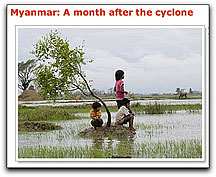
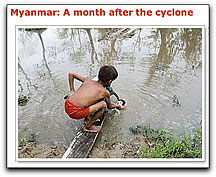
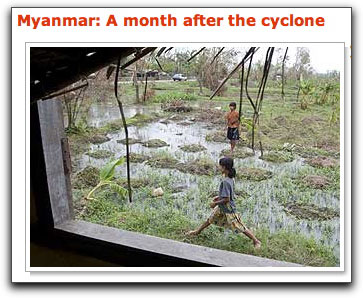
In Myanmar, Cyclone Nargis killed at least 133,600 people and affected at least 2.4 million in particular in the regions of Irrawaddy and Yangon. This is the worst natural disaster since the Asian tsunami on December 26th, 2004. This agency is strictly out to assist with providing critical communications after emergencies.
The Emergency Telecommunications Cluster (ETC) is led by the World Food Programme (WFP) and Unicef and coordinated by the United Nations Office for the Coordination of Humanitarian Affairs (OCHA). TSF is certainly well qualified and further validation came when it was appointed First Responder of the ETC in 2006. The objective of the ETC is to use and better coordinate resources from different agencies involved in emergency
telecommunications leaving no emergency responder unconnected. Since 2006, TSF already responded to several emergencies in coordination with the ETC: in Indonesia, Lebanon, the Democratic Republic of Congo and more recently in Mozambique following heavy floods in February.
In Myanmar, Cyclone Nargis killed at least 133,600 people and affected at least 2.4 million in particular in the regions of Irrawaddy and Yangon. This is the worst natural disaster since the Asian tsunami on December 26th, 2004. This agency is strictly out to assist with providing critical communications after emergencies.
TSF will be celebrating its 10th Anniversary on June 29th in Clairefontaine, near Paris. Since its creation in 1998, TSF deployed to over 50 countries and assisted almost 500 relief organizations and millions of victims.
