
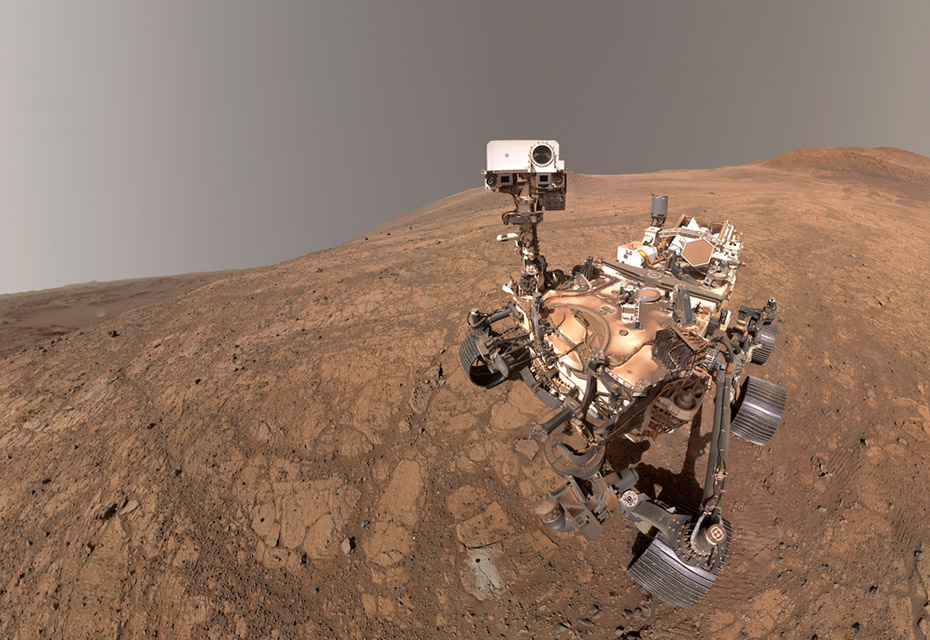
On October 11, 2026, NASA’s Perseverance Mars rover officially surpassed the record for the longest distance driven on the surface of another world. A 299.6-foot (91.31-meter) drive during the mission’s 2,006th Martian day (sol) pushed the six-wheeled rover’s cumulative odometer to 28.10 miles (45.22 kilometers), eclipsing the previous mark of 28.06 miles (45.16 kilometers) established by NASA’s Opportunity rover between 2004 and 2018.
Autonomous Navigation Architecture and Mobility Performance
Perseverance’s traverse capabilities rely on its onboard AutoNav autonomous navigation system, which calculates drive paths in real time while rolling across Martian terrain. While NASA’s first Mars rover, Sojourner, evaluated surrounding hazards using 20 measurement points in 1997, Perseverance’s computer architecture processes approximately 600,000 spatial points with each look. AutoNav captures navigation imagery while moving and builds three-dimensional maps of terrain obstacles, allowing the rover to navigate around boulders and dunes without halting for ground-commanded steering instructions from Earth.
The rover’s mobility performance has allowed the platform to far surpass its original baseline design requirement of 12.4 miles (20 kilometers).
Mission Heritage and Extended Crater Rim Exploration
The distance record represents a major operational evolution since Perseverance executed its first drive on Mars in March 2021. Managed by NASA’s Jet Propulsion Laboratory (JPL), the rover landed inside Jezero Crater in February 2021 to examine ancient river delta formations and collect core samples.
“It is an honor to be working on Perseverance at a moment when the technology has evolved to the point that drives like these are routine,” stated Steven Lee, project manager of the Curiosity and Perseverance rovers at NASA JPL. “The original mission called for no more than 12.4 miles of driving. We’ve blown well past that, and with all mobility systems fully operational and favorable extended-ground-life test results, we expect Perseverance to keep adding to this record for many years to come.”
NASA recently approved the mission’s first extension through the end of 2028. The rover is currently navigating toward Rainbow Falls, a 328-foot-wide (100-meter) uplifted block of ancient bedrock along the Jezero Crater rim.