

On Sunday, May 24, 2026, the China Manned Space Agency (CMSA) launched the Shenzhou-23 crewed spacecraft from the Jiuquan Satellite Launch Center in northwest China.
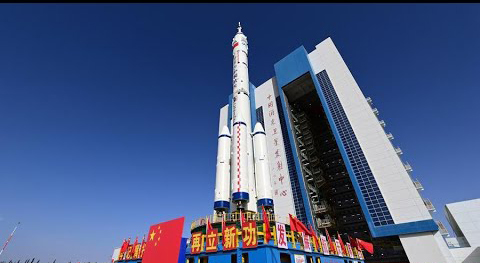
The mission, carried to low-Earth orbit by a Long March-2F carrier rocket at 11:08 p.m. local time, transports a three-person crew to the Tiangong space station. One member of the crew will remain aboard the orbital outpost for a full year, marking the longest continuous single-mission duration in the history of the Chinese space program.
The Shenzhou-23 crew is led by commander Zhu Yangzhu, accompanied by pilot Zhang Zhiyuan and payload specialist Lai Ka-ying. Lai, a former Hong Kong police officer selected during China’s fourth batch of astronaut recruitment in 2024, is the first astronaut from Hong Kong to participate in an active flight mission.
While standard Tiangong crew rotations maintain a six-month timeline, this extended 12-month deployment is structurally calibrated to study the long-term biological and psychological impacts of prolonged weightlessness on human physiology.
The vehicle itself features technical upgrades designed to address orbital safety hazards. Following a suspected space debris impact that damaged a window on the previous Shenzhou-20 spacecraft, the Shenzhou-23 vessel has been outfitted with reinforced porthole and window structural protection. The current mission follows the China’s Shenzhou 22 rescue ship arrives at Tiangong deployment in December 2025, which served as an uncrewed emergency lifeboat during the preceding crew cycle.
The extended flight data will support Beijing’s strategic target of executing a crewed lunar landing by 2030 and establishing a joint permanent lunar base with Russia by 2035. This timeline positions China’s lunar exploration goals two years behind NASA’s revised Artemis program target, which currently aims for an American crewed return to the lunar surface in 2028.
Upon arrival at the Tiangong space station, the incoming crew will begin a transition period with the residing Shenzhou-21 astronauts, who are scheduled to return to Earth on May 29, 2026, after completing an extended seven-month orbital stay. Later this year, the outbound Shenzhou-24 mission will transport an international astronaut from Pakistan to the facility for a short-duration mission, utilizing the vacated seat of the year-long Shenzhou-23 crew member for the return flight.
