

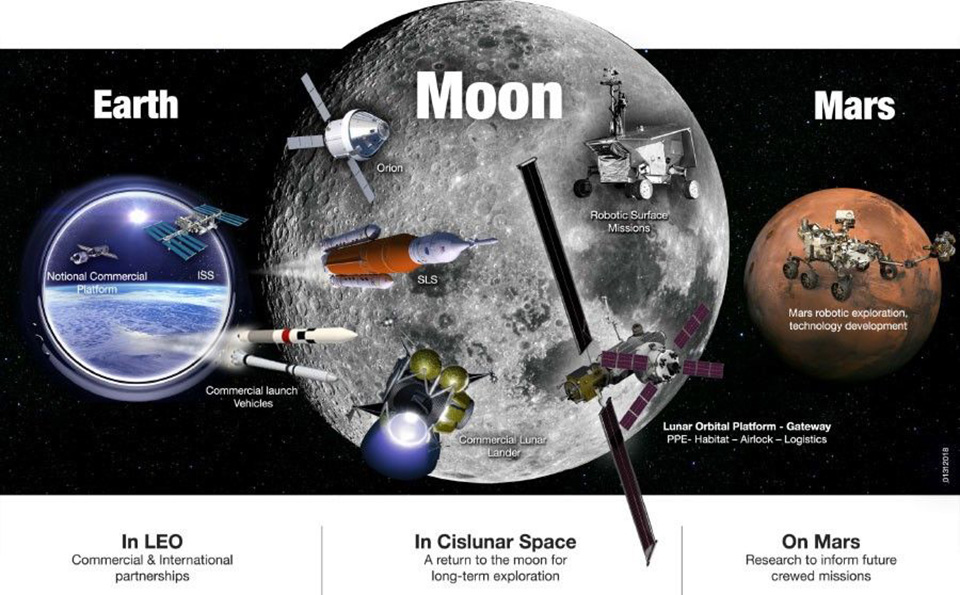
Seeking to resolve technical gaps that currently hinder long-term deep space habitation, the NASA Space Technology Mission Directorate (STMD) announced an open call for industry feedback on Monday, January 12, 2026.
The initiative is designed to identify and prioritize the most significant technology shortfalls facing the commercial space sector as the agency prepares for the next phase of the Artemis program and future missions to Mars.
By soliciting direct input from commercial partners, NASA aims to align its federal research and development investments with the practical needs of the evolving lunar economy. This strategic pivot ensures that government-funded innovations serve as a catalyst for private sector participation in deep space exploration.
Identifying the Strategic Roadmap to Mars
The current solicitation focuses on high-priority technology areas that are essential for establishing a sustainable presence on the Moon. These include advanced propulsion systems, cryogenics, lunar surface power generation, and in-situ resource utilization. NASA’s strategy relies on bridging these gaps to transform the Moon from a destination into a operational hub for missions further into the solar system.
This collaborative approach addresses the “Sovereign-Commercial Nexus,” where government agencies act as anchor customers and technology facilitators. By addressing technical hurdles through a unified roadmap, the agency expects to accelerate the maturation of the Commercial Lunar Payload Services (CLPS) program and other mission-critical architectures.
Strengthening the Commercial Lunar Economy
The call for input is a central component of NASA’s efforts to bolster what it describes as a “Golden Age of Exploration.” As private firms increasingly take on roles in lunar logistics and infrastructure, the agency is prioritizing technologies that offer dual-use capabilities for both government science missions and commercial enterprise. This initiative directly supports the ongoing development of a “railroad to the Moon,” providing the reliable infrastructure necessary for startups and established aerospace firms to operate profitably in cislunar space.
The feedback gathered through this process will directly influence the STMD’s funding priorities for the 2027 fiscal year. This ensures that the technical requirements of the commercial sector are integrated into the early stages of mission architecture design, potentially reducing long-term costs and development timelines for deep space hardware.
Participation Deadlines and Future Timeline
The agency has opened a dedicated portal for submission of technical feedback and strategic recommendations. The commercial space sector and academic researchers have until February 20, 2026, to provide their input through the official NASA Space Tech Priorities website.
Following the close of the comment period, the STMD will conduct a comprehensive review of the submissions to refine its technology investment portfolio. A finalized list of prioritized shortfalls is expected to be released in late spring 2026, which will serve as a guide for upcoming Grant and Small Business Innovation Research (SBIR) opportunities.
