

By Chris Forrester
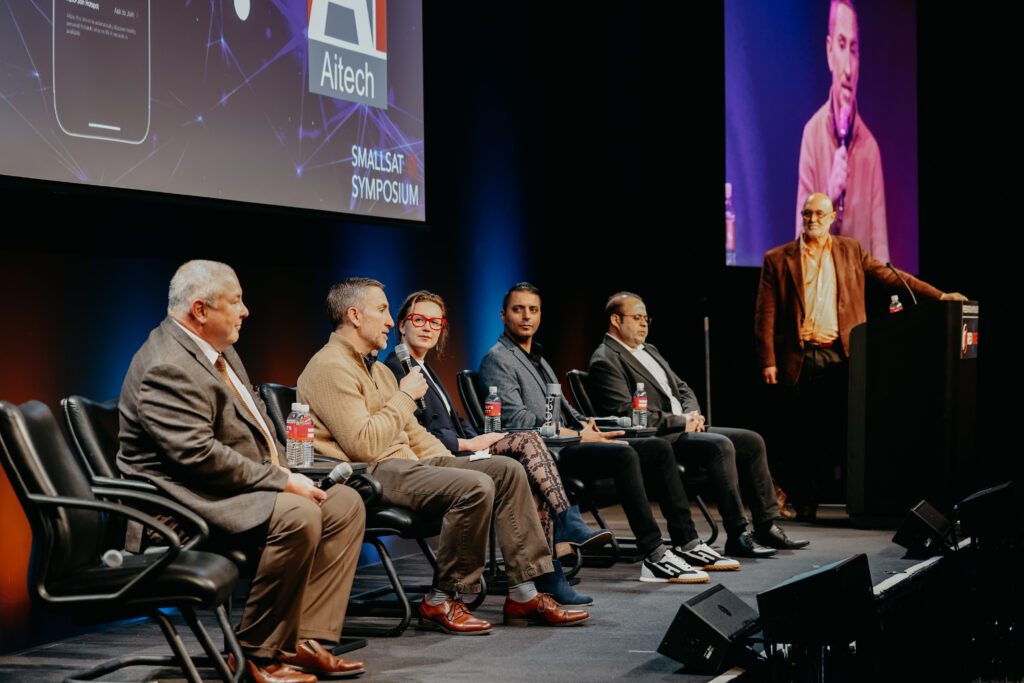
Ground Systems are a market that’s worth $145 billion (according to BryceTech) was examined in detail by session moderator Prof. Andy Kwas, NG Fellow at Northrop Grumman, and delegates to the SmallSat Symposium at Mountain View on February 4. Kwas told delegates how the past few years had seen huge advancements in small satellites, in terms of size, functionality and ability. But he asked his panel whether Ground System providers had kept up?
Aaron Hawkins, Real-time Earth Business Manager at Viasat said that his company had moved rapidly into adaptable infrastructure for multi-orbit demands. He said Viasat tried to make life very simple for our customers having conversations as to drill down as to what they actually needed. We can provide engineers to help them, of course, but the main challenge we have is to identify the customer’s actual needs. The old way was to serve a $500 million satellite with a couple of ground antennas costing perhaps a million or two. Now, satellites are costing a fraction of that sum but with perhaps much greater data-rates. It means we have to work with ground-station partners. Multi-mission modems, multi-satellite orbits and solutions. We moved from Gigabit to Terabit and this won’t change.
Mr Hawkins also said that despite weather considerations there would definitely be a need for optical solutions. “We are not going to switch overnight to optical, but it’s happening.”
Chris Faletra, President/CEO at Comsat said the changes in Ground Station demand and use were dramatic, and where incoming demand meant multiple feeds, and handling data-centric services. “Our technicians today tend not to be traditional RF engineers but are now network-savvy, IP-friendly and are extremely adjustable and adaptable and extremely computer literate.”
“There’s also been a change from giant antennas which are not just expensive to build but costly to maintain. Smaller antenna, say at 4 metres and less, are much simpler. They are cheaper to build. I don’t need to bring in civil engineers and power supply experts to build and connect the antenna,” he added.
Jai Dialani, US MD at Leaf Space said that software defined reconfigurability was essential. Today’s customers were using multiple bands and the antennas had to cope. “Our client’s missions are usually different one from the other. They might be Earth Observation focussed, as well as a hundred-and-one different communications usages. We have several clients, especially those who rideshare on SpaceX, who want to speedily manage the challenges of handling multiple and near-simultaneous demands.”
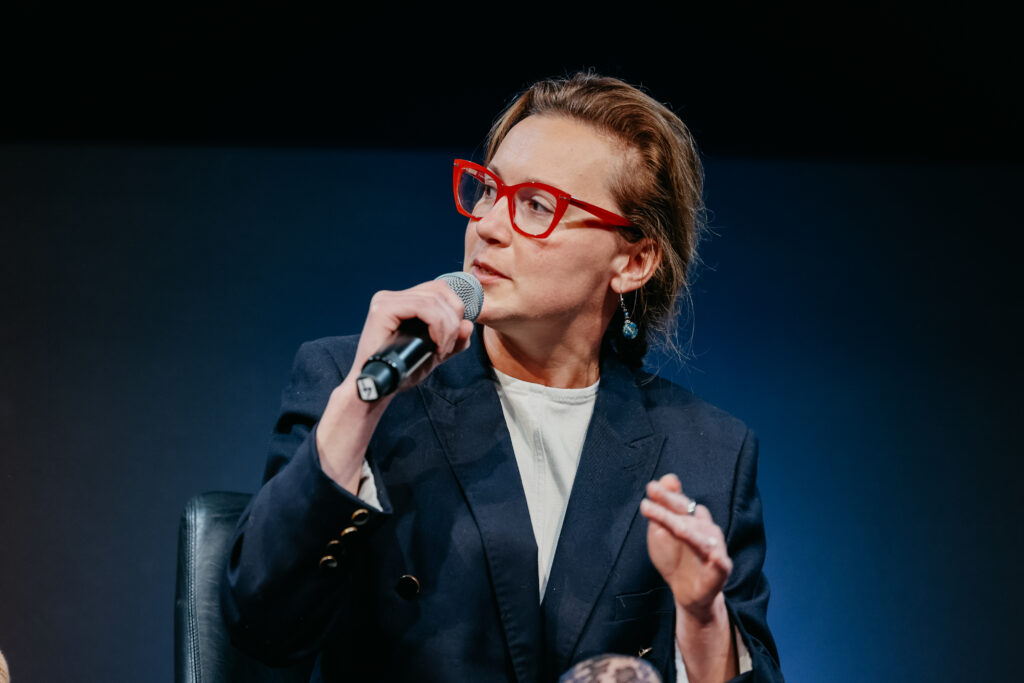
Dr. Diana Gamzina, CEO at amplifier manufacturer Elve, said that Ka-band and frequencies above would increasingly be sharing the same dish which is a major change from the past. She explained that the likes of SpaceX’s Starlink and that of other mega-constellations have totally changed the ground station model, and the need to move and push the data onward. “Optical is a shiny tool,” she admitted.
Amir Kashanizadeh, Dir. Of Systems Engineering at Spacebridge, said that managing different data rates, different wave forms and multiple use systems was now the everyday challenge. “We aim to orchestrate the network to suit the customer, and we are developing and investing in new techniques for handling APIs using AI. This is likely to be within the 2-3 year timeframe.”
