

On Thursday, September 10, 2026, industry financial reports evaluated the ongoing strategic positioning of United Launch Alliance (ULA), raising renewed questions over whether corporate co-owners Boeing and Lockheed Martin will accelerate a sale of the 50-50 joint venture.
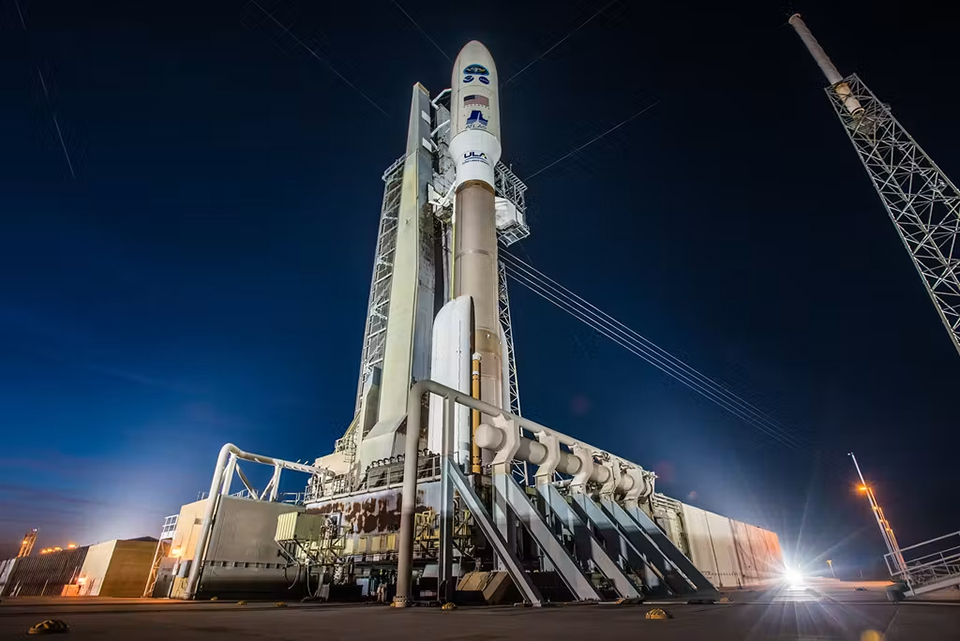
Mounting capital requirements for launch vehicle production, coupled with low profit margins inherent to pure-play launch providers, have intensified internal friction between the defense primes and their launch subsidiary.
Corporate Ownership History and Leadership Transition Context
Established in 2006 through the consolidation of Boeing’s Delta and Lockheed Martin’s Atlas launch programs, ULA maintained a near-monopoly on U.S. National Security Space Launch (NSSL) missions for over a decade. However, the rise of commercial competitors, led by SpaceX and its vertically integrated satellite services, transformed launch economics from a high-margin government service into a high-volume commodity market.
Speculation surrounding ULA’s ownership structure intensified following the departure of long-time CEO Tory Bruno and the appointment of interim CEO John Elbon. Industry analysts noted that appointing a caretaker executive signaled potential prep work for an eventual transaction, expanding on earlier acquisition interest from Blue Origin and private equity firms.
Financial Metrics and Debt Structure Parameters
Unlike competitors that leverage internal spacecraft manufacturing, direct-to-consumer satellite constellations, or software subscriptions to subsidize launch operations, ULA relies primarily on contract rocket deliveries. This narrow revenue baseline forces the joint venture to absorb high capital costs directly on its balance sheet.
Key financial metrics driving the joint venture’s structural headwinds include:
- Debt Capital Requirements: ULA recently executed a $1.5 billion private bond placement to fund Decatur factory upgrades and launch pad infrastructure, increasing debt obligations across four distinct maturity tranches.
- Payload Manifest Swap Costs: Revenue streams suffered disruptions following the Space Force’s temporary reassignment of the GPS III SV-10 mission to SpaceX due to solid rocket booster nozzle investigations.
- Commercial Backlog Commitments: ULA holds an 80-plus mission backlog, led by 38 Vulcan launches committed to Amazon Leo, requiring high capital outlay before launch milestone payments are fully realized.
Competitive Market Rationale and Diversification Deficits
The financial pressure on ULA highlights a broader structural shift within the aerospace sector. Companies like SpaceX, Blue Origin, and Rocket Lab have pursued vertical integration, building satellite buses, proprietary engines, ground stations, and constellation services alongside launch vehicles. This multi-layered business model allows operators to capture high-margin satellite data and connectivity revenues while treating launch capability as an internal cost center.
Conversely, ULA operates purely as a launch provider. Boeing and Lockheed Martin have historically extracted dividends from ULA rather than reinvesting profits into adjacent commercial satellite ventures. With launch prices pushed down by reusable rockets, Boeing and Lockheed Martin face declining returns on equity from ULA, making a divestment attractive as both defense primes focus capital on core aerospace, defense, and military software programs.
Executive Leadership Viewpoint
Prior to the current leadership transition, ULA management highlighted the ongoing requirement for assured national security launch access despite commercial market shifts.
“This rocket is transforming the future of launch. Vulcan satisfies all challenging orbital requirements essential for U.S. national defense and provides one scalable system for all missions while continuing to provide unmatched reliability and orbital precision,” stated former President and CEO Tory Bruno during the vehicle’s inaugural certification flight.
Strategic Outlook for Joint Venture Divestment
While ULA remains insulated by the Department of Defense’s dual-source policy—which guarantees ULA a baseline allocation of Phase 2 and Phase 3 NSSL launch contracts—the financial returns may no longer align with Boeing’s and Lockheed Martin’s corporate growth targets. As ULA works through its 2026 and 2027 flight manifests to clear its commercial backlog, market conditions suggest that parent company boards will continue evaluating buyout offers from strategic aerospace buyers or private equity consortiums seeking an established defense launch provider.
