

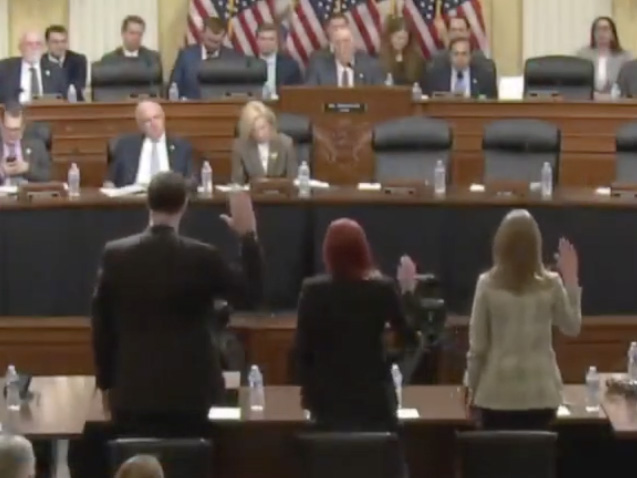
Key Themes from China Tech Hearings
Congressional hearings have consistently focused on the growing technological capabilities of the People’s Republic of China (PRC) and their implications for U.S. national and economic security.
AI Competition and Dominance: Witnesses and lawmakers emphasize that the U.S. is in a crucial race with China to dominate the development and application of AI. The concern is that if the Chinese Communist Party (CCP) wins this competition, it could use the technology to perfect its oppressive surveillance state and export that model globally.
One executive testified that the U.S. is ahead, but only “barely,” and that AI will be as transformative as the internet.
Cybersecurity Threats: There is significant concern about increasingly sophisticated, state-sponsored cyber operations by the PRC.
Recent disclosures have highlighted risks from AI-assisted, partially autonomous cyber operations conducted by state-sponsored actors against U.S. companies.
The attacks often target critical infrastructure and rely on exploiting vulnerabilities in obsolete and legacy IT systems.

Intellectual Property Theft and Economic Espionage: China is accused of not only developing cutting-edge technology but also stealing U.S. intellectual property (IP) and funneling it into its state-owned enterprises.
The motive is twofold: to control international supply chains (e.g., in batteries and other key technologies) and to gain economic and geopolitical leverage over the U.S.
Military and Dual-Use Technology: Lawmakers are worried that U.S. technology, including AI models and computing power (like advanced chips), is being used by Chinese researchers for military purposes.
There is a push for stronger export controls and legislation to prohibit federal agencies from using Chinese and Russian AI models.
Satellite and Space Technology: The U.S. State Department has reportedly urged allies to avoid doing business with Chinese satellite firms, arguing that such contracts fuel military development and aid in gathering sensitive intelligence.
These hearings stress the urgent need for the U.S. to bolster its cyber defenses, invest heavily in AI development with a “light-touch” regulatory approach, and implement robust policies to counter Chinese espionage and protect U.S. technological advantage.
