

On Sept. 23, 2026, speaking at the European Commission’s 2nd Access to Space Conference in Brussels, European Commissioner for Defense and Space Andrius Kubilius stated that European institutional missions will require 14 Ariane 6 launches annually by 2031.
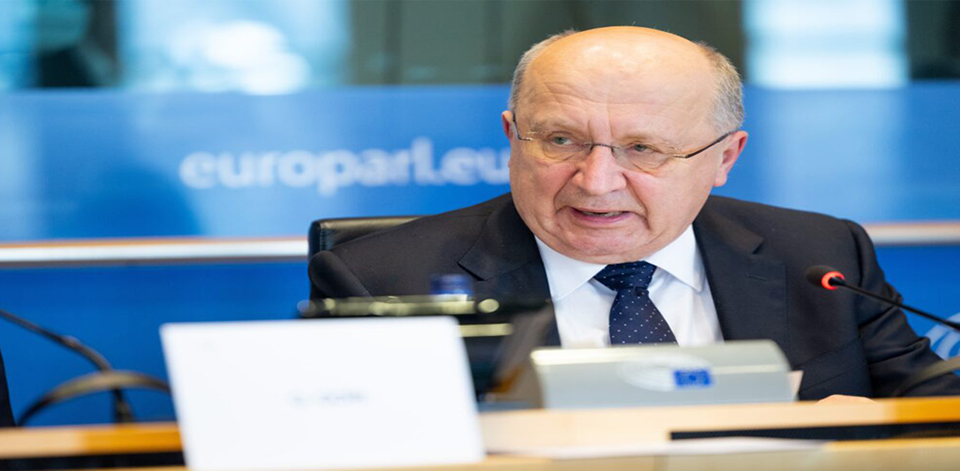
The projected government launch demand exceeds ArianeGroup’s current baseline production plan of 10 Ariane 6 vehicles per year, signaling supply bottlenecks across the European launch sector.
Ariane 6 Operational History and Production Limits
The projected deficit in heavy-lift launch capacity follows the operational entry of Ariane 6, which succeeded the retired Ariane 5 to restore independent European access to space. To support institutional payloads—including Galileo navigation satellites, Copernicus Earth observation platforms, and military reconnaissance hardware—European launch services provider Arianespace established an initial manufacturing baseline of 9 to 10 Ariane 6 vehicles per year at assembly facilities in Les Mureaux, France, and Bremen, Germany.
While commercial contracts, such as Kuiper constellation deployments, occupy significant manifest capacity, European government institutions are increasing payload cadence. European Space Agency (ESA) leadership and industrial contractors have repeatedly urged the European Commission to issue a multi-year bulk procurement down payment to secure raw material supply chains, lower unit production costs, and finance manufacturing line expansions.
Although Commissioner Kubilius confirmed that the upcoming 2028–2035 European Union budget framework will allocate dedicated funding for space launch services, he did not commit to the immediate bulk purchasing mechanism requested by industry officials.
Supply Chain Requirements and Booster Industrial Bottlenecks
Ramping Ariane 6 manufacturing from 10 to 12, and eventually 15 launches per year introduces severe industrial scaling requirements across European subcontractor networks.
Achieving a 14-launch annual cadence requires expanding production of the P160C solid rocket booster, manufactured by Italian propulsion contractor Avio at its Colleferro facility. The Ariane 6 operates in two primary configurations: the Ariane 62, which utilizes two P160C boosters for medium-weight payloads, and the Ariane 64, which integrates four P160C boosters for heavy geostationary and deep-space missions.
Sustaining a manifest of 14 Ariane 6 missions per year—assuming a typical operational mix of Ariane 62 and Ariane 64 variants—requires Avio to scale solid motor production to between 40 and 50 P160C units annually. This production volume demands expanded carbon-fiber winding capacity, propellant mixing facilities, and transportation infrastructure across the European supply chain.
Similarly, ArianeGroup must scale production of the Vulcain 2.1 core stage engine and the re-ignitable Vinci upper stage engine, alongside expanding payload fairing manufacturing handled by Beyond Gravity in Switzerland.
Executive Statement
“Access to space is the most decisive issue in space today,” said Andrius Kubilius, European Commissioner for Defense and Space. “By 2031, European government demand alone will require 14 Ariane 6 missions per year. The upcoming 2028-2035 EU budget will include dedicated launch funding to ensure European institutional payloads retain reliable, independent access to orbit.”
Budgetary and Manifest Horizon
The European Commission and ESA will continue negotiations through late 2026 to structure launch procurement frameworks ahead of the 2028–2035 budget cycle. Industrial prime contractors ArianeGroup and Avio will evaluate facility expansions and long-lead material acquisitions required to ramp P160C booster and engine production lines toward the 14-launch target over the next five years.
