

On Thursday, July 9, 2026, Spanish aerospace mechanisms developer OCCAM Space confirmed that its proprietary KISS 24 clampband separation system successfully achieved flight heritage during a SpaceX rideshare campaign.
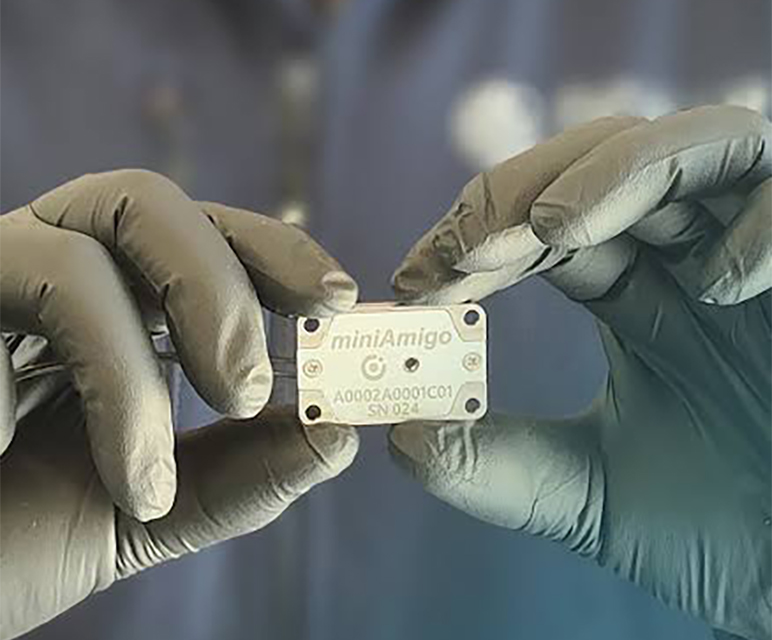
The mechanical separation hardware was launched into low Earth orbit from Vandenberg Space Force Base in California aboard a Falcon 9 rocket executing the Transporter-17 mission.
The launch records three commercial milestones for the Madrid-based developer, representing the first operational flight of the KISS 24 architecture, the company’s inaugural deployment on a SpaceX rideshare vehicle, and its baseline technical integration contract alongside space logistics provider D-Orbit.
Simplified Component Architecture and Integration Timelines
The KISS 24 hardware forms part of a scalable family of clampband payload adapters developed to handle release operations for launch vehicles, satellite buses, and orbital transfer tugs. The structural properties of the separation system include:
- A simplified mechanical architecture utilizing approximately one tenth of the moving parts and structural components found in standard industrial clampbands, lowering potential failure risks.
- A deployment design that can be completely integrated and tensioned in less than one hour under nominal launch base cleanroom conditions.
- A fully resettable locking mechanism that permits repeated ground testing with the exact structural flight hardware assigned to the launch vehicle.
- Preload distribution patterns enabled by a patented configuration that makes full use of baseline launch interface structural capacity.
The company managed the end-to-end design and fabrication of the clampband before providing specialized deployment engineering support during the vehicle integration phase in the United States. The flight follows the previous deployment of the larger KISS-XL system, a four-meter-diameter clampband variant that completed separation in late 2025.
“This mission is an important milestone for OCCAM Space and for KISS 24,” stated Manuel Serrano, CEO of OCCAM Space. “Achieving flight heritage on a SpaceX rideshare mission, together with a customer like D-Orbit, confirms the maturity of our approach and the value of simple, robust and scalable separation systems for today’s launch market.”
Payload Interface Expansion Plans
The successful flight heritage validation establishes a baseline to expand the corporate partnership, with additional OCCAM Space separation units already scheduled for subsequent D-Orbit manifests later this year. To address a broader range of small-satellite interfaces, the engineering firm is expanding its product line to include the specialized KISS 15 system alongside custom payload adapters designed to support upcoming commercial micro-launchers, building upon its structural design experience with European launch platforms.
