

On Friday, June 5, 2026, NASA issued a rare emergency directive for astronauts aboard the International Space Station. Five crew members were temporarily ordered to take shelter inside a docked SpaceX Crew Dragon capsule.
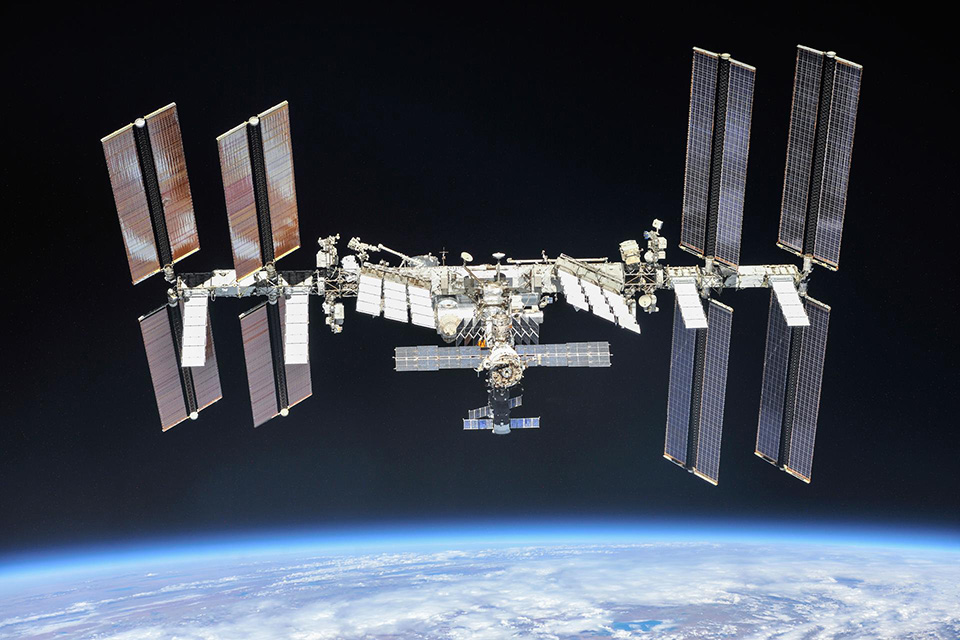
This “safe haven” measure was initiated out of an abundance of caution due to an escalating air leak in the Russian-operated segment of the orbital laboratory and a disagreement over proposed repair methods.
The Source of the Orbital Leak
The root of the concern lies in the Zvezda service module’s transfer tunnel, commonly known as the PrK. This specific Russian-operated section connects to a docking port and has been experiencing intermittent cracks and minor air leaks since 2019. Recently, the situation worsened when mission controllers detected that the air leak rate had doubled, increasing from approximately one pound of air lost per day to two pounds per day. This sudden increase in depressurization prompted Roscosmos to attempt a more extensive repair operation to find and permanently seal the source of the escaping atmosphere.
Disagreement Over Repair Strategy
The situation escalated when Russian cosmonauts Sergey Kud-Sverchkov and Sergey Mikaev planned to conduct structural repairs that involved cutting a bracket to gain better access to the suspected leak location. Reports indicated that the cosmonauts intended to use a saw to access the area. NASA engineers and mission controllers in Houston fundamentally disagreed with this aggressive approach. They expressed serious concerns that cutting into the structure could present elevated structural risks to the already compromised and aging module. Because the two space agencies could not immediately align on the safety of the procedure, NASA elected to initiate the safe-haven protocols to protect the crew.
Initiating the Safe Haven Protocol
Safe-haven procedures are highly uncommon during normal station operations and are generally reserved for imminent threats, such as potential space debris collisions. Under this directive, NASA astronauts Jessica Meir, Jack Hathaway, and Chris Williams, along with European Space Agency astronaut Sophie Adenot and Russian cosmonaut Andrey Fedyaev, sealed themselves inside the SpaceX Crew Dragon “Freedom” capsule. The spacecraft was kept powered and fully prepared to undock, essentially serving as a lifeboat in the unlikely event that a rapid depressurization necessitated a complete and immediate evacuation of the station.
Resolution and Continued Monitoring
The emergency posture was ultimately short-lived. Following the initiation of the shelter order, Roscosmos decided to pause the planned structural cutting and instead perform additional measurements and data assessments on the affected area. With the immediate structural risk averted, NASA fully supported the revised approach and lifted the safe-haven order, allowing the five crew members to return to their normal scientific operations aboard the station.
According to updates from Roscosmos, one leak was subsequently sealed using a traditional two-component sealing compound, while preparations continued for addressing a second location. While the immediate threat has passed, the incident serves as a stark reminder of the escalating maintenance challenges facing the 27-year-old International Space Station as it approaches its planned retirement at the end of the decade.
