

NUREMBERG, GERMANY – On Monday, March 9, 2026, Seattle-based Hubble Network announced a significant milestone in the Internet of Things (IoT) sector, demonstrating the first-ever direct-to-satellite connection using standard, off-the-shelf Bluetooth Low Energy (BLE) chips.
The demonstration, held at Embedded World 2026, proves that everyday wireless devices can now achieve global connectivity without the need for expensive cellular modems or specialized satellite hardware.
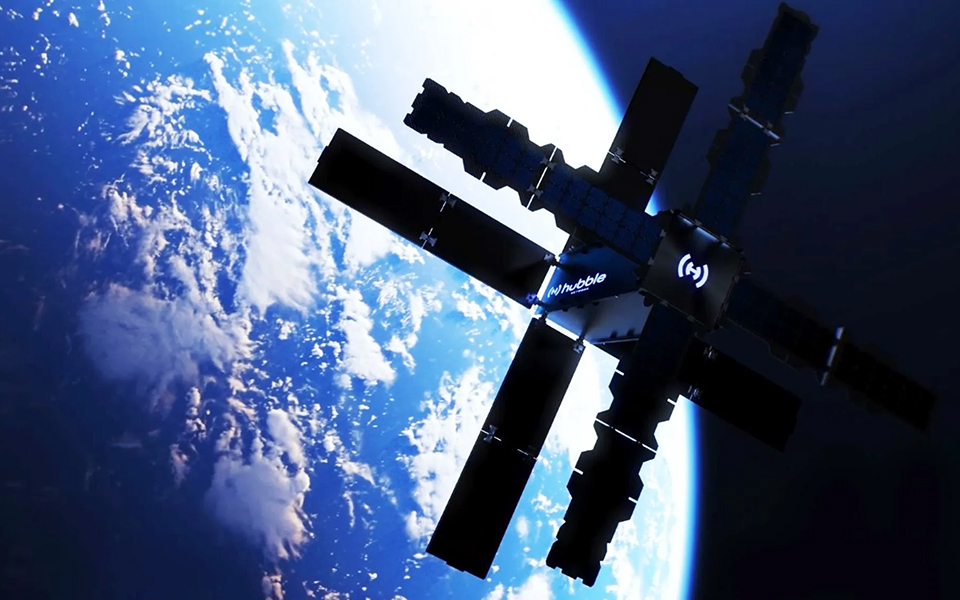
By utilizing a proprietary protocol and a lightweight Software Development Kit (SDK), Hubble has bridged the 650-kilometer gap between terrestrial BLE chips and its Low Earth Orbit (LEO) satellite constellation.
Technical Specs: The 13-Byte Breakthrough
Hubble’s architecture turns the standard Bluetooth protocol—originally designed for short-range audio and data—into a long-range, narrow-band satellite link.
- Payload Capacity: Supports small data packets of up to 13 bytes per message, optimized for sensor data (temperature, motion, location).
- Hardware Compatibility: Compatible with standard microcontrollers from partners like Silicon Labs (MG24) and Texas Instruments (CC2340/CC2755x).
- Power Efficiency: Devices can operate for several years on a single coin cell battery, as the “Space-Cloud” protocol is 20 times more energy-efficient than traditional satellite IoT.
- Range Achievement: Hubble’s satellites utilize high-gain phased-array antennas—described by CEO Alex Haro as “giant magnifying glasses”—to detect weak BLE signals from over 600 km away.
Context: Disrupting the Satellite IoT Cost Barrier
Historically, satellite IoT has been a niche market restricted by high hardware costs (often $50+ per unit) and complex integration. Hubble Network, founded in 2021 by Alex Haro (Co-founder of Life360) and Ben Wild, has dismantled this barrier by enabling connectivity through a simple firmware update.
As of March 2026, Hubble operates a constellation of seven satellites, providing global coverage at least once every 24 hours. The company recently raised $70 million in Series B funding, bringing its total capital to $100 million. This funding is currently being used to scale the constellation to 60 satellites by 2028, which will enable near-real-time global coverage with revisits every 15 minutes.
Operational Rationale and Use Cases
The “direct-to-satellite” BLE model is specifically targeted at high-volume, low-margin sectors that require global visibility but cannot afford the power drain of GPS or cellular:
- Asset Tracking: Monitoring shipping pallets and containers in remote regions.
- Industrial IoT: Telemetry for oil and gas pipelines and agricultural soil sensors.
- Consumer Safety: Integration with the Life360 and Tile networks to locate lost items or pets anywhere on Earth.
Live Demonstration
Attendees at Embedded World 2026 can view live demonstrations of mass-market BLE devices transmitting directly to orbit at the Nürnberg Exhibition Centre, Hall 3A, Booth 131, through March 12. Hubble has officially opened its developer portal, allowing enterprises to integrate the Hubble SDK into existing product lines immediately.
