

EL SEGUNDO, Calif. — In a statement released Friday, February 20, 2026, Boeing [NYSE: BA] announced the opening of a new 9,000-square-foot production line dedicated to manufacturing electro-optical infrared (EO/IR) sensors.
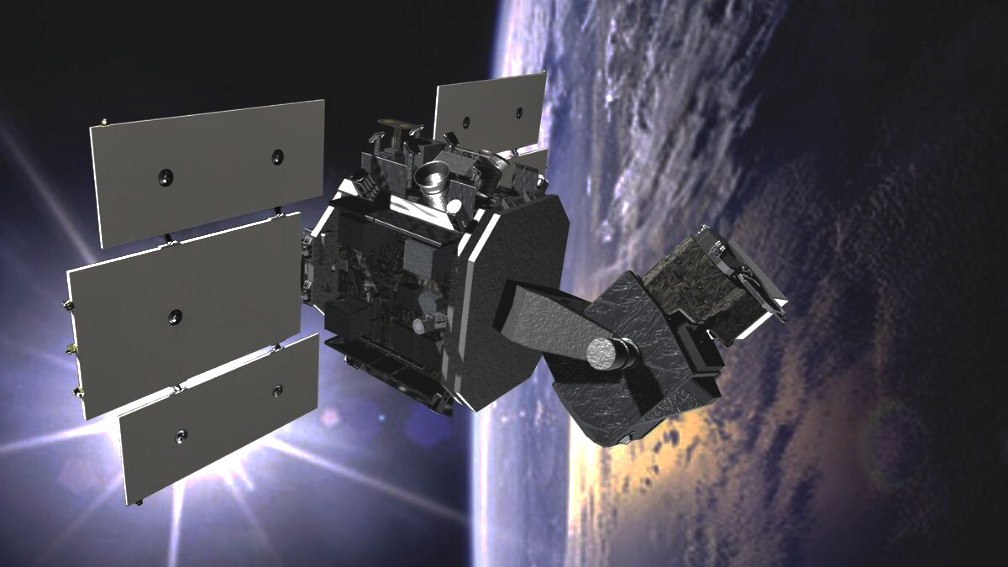
Located within the company’s primary satellite factory in El Segundo, the facility expansion is designed to accelerate the delivery of payloads for the U.S. Space Force’s (USSF) high-priority missile defense programs.
The new line provides the manufacturing capacity necessary to support Boeing subsidiary Millennium Space Systems in fulfilling its contract for the Space Force’s Resilient Missile Warning and Tracking (MWT MEO) program.
Supporting the Golden Dome Architecture
The expansion arrives as the Department of Defense (DoD) shifts toward a proliferated, multi-orbit sensor architecture to counter maneuvering hypersonic threats. This effort is a central component of the $175 billion “Golden Dome” initiative, which seeks to integrate space-based sensors and interceptors into a unified national defense shield.
Millennium Space Systems was originally selected to deliver the first installment of the MWT MEO constellation, known as Epoch 1. While the program was initially slated for a 2026 debut, supply chain constraints have pushed the inaugural launch to mid-2027. The new production line in El Segundo is a direct response to these industrial bottlenecks, allowing the company to transition from rapid prototyping to rate manufacturing.
Payload Capabilities and Scale
The 9,000-square-foot facility is roughly the size of two professional basketball courts and is optimized for the assembly, integration, and testing of dual-spectrum detection systems. These EO/IR sensors are capable of identifying the heat signatures of ballistic and hypersonic glide vehicles against the Earth’s background.
- Production Target: Boeing intends to more than double its total satellite output this year, targeting the delivery of 26 spacecraft in 2026, up from 12 in 2025.
- Epoch 1 Requirements: The facility will support the manufacturing of the 12 satellites Millennium is building for the MWT MEO program.
- Architecture Integration: These satellites will operate in medium-Earth orbit (MEO), providing a layer of “custody” that bridges the gap between low-Earth orbit (LEO) tracking and traditional geostationary (GEO) early warning.
Executive Perspective
“We’re moving to more than double our satellite output this year, and investments like this, along with other factory upgrades and continued investment in our team, are how we do it with schedule credibility,” said Sam Greaves, Boeing’s interim vice president for space mission systems.
Tony Gingiss, CEO of Millennium Space Systems, added: “By combining Millennium’s agility with Boeing’s EO/IR payload capability, we can deliver superior mission performance for the MWT MEO program. We will continue investing in and expanding our production footprint to advance our capability and drive future mission success.”
Timeline to mid-2027 Launch
Following the completion of the space vehicle Critical Design Review (CDR) in late 2023, the Epoch 1 satellites are now entering the assembly phase. The first batch of satellites is scheduled for delivery and launch in the second quarter of 2027. In parallel, the Space Force has already moved to Epoch 2, recently awarding a $1.2 billion contract to BAE Systems for an additional 10 satellites to ensure continuous constellation build-out through 2029.
