

TEHRAN — Recent high-resolution satellite imagery from Planet Labs and Airbus indicates that Iran has begun a visible reconstitution of its long-range air defense network near the capital. The imagery shows S-300 surface-to-air missile (SAM) launchers returning to prepared revetments that were largely decimated during precision strikes in mid-2024.
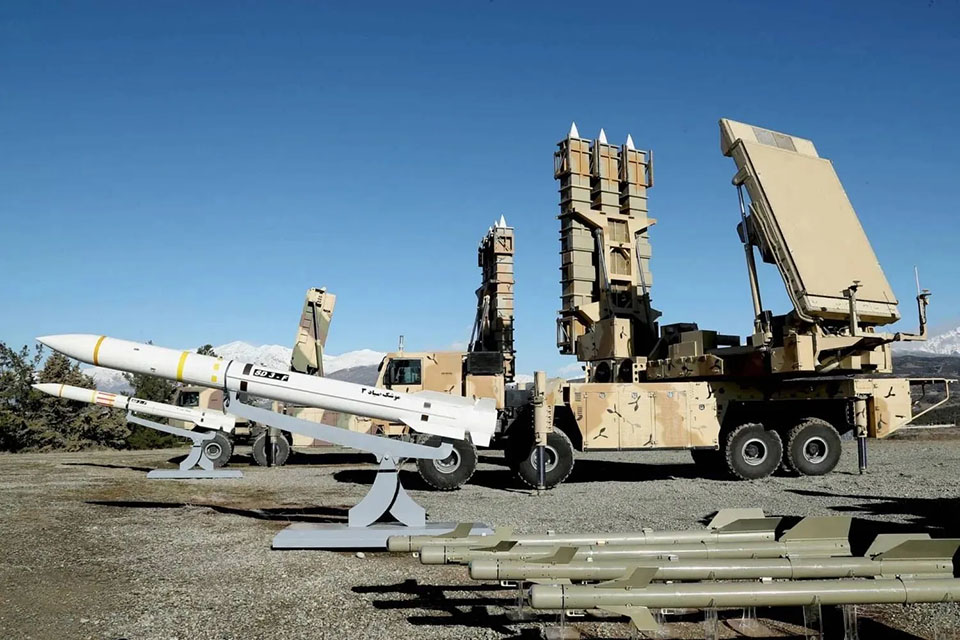
However, defense analysts note a significant “sensor gap” in the new deployments: while launcher vehicles (5P85-series) are clearly emplaced at sites such as Khariizak and Khavar Shahr, the associated 30N6E1 engagement radars and 64N6E acquisition radars remain absent from the visible earthworks.
Analysis of the “Radar Gap”
The absence of fire-control radars suggests one of three strategic possibilities:
- Mobile Decoy Strategy: Iran is deploying surviving or dummy launcher chassis to draw fire and deplete Allied precision munitions.
- Remote Integration: Tehran may be attempting to link Russian launchers to domestic radar sets, such as those used by the Bavar-373 or Khordad-15 systems, to create a more resilient, “layered” defense that is harder to suppress using standard SEAD (Suppression of Enemy Air Defenses) tactics.
- Survivalist Posture: Radars are being held in hardened underground shelters (garrisoned “in the hole”) and only deployed during active alert cycles to minimize their electronic signature and physical exposure.
Geopolitical Rationale and Counter-Deterrence
The timing of these redeployments is a direct response to the massive U.S. air power buildup currently converging on the CENTCOM theater. By placing S-300 launchers back on the map, the Islamic Revolutionary Guard Corps (IRGC) is signaling that its “Integrated Air Defense System” (IADS) retains operational continuity despite the losses sustained during the June 2024 conflict.
This reconstitution is part of a broader fortification effort. Separate satellite imagery from February 18, 2026, confirms that Iran is rushing to bury tunnel entrances at the Isfahan and Natanz nuclear sites under “concrete sarcophagi” to shield them from the high-yield bunker-busters expected in any potential U.S. strike.
In this high-friction environment, the “Sovereign-Commercial Nexus” has become the primary lens for intelligence. While national assets provide classified telemetry, commercial providers like Planet Labs and Airbus are offering real-time, unclassified verification of Iran’s defensive posture. The reappearance of S-300 components near Tehran—just nine months after the joint U.S.-Israeli Operation Midnight Hammer—serves as a critical indicator of Iran’s “hybrid layering” strategy, where it blends surviving Russian hardware with indigenous systems like the Bavar-373 to complicate Allied strike planning during this pre-crisis shaping phase.
Operational Outlook
As President Trump’s ten-day deadline for a nuclear deal approaches at the end of February, the “cat and mouse” game in LEO imagery will intensify. The return of the S-300 launchers—even without their primary sensors—complicates the air superiority equation for Israeli and U.S. planners, who must now re-verify the status of every “reanimated” site before a potential launch.
The presence of these launchers ensures that any “weeks-long operation” against Iran will require a sustained, high-intensity campaign to achieve total air dominance, rather than the “one-and-done” surgical strikes seen in previous years.
