

• Skip to primary navigation
  • Skip to main content
  • Skip to primary sidebar
  • Skip to secondary sidebar
  • Skip to footer
  • NEWS:
  • SatNews
  • SatMagazine
  • MilSatMagazine
  • SmallSat News
  • |     EVENTS:
  • SmallSat Symposium
  • Satellite Innovation
  • MilSat Symposium
  • SmallSat Europe

SatNews

Satellite Industry Intelligence Since 1983

Subscribe
  • LATEST
  • Missions & Constellations
    • Exploration & Science Missions
    • In-Orbit Servicing & Orbital Operations
    • LEO Constellations
    • Mission Autonomy & Onboard Systems
    • Mission Deployments & Manifests
    • Navigation & PNT
    • SmallSat
    • Spacecraft & Payload Technology
    View All in Missions & Constellations →
    Voyager Technologies Executes Strategic Investment in Max Space Expandable Habitat ArchitectureVoyager Technologies Executes Strategic Investment in Max Space Expandable Habitat Architecture
    Titans of LEO in a Heavenly Price battleTitans of LEO in a Heavenly Price battle
    Satellite Connectivity in a Post Capacity EraSatellite Connectivity in a Post Capacity Era
    MTN Launches Click-to-Deploy StarEdge Horizon Satellite Service on AWS MarketplaceMTN Launches Click-to-Deploy StarEdge Horizon Satellite Service on AWS Marketplace
  • Business
    • Contracts & Commercial Deals
    • Earnings & Financial Reporting
    • Events & Conferences
    • Funding & Venture Capital
    • Market Forecasts
    • Mergers & Acquisitions
    • Personnel Moves & Appointments
    View All in Business & Finance →
    Air Force Triples AEHF Terminal Contract Ceiling to Nearly $3 BillionAir Force Triples AEHF Terminal Contract Ceiling to Nearly $3 Billion
    York Space Systems Acquires Orbion Space Technology to Deepen Vertical Integration for SDA ConstellationsYork Space Systems Acquires Orbion Space Technology to Deepen Vertical Integration for SDA Constellations
    Rheinmetall Withdraws From Mynaric Bidding Process; Rocket Lab Acquisition Clears Major Competitive HurdleRheinmetall Withdraws From Mynaric Bidding Process; Rocket Lab Acquisition Clears Major Competitive Hurdle
    MTN Launches Click-to-Deploy StarEdge Horizon Satellite Service on AWS MarketplaceMTN Launches Click-to-Deploy StarEdge Horizon Satellite Service on AWS Marketplace
  • Defense
    • Counterspace & ASAT
    • Defense Budgets & Procurement
    • ISR & Reconnaissance
    • MILSATCOM
    • Missile Warning & Defense
    • National Security Programs
    • Space Domain Awareness
    View All in Military & Defense →
    Air Force Triples AEHF Terminal Contract Ceiling to Nearly $3 BillionAir Force Triples AEHF Terminal Contract Ceiling to Nearly $3 Billion
    Your Teleport Can’t Dodge a MissileYour Teleport Can’t Dodge a Missile
    BAE Systems Completes Preliminary Design Review for $1.2 Billion Space Force Epoch 2 ProgramBAE Systems Completes Preliminary Design Review for $1.2 Billion Space Force Epoch 2 Program
    Guardians in the Kill Chain: How the Space Force Led the Opening Salvo of Operation Epic FuryGuardians in the Kill Chain: How the Space Force Led the Opening Salvo of Operation Epic Fury
  • Gov
    • Export Controls & Compliance
    • International Space Agreements
    • National Space Policy
    • Space Law & Treaties
    • Space Sustainability & Debris Policy
    • Space Traffic Management / Debris Removal
    View All in Government & Regulation →
    Saying Goodbye to the ISS, and Hello to the Orbital Tenancy Trap Saying Goodbye to the ISS, and Hello to the Orbital Tenancy Trap 
    FAA Rescinds Proposed Orbital Debris Rule Amid Industry Pressure and Regulatory ReassessmentFAA Rescinds Proposed Orbital Debris Rule Amid Industry Pressure and Regulatory Reassessment
    The Iran Precedent: Operation Epic Fury and the Law of Armed Conflict in SpaceThe Iran Precedent: Operation Epic Fury and the Law of Armed Conflict in Space
    Geopolitical Scrutiny: The Strategic Implications of APT Satellite’s Chinese State OwnershipGeopolitical Scrutiny: The Strategic Implications of APT Satellite’s Chinese State Ownership
  • Launch
    • Launch Providers
    • Launch Schedule & Calendars
    • Launch Sites & Infrastructure
    • Rocket Technology & Vehicles
    View All in Launch →
    Firefly Aerospace Returns to Flight with Successful “Stairway to Seven” MissionFirefly Aerospace Returns to Flight with Successful “Stairway to Seven” Mission
    SpaceX Evolves Beyond Broadband with “Million-Satellite” AI Data Center Plan; Amazon Mounts Legal ChallengeSpaceX Evolves Beyond Broadband with “Million-Satellite” AI Data Center Plan; Amazon Mounts Legal Challenge
    Times Microwave Systems Launches Levitate™ Ultra-Lightweight Cables for UAV and Defense AvionicsTimes Microwave Systems Launches Levitate™ Ultra-Lightweight Cables for UAV and Defense Avionics
    Blue Origin Accelerates New Glenn 9×4 Production and TeraWave Constellation DevelopmentBlue Origin Accelerates New Glenn 9×4 Production and TeraWave Constellation Development
  • Software
    • Autonomous Ground Operations
    • Data Processing & AI/ML
    • Digital Twins & Modeling
    • Ground Segment & Teleports
    • Mission Planning & Simulation
    • Space Systems Software Engineering
    • Spectrum & Licensing
    View All in Software Automation & Ground Systems →
    Your Teleport Can’t Dodge a MissileYour Teleport Can’t Dodge a Missile
    Missile Strike Targets Strategic SES Ha’Ela Teleport in Central IsraelMissile Strike Targets Strategic SES Ha’Ela Teleport in Central Israel
    ATLAS Space Operations Establishes South Pacific Hub with New Ground Station in American SamoaATLAS Space Operations Establishes South Pacific Hub with New Ground Station in American Samoa
    Danish Army Selects BAE Systems OneArc for 7-Year Simulation Modernization ProgramDanish Army Selects BAE Systems OneArc for 7-Year Simulation Modernization Program
  • Services & Apps
    • Climate & Environmental Monitoring
    • Disaster Response & Security Mapping
    • Earth Observation & Imaging
    • Maritime & Aviation Satcom
    • Satellite Communications
    View All in Services & Applications →
    Your Teleport Can’t Dodge a MissileYour Teleport Can’t Dodge a Missile
    Jazz Secures Industry-Leading 190 MHz in Pakistan’s Landmark $507M 5G Spectrum AuctionJazz Secures Industry-Leading 190 MHz in Pakistan’s Landmark $507M 5G Spectrum Auction
    Spring Forward: Legacy Operators Are Killing GEO. That’s the Plan.Spring Forward: Legacy Operators Are Killing GEO. That’s the Plan.
    Synthetic Aperture Radar as the Modern Backbone of Maritime Domain AwarenessSynthetic Aperture Radar as the Modern Backbone of Maritime Domain Awareness
  • SatNews Events
  • Magazines
  • Calendar
  • Jobs

NASA’s Shock With Dusty Stars

November 12, 2008

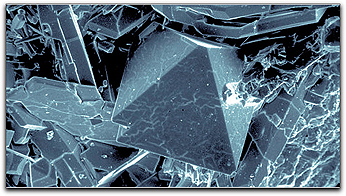
dusty shock wave Not necessarily what you might think when you imagine stars, and the creation of planets, according to new observations from NASA’s Spitzer Space Telescope. Shock waves around dusty, young stars might be creating the raw materials for planets; the evidence comes in the form of tiny crystals. Spitzer detected crystals similar in make-up to quartz around young stars just beginning to form planets. The crystals, called cristobalite and tridymite, are known to reside in comets, in volcanic lava flows on Earth, and in some meteorites that land on Earth. NASA’s Spitzer Space Telescope detected quartz-like crystals called cristobalite in young planetary systems. Cristobalite, which is shown here in this magnified view, is found on Earth in volcanic lava flows. Photo courtesy of George Rossman of Caltech.

Planets are born out of swirling pancake-like disks of dust and gas that surround young stars. They start out as mere grains of dust swimming around in a disk of gas and dust, before lumping together to form full-fledged planets. During the early stages of planet development, the dust grains crystallize and adhere together, while the disk itself starts to settle and flatten. This occurs in the first millions of years of a star’s life.

Astronomers already knew that crystallized dust grains stick together to form larger particles, which later lump together to form planets. But they were surprised to find cristobalite and tridymite. What’s so special about these particular crystals? They require flash heating events, such as shock waves, to form. The findings suggest that the same kinds of shock waves that cause sonic booms from speeding jets are responsible for creating the stuff of planets throughout the universe.

“By studying these other star systems, we can learn about the very beginnings of our own planets 4.6 billion years ago,” said William Forrest of the University of Rochester, New York. “Spitzer has given us a better idea of how the raw materials of planets are produced very early on.” Forrest and University of Rochester graduate student Ben Sargent led the research, to appear in the Astrophysical Journal.

When Forrest and his colleagues used Spitzer to examine five young planet-forming disks about 400 light-years away, they detected the signature of silica crystals. Silica is made of only silicon and oxygen and is the main ingredient in glass. When melted and crystallized, it can make the large hexagonal quartz crystals often sold as mystical tokens. When heated to even higher temperatures, it can also form small crystals like those commonly found around volcanoes.
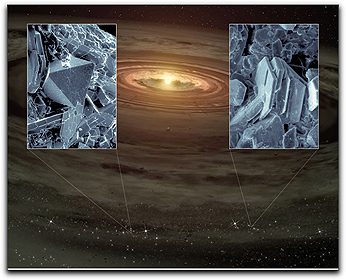
Planetary disks The crystals require temperatures as high as 1,220 Kelvin (about 1,740 degrees Fahrenheit) to form. But young planet-forming disks are only about 100 to 1,000 Kelvin (about minus 280 degrees Fahrenheit to 1,340 Fahrenheit), too cold to make the crystals. Because the crystals require heating followed by rapid cooling to form, astronomers theorized that shock waves could be the cause. Shock waves, or supersonic waves of pressure, are thought to be created in planet-forming disks when clouds of gas swirling around at high speeds collide. Some theorists think that shock waves might also accompany the formation of giant planets. NASA’s Spitzer Space Telescope has, for the first time, detected tiny quartz-like crystals sprinkled in young planetary systems. The crystals, which are types of silica minerals called cristobalite and tridymite, can be seen close-up in the black-and-white insets (cristobalite is on the left, and tridymite on the right). The main picture is an artist’s concept of a young star and its swirling disk of planet-forming materials. Image credit: NASA/JPL-Caltech

The findings are in agreement with local evidence from our own solar system. Spherical pebbles, called chondrules, found in ancient meteorites that fell to Earth are also thought to have been crystallized by shock waves in our solar system’s young planet-forming disk. In addition, NASA’s Stardust mission found tridymite minerals in comet Wild 2.

Other authors of the paper include C. Tayrien, M.K. McClure, A.R. Basu, P. Mano, Dan Watson, C.J. Bohac, K.H. Kim and J.D. Green of the University of Rochester; A Li of the University of Missouri, Columbia; E. Furlan of NASA’s Jet Propulsion Laboratory, Pasadena, California, and G.C. Sloan of Cornell University, Ithaca, New York.

JPL manages the Spitzer Space Telescope mission for NASA’s Science Mission Directorate, Washington. Science operations are conducted at the Spitzer Science Center at the California Institute of Technology, also in Pasadena. Caltech manages JPL for NASA. Spitzer’s infrared spectrograph, which made the observations, was built by Cornell University, Ithaca, New York. Its development was led by Jim Houck of Cornell. You can learn more at this site.

Filed Under: Exploration & Science Missions

Primary Sidebar

Coverage

  • Missions & Constellations
  • Business & Finance
  • Military & Defense
  • Launch
  • Software Automation & Ground Systems
  • Government & Regulation
  • Services & Applications

Most Read Stories

  • Global Shift Toward Sovereign Launch Gains Momentum Amid Geopolitical Tensions
  • SES Executive Confirms End of the 15-Year Satellite Era
  • SpaceX Unveils ‘Stargaze’ System to Revolutionize Space Traffic Management
  • AST SpaceMobile Encapsulates BlueBird 7 Satellite for Inaugural New Glenn Mission
  • SpaceX Prepares for Record-Breaking $1.75 Trillion Confidential IPO Filing in March

Secondary Sidebar

Footer


Satnews is a leading provider of satellite news, events, publications, research and other satellite industry information in both commercial and military enterprises worldwide.

Stories By Category

  • Business & Finance
  • Government & Regulation
  • Launch
  • Military & Defense
  • Missions & Constellations
  • Services & Applications
  • Software Automation & Ground Systems
  • Spectrum & Licensing
  • Startups & NewSpace Business

About Us

  • Leadership & Editorial Team
  • SatNews History
  • Free Satnews Subscription
  • SatNews Events
  • Magazines

Navigation

  • Latest Stories
  • Magazines
  • Events
  • Contact
  • Cookie & Privacy Policy for Satnews

We use cookies to ensure that we give you the best experience on our website. If you continue to use this site we will assume that you are happy with it.
x
Sign up Now (For Free)
Access daily or weekly satellite news updates covering all aspects of the commercial and military satellite industry.
Invalid email address
Notify Me Regarding ( At least one ):
We value your privacy and will not sell or share your email or other information with any other company. You may also unsubscribe at anytime.

Click Here to see our full privacy policy.
Thanks for subscribing!