

On May 18, 2026, Dublin-based Space AI pioneer Ubotica Technologies and Texas-based NOVI Space announced a strategic partnership to deliver real-time, edge-processed intelligence directly from Earth orbit.
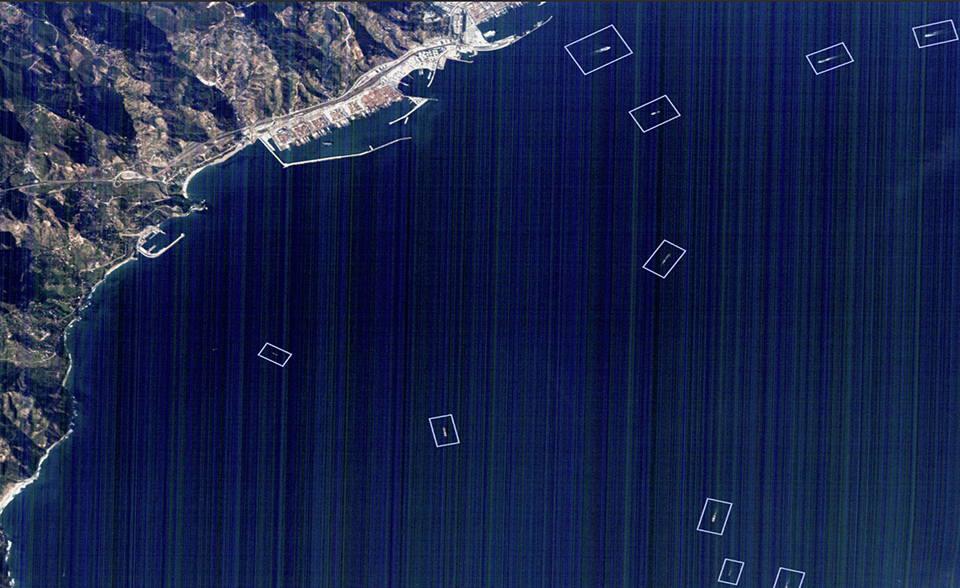
The collaboration integrates Ubotica’s flight-proven SPACE:AI software infrastructure with NOVI Space’s GENIE smart-satellite constellation and hardware platform, fundamentally transforming orbital assets from passive data gatherers into autonomous intelligent agents.
Transitioning from Traditional Earth Observation to Live Geo-Intelligence
Traditional Earth observation missions operate on a “bent-pipe” model: satellites capture voluminous raw optical, hyperspectral, or radar imagery and store it until the spacecraft passes over a designated ground station teleport. This legacy pipeline introduces processing bottlenecks, with download, decoding, and data analysis timelines typically measured in hours or days.
The Ubotica-NOVI partnership addresses this latency by moving the computer vision and machine learning layers directly to the space edge. Utilizing NOVI’s TRL-9 rated SP240 onboard computer and multi-sensor satellite bus, Ubotica’s SPACE:AI algorithms process raw sensor data in orbit, generating actionable intelligence within 90 seconds of image acquisition. By resolving the data stream in space, the system downlinks only the extracted insights—the critical “needles” rather than the entire raw “haystack”—drastically reducing downrange bandwidth costs, processing overhead, and response latency.
Tactical Maritime Interdiction and “Dark Vessel” Tracking
A primary operational focus for the combined platform is space-to-seabed maritime surveillance and situational awareness. In a recent operational proof-of-concept conducted over a congested Singapore shipping channel, the integrated edge-processing platform successfully analyzed hundreds of maritime targets in under two minutes.
The onboard system cross-referenced visual and radar imagery to automatically flag “dark vessels”—ships that intentionally deactivate their terrestrial Automatic Identification System (AIS) transponders to mask illegal fishing, smuggling, or sanctions evasion. Instead of downlinking terabytes of uncompressed marine imagery, the satellite transmitted a localized, low-bandwidth alert packet directly to tactical maritime units, demonstrating the platform’s capacity for time-critical national security and defense applications.
Technical Synergy and Full-Stack Constellation Open Access
The collaboration represents a full-stack hardware and software convergence optimized for rapid deployment.
- Software Layer: Ubotica’s SPACE:AI functions akin to an orbital application ecosystem, allowing developers to securely upload and iterate AI models via automated cloud pipelines.
- Hardware Layer: NOVI’s GENIE multi-sensor 3U and 6U nanosatellite buses provide the localized power, thermal shielding, and processing cores required to execute compute-heavy neural network inference in a harsh radiation environment.
- Operational Model: The open-access nature of the GENIE platform allows commercial enterprises, civil research organizations, and defense agencies to deploy custom, user-defined intelligence tasks without building proprietary space infrastructure.
“Our collaboration with NOVI brings more AI-enabled Earth observation capacity into orbit,” said Dr. Aubrey Dunne, co-founder and Chief Technology Officer of Ubotica. “By combining SPACE:AI with GENIE’s onboard compute, we’re shifting satellites from data collectors to intelligent agents, delivering insights in minutes rather than days. That capability underpins our live maritime intelligence service and unlocks new operational models for time-critical surveillance.”
Alignment with Distributed Autonomous Network Initiatives
The partnership with NOVI Space develops alongside Ubotica’s ongoing commitments to major civil space programs. In April 2026, Ubotica partnered with NASA’s Jet Propulsion Laboratory and Open Cosmos on the Flight Demonstration of Federated Autonomous Measurement (FAME) mission.
FAME will link more than 50 spacecraft into a coordinated, intelligent satellite network to dynamically observe real-time planetary events such as volcanic eruptions and wildfires. The integration of NOVI’s GENIE constellation into this growing ecosystem expands the raw processing volume available to operators, moving the space industry closer to a standardized model of decentralized, collaborative orbital intelligence.
