

On Tuesday, March 17, 2026, the U.S. Space Force’s Space Systems Command (SSC) awarded a $446.8 million Ground Management and Integration (GMI) agreement to Kratos Technology & Training Solutions, Inc.
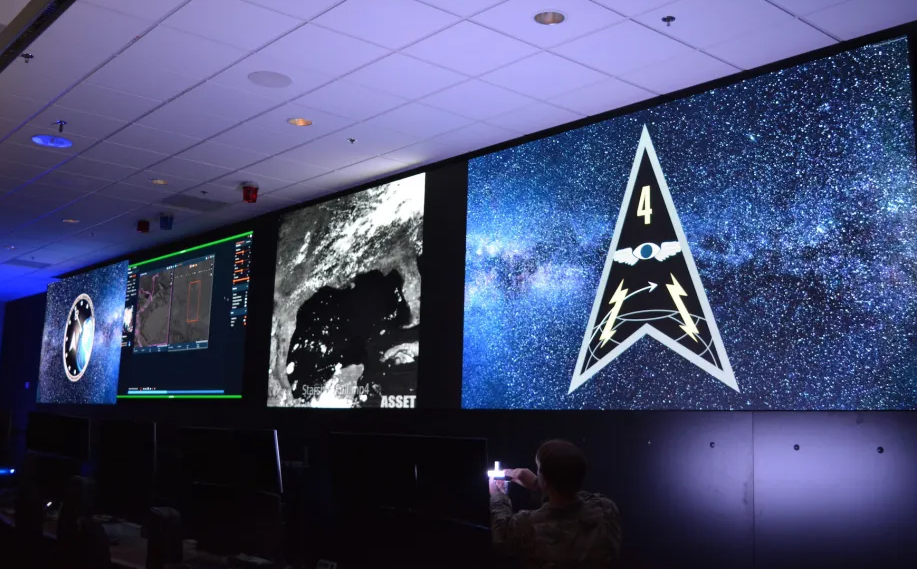
The award, structured as a cost-reimbursement Other Transaction Authority (OTA) agreement, will support launch and operations for both Epoch 1 and Epoch 2 of the Resilient Missile Warning and Tracking (MWT) architecture in Medium Earth Orbit (MEO).
The GMI agreement is designed to provide a unified command and control (C2) framework to facilitate the rapid integration of space vehicles and ensure the delivery of real-time infrared sensing data to national decision-makers.
The Proliferated MEO Architecture
The award is a critical pillar of the Space Force’s transition from legacy, high-value Geostationary (GEO) assets toward a more resilient, proliferated constellation in MEO. Managed under SSC’s System Delta 84 (SYD 84), the Resilient MWT program is part of a broader “layered defense” strategy that integrates with Low Earth Orbit (LEO) tracking layers from the Space Development Agency (SDA).
The Epoch-based acquisition strategy allows for the incremental delivery of capabilities. While Millennium Space Systems is building the initial 12 satellites for Epoch 1, BAE Systems (formerly Ball Aerospace) recently completed the Preliminary Design Review (PDR) for the 10-satellite Epoch 2 constellation in March 2026. Kratos will serve as the horizontal integrator, ensuring these diverse space segments operate within a singular ground management architecture.
Agile Acquisition and Vendor Diversity
The use of Middle Tier of Acquisition (MTA) authorities for the GMI award reflects the Space Force’s intent to outpace emerging threats, specifically maneuvering hypersonic glide vehicles and fractional orbital bombardment systems. By awarding the ground segment to Kratos as an independent integrator, the SSC aims to avoid “vendor lock” and ensure that future Epochs from different satellite manufacturers can be onboarded seamlessly.
“The Resilient MWT MEO program truly exemplifies recent acquisition reforms. We are awarding competitive contracts to multiple vendors to mitigate against any future sustainment vendor lock issues and utilizing the Middle Tier of Acquisition for speed and agility to rapidly field capabilities and keep pace with emerging threats,” said USSF Col. Michael Rupp, SYD 84 system program director.
From Launch to Real-Time Data
The GMI agreement focuses on the rapid acquisition and integration of infrared sensing technology into the broader national missile defense network. Key technical responsibilities include:
- Launch Support: Coordinating ground systems for the first Epoch 1 launches scheduled for late 2026.
- Operations & Integration: Facilitating Command and Control (C2) for multi-vendor constellations.
- Data Processing: Integrating MEO tracking data with the broader National Space Defense Center (NSDC) and tactical warfighter links.
- Resiliency: Developing a ground architecture that remains operational even if specific nodes are contested or degraded.
Timeline to Full Operational Capability (FOC) 2031
With the GMI agreement in place, the program is moving toward a series of high-priority launch milestones. The first Epoch 1 satellites are expected to reach orbit in the second half of 2026, providing the initial capability for tracking dim, maneuvering hypersonic threats.
The full Epoch 2 constellation is slated for deployment starting in 2029, with the Resilient MWT MEO architecture expected to achieve independent Full Operational Capability (FOC) by 2031. This timeline ensures a continuous overlap and eventual replacement of the legacy Space-Based Infrared System (SBIRS).
