

On Tuesday, March 17, 2026, Telesat (Nasdaq and TSX: TSAT) announced a major strategic update to its Lightspeed Low Earth Orbit (LEO) constellation, adding 500 MHz of military Ka-band (Mil-Ka) spectrum to its initial 156 satellites. The decision, revealed during the company’s Q4 2025 earnings call, targets the surging demand from NATO and allied defense departments for secure, sovereign, and interoperable communications.
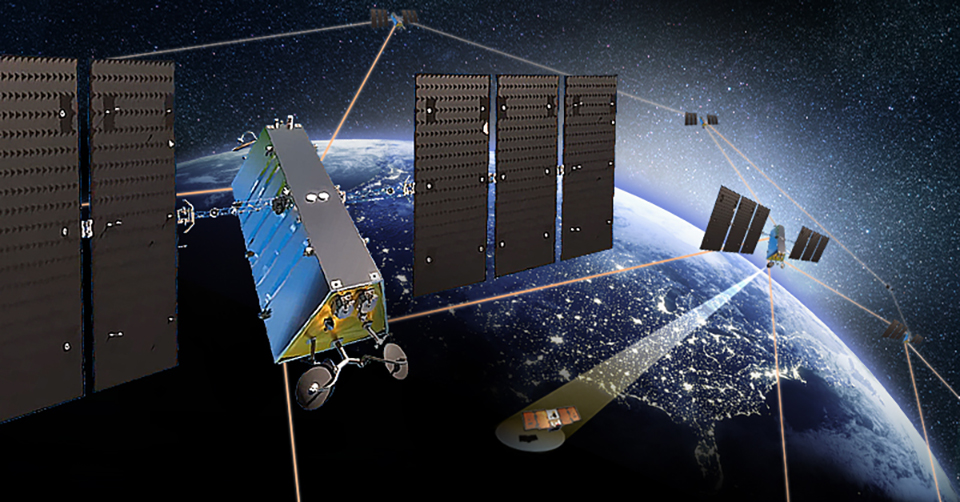
The reallocation represents 25% of the total spectrum on which Lightspeed will operate. Because the Mil-Ka frequencies are immediately adjacent to the constellation’s existing commercial Ka-band, Telesat confirmed the change will not impact the deployment schedule and carries a modest incremental cost of approximately $25 million—less than 0.5% of the total program budget.
Strategic Pivot to Sovereign Defense
The move signals Telesat’s aggressive pursuit of the “Sovereign-Commercial Nexus,” where commercial LEO networks are increasingly integrated into national defense architectures. This shift is highlighted by Telesat Government Solutions’ recent award in February 2026 under the U.S. Missile Defense Agency’s $151 billion SHIELD IDIQ program.
By dedicating 500 MHz to Mil-Ka, Telesat is positioning Lightspeed as a LEO-based alternative or supplement to traditional Geostationary (GEO) Mil-Ka systems, which allied governments have historically relied upon for mission-critical command and control.
Technical Implementation and Hardware Compatibility
The integration of Mil-Ka spectrum will specifically replace an equivalent amount of commercial Ka-band on the user link, while the gateway links remain unaffected.
- Spectrum Reallocation: 500 MHz of dedicated Mil-Ka.
- Compatibility: Designed for interoperability with national networks, enabling coalition partners to maintain shared mission-critical connectivity.
- User Terminals: Military-compatible terminals, including the ALL.SPACE multi-orbit terminals currently under collaboration, will be available concurrently with commercial hardware at service commencement.
Schedule Adjustments and ASIC Development
Despite the spectrum change not affecting the timeline, Telesat did announce a slight delay in its overall global commercial service launch. Initially expected by late 2027, the company now targets Q1 2028 for full global service.
The three-month shift is attributed to the development timeline for the SatixFy Application-Specific Integrated Circuits (ASICs) that power the satellite payloads. Following MDA Space’s acquisition of SatixFy’s digital payload division, Telesat noted that MDA has significantly bolstered the technical resources available to finalize the chip design.
“The addition of Mil-Ka to Telesat Lightspeed will result in a substantial increase to the current global supply of Mil-Ka capacity,” said Dan Goldberg, Telesat’s President and CEO. “By integrating it with the already highly advanced Telesat Lightspeed network, the Telesat Mil-Ka capability is expected to have meaningfully superior performance characteristics relative to the Mil-Ka platforms that allied governments have historically relied upon.”
Timeline to Orbit
The launch cadence for Telesat Lightspeed remains on track for a high-intensity deployment cycle:
- December 2026: Launch of the first two production satellites.
- Throughout 2027: High-cadence launch schedule with a target of 96 satellites in orbit by year-end.
- Q1 2028: Commencement of full global commercial and military service.
