

On Wednesday, March 18, 2026, industry data and recent earnings reports underscore a fundamental transformation in the Intelligence, Surveillance, and Reconnaissance (ISR) sector. The traditional model of orbital data collection is being superseded by a “latency-first” architecture, where the competitive moat is no longer the resolution of the image, but the speed of the delivered insight.
As conflicts in Eastern Europe and elsewhere demonstrate, ISR latency—the time between a tasking request and an actionable battlefield decision—is now the primary metric for operational success. Commercial providers are increasingly being judged on their ability to collapse this timeline from hours to minutes.
The Systemic Moat: Latency as the Product
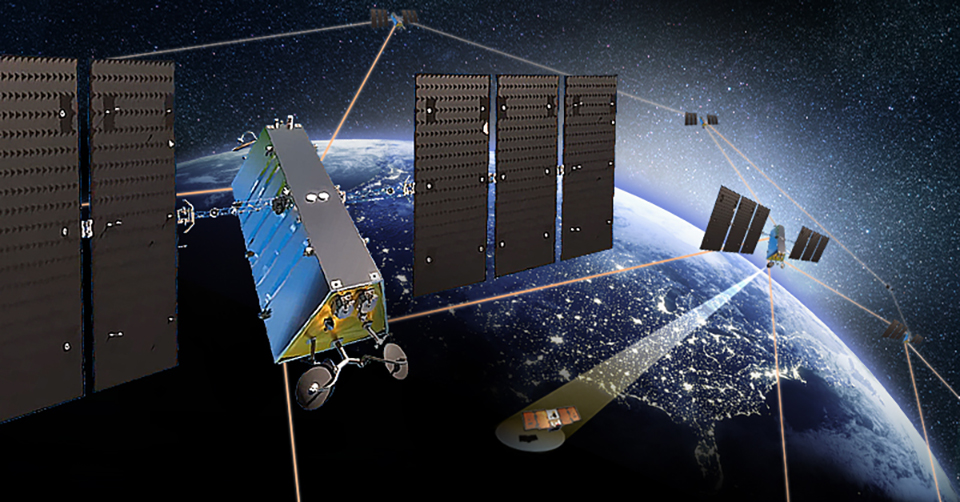
Latency is a systemic challenge that requires optimization across the entire satellite architecture, from in-orbit processing to mesh-network transport layers.
BlackSky Technology has emerged as a leader in this transition. In a statement released Tuesday, March 17, 2026, BlackSky reported record 2025 revenue of $107 million, driven by a 32% surge in backlog to $345 million. The company’s competitive advantage was further validated on March 12, when its latest Gen-3 satellite began delivering very high-resolution imagery within 12 hours of launch, entering commercial operations in just three weeks.
Similarly, Planet Labs reported record Q3 2025 revenues of $81.3 million, with its defense and intelligence sector revenue accelerating to 70% year-over-year growth. Planet’s focus on daily global indexing, combined with its recent integration of NVIDIA-accelerated computing from space to ground, aims to compress the automated identification of battlefield anomalies.
From Standalone Assets to the Actionable Intelligence Stack
The defense market is pivoting toward “Edge-Enabled ISR,” an architectural model where AI and Machine Learning (ML) processing occurs on the satellite bus rather than in a centralized cloud.
This is leading to the rise of the Actionable Intelligence Stack, which integrates four distinct layers:
- Sensing: Diversified constellations (Optical, SAR, RF) from firms like ICEYE, Umbra, and Capella Space.
- Transport: Low-latency data transport layers, such as the U.S. Space Development Agency’s (SDA) Proliferated Warfighter Space Architecture (PWSA) and commercial mesh networks like Starlink.
- Processing: AI/ML analytics at the tactical edge.
- Delivery: Direct integration into battlefield systems via APIs and dashboards.
On March 4, 2026, the SDA released an updated Broad Agency Announcement (BAA) specifically seeking “leap-ahead” improvements in novel architecture concepts and technologies for future PWSA tranches. This indicates a sustained government appetite for systems that can automatically detect, track, and provide targeting data for hyper-velocity threats.
Compressing the Decision Loop
The role of the human analyst is becoming a potential bottleneck in the modern decision loop. To solve this, integrators like Palantir Technologies and Anduril Industries are developing automated workflows that ingest multi-source ISR data to trigger alerts in seconds.
The strategic question for the next generation of ISR remains the location of the intelligence: Should AI sit in orbit, at the tactical edge, or in the cloud? While cloud processing offers the most compute power, in-orbit processing offers the lowest latency, creating a “processing at the source” mandate for new military constellations.
“We are pushing the limits of real-time, space-based intelligence to deliver critical insights at the speed of relevance for the vital missions of the U.S. government and allied partners throughout the world,” said Brian O’Toole, CEO of BlackSky.
Outlook for 2026-2027
As the market moves toward vertically integrated ISR ecosystems, companies that control multiple layers of the Actionable Intelligence Stack are gaining a decisive advantage. L3Harris and Anduril are positioning themselves as end-to-end integrators, effectively turning “raw data” into “operational decisions” before the data even reaches a traditional ground station.
