

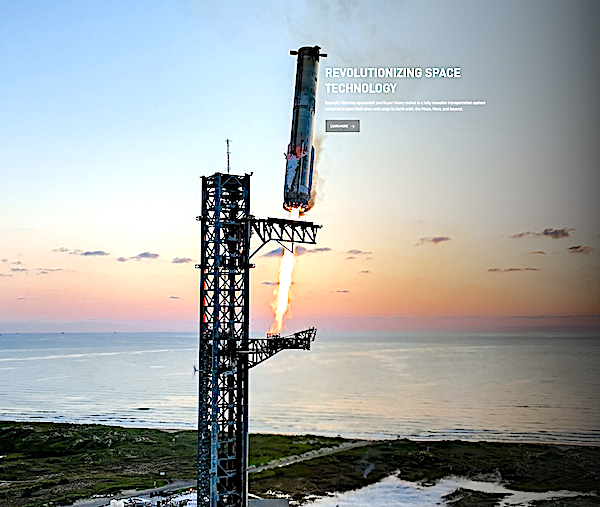
While the weather was not good the cause of the delay of the the tenth flight test of Starship was as SpaceX explains, “to allow time to troubleshoot an issue with ground systems.” SpaceX is now preparing to launch as soon as Monday, August 25. The launch window will open at 6:30 p.m. CT.
A live webcast of the flight test will begin about 30 minutes before liftoff, which you can watch on X @SpaceX. You can also watch the webcast on the X TV app. As is the case with all developmental testing, the schedule is dynamic and likely to change, so be sure to check in here and stay tuned to our X account for updates.
After completing the investigations into the loss of Starship on its ninth flight test and the Ship 36 static fire anomaly, hardware and operational changes have been made to increase reliability. You can read the full technical summary of the investigations here.
The upcoming flight will continue to expand the operating envelope on the Super Heavy booster, with multiple landing burn tests planned. It will also target similar objectives as previous missions, including Starship’s first payload deployment and multiple reentry experiments geared towards returning the upper stage to the launch site for catch.
The booster on this flight test is attempting several flight experiments to gather real-world performance data on future flight profiles and off-nominal scenarios. The Super Heavy booster will attempt these experiments while on a trajectory to an offshore landing point in the Gulf of America and will not return to the launch site for catch.
Following stage separation, the booster will flip in a controlled direction before initiating its boostback burn. This maneuver was demonstrated for the first time on Flight 9 and requires less propellant to be held in reserve, enabling the use of more propellant during ascent to enable additional payload mass to orbit.
The primary test objectives for the booster will be focused on its landing burn and will use unique engine configurations. One of the three center engines used for the final phase of landing will be intentionally disabled to gather data on the ability for a backup engine from the middle ring to complete a landing burn. The booster will then transition to only two center engines for the end of the landing burn, entering a full hover while still above the ocean surface, followed by shutdown and drop into the Gulf of America.
The Starship upper stage will again target multiple in-space objectives, including the deployment of eight Starlink simulators, similar in size to next-generation Starlink satellites. The Starlink simulators will be on the same suborbital trajectory as Starship and are expected to demise upon entry. A relight of a single Raptor engine while in space is also planned.
The flight test includes several experiments focused on enabling Starship’s upper stage to return to the launch site. A significant number of tiles have been removed from Starship to stress-test vulnerable areas across the vehicle during reentry. Multiple metallic tile options, including one with active cooling, will test alternative materials for protecting Starship during reentry. On the sides of the vehicle, functional catch fittings are installed and will test the fittings’ thermal and structural performance, along with a section of the tile line receiving a smoothed and tapered edge to address hot spots observed during reentry on Starship’s sixth flight test. Starship’s reentry profile is designed to intentionally stress the structural limits of the upper stage’s rear flaps while at the point of maximum entry dynamic pressure.
Flight tests continue to provide valuable learnings to inform the design of the next generation Starship and Super Heavy vehicles. With production ramping up inside Starfactory at Starbase alongside new launch and test infrastructure actively being built in Texas and Florida, Starship is poised to continue iterating towards a rapidly and fully reusable launch system.
Starship’s tenth flight test plans for Sunday but weather could cause delay
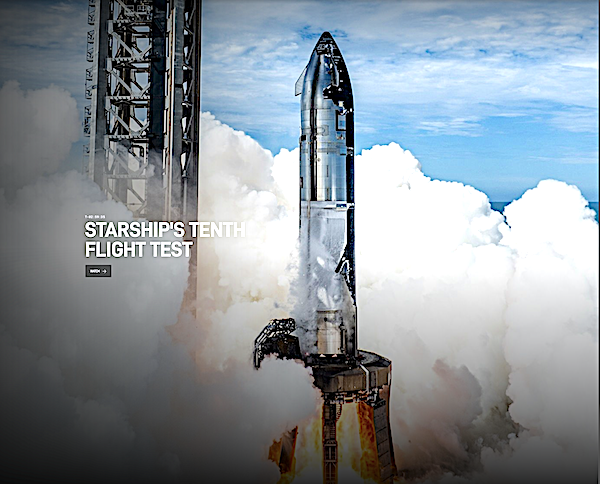
The tenth flight test of Starship is preparing to launch as soon as Sunday, August 24. The launch window will open at 6:30 p.m. CT.
According to weather officials, there’s a 45% chance of favorable weather conditions at the time of the launch. The forecast calls for a temperature of 81°F, light rain, 100% cloud cover, a wind speed of 6mph and 0.82in of rain.
A live webcast of the flight test will begin about 30 minutes before liftoff, which you can watch on X @SpaceX. You can also watch the webcast on the X TV app. As is the case with all developmental testing, the schedule is dynamic and likely to change, so be sure to check in here and stay tuned to our X account for updates.
After completing the investigations into the loss of Starship on its ninth flight test and the Ship 36 static fire anomaly, hardware and operational changes have been made to increase reliability. You can read the full technical summary of the investigations here.
The upcoming flight will continue to expand the operating envelope on the Super Heavy booster, with multiple landing burn tests planned. It will also target similar objectives as previous missions, including Starship’s first payload deployment and multiple reentry experiments geared towards returning the upper stage to the launch site for catch.
The booster on this flight test is attempting several flight experiments to gather real-world performance data on future flight profiles and off-nominal scenarios. The Super Heavy booster will attempt these experiments while on a trajectory to an offshore landing point in the Gulf of America and will not return to the launch site for catch.
Following stage separation, the booster will flip in a controlled direction before initiating its boostback burn. This maneuver was demonstrated for the first time on Flight 9 and requires less propellant to be held in reserve, enabling the use of more propellant during ascent to enable additional payload mass to orbit.
The primary test objectives for the booster will be focused on its landing burn and will use unique engine configurations. One of the three center engines used for the final phase of landing will be intentionally disabled to gather data on the ability for a backup engine from the middle ring to complete a landing burn. The booster will then transition to only two center engines for the end of the landing burn, entering a full hover while still above the ocean surface, followed by shutdown and drop into the Gulf of America.
The Starship upper stage will again target multiple in-space objectives, including the deployment of eight Starlink simulators, similar in size to next-generation Starlink satellites. The Starlink simulators will be on the same suborbital trajectory as Starship and are expected to demise upon entry. A relight of a single Raptor engine while in space is also planned.
The flight test includes several experiments focused on enabling Starship’s upper stage to return to the launch site. A significant number of tiles have been removed from Starship to stress-test vulnerable areas across the vehicle during reentry. Multiple metallic tile options, including one with active cooling, will test alternative materials for protecting Starship during reentry. On the sides of the vehicle, functional catch fittings are installed and will test the fittings’ thermal and structural performance, along with a section of the tile line receiving a smoothed and tapered edge to address hot spots observed during reentry on Starship’s sixth flight test. Starship’s reentry profile is designed to intentionally stress the structural limits of the upper stage’s rear flaps while at the point of maximum entry dynamic pressure.
Flight tests continue to provide valuable learnings to inform the design of the next generation Starship and Super Heavy vehicles. With production ramping up inside Starfactory at Starbase alongside new launch
SpaceX prepares Starship’s 10th launch on Sunday incorporating changes for reliability
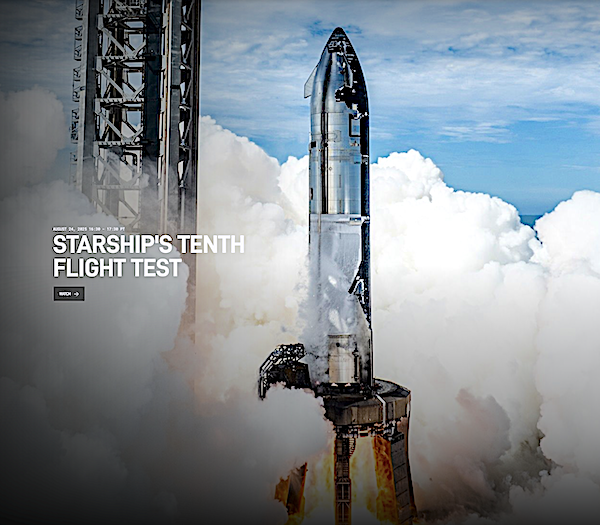
The tenth flight test of Starship is preparing to launch as soon as Sunday, August 24. The launch window will open at 6:30 p.m. CT.
A live webcast of the flight test will begin about 30 minutes before liftoff, which you can watch on X @SpaceX. You can also watch the webcast on the X TV app. As is the case with all developmental testing, the schedule is dynamic and likely to change, so be sure to check in here and stay tuned to our X account for updates.
After completing the investigations into the loss of Starship on its ninth flight test and the Ship 36 static fire anomaly, hardware and operational changes have been made to increase reliability. You can read the full technical summary of the investigations here.
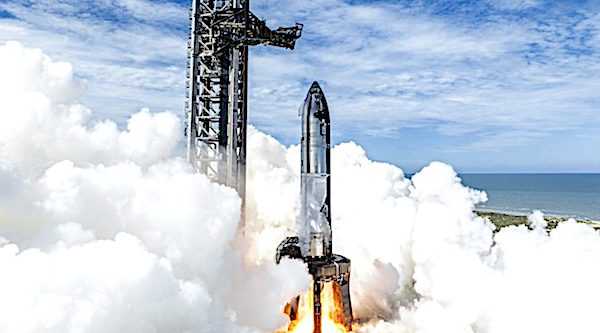
The upcoming flight will continue to expand the operating envelope on the Super Heavy booster, with multiple landing burn tests planned. It will also target similar objectives as previous missions, including Starship’s first payload deployment and multiple reentry experiments geared towards returning the upper stage to the launch site for catch.
The booster on this flight test is attempting several flight experiments to gather real-world performance data on future flight profiles and off-nominal scenarios. The Super Heavy booster will attempt these experiments while on a trajectory to an offshore landing point in the Gulf of America and will not return to the launch site for catch.
Following stage separation, the booster will flip in a controlled direction before initiating its boostback burn. This maneuver was demonstrated for the first time on Flight 9 and requires less propellant to be held in reserve, enabling the use of more propellant during ascent to enable additional payload mass to orbit.
The primary test objectives for the booster will be focused on its landing burn and will use unique engine configurations. One of the three center engines used for the final phase of landing will be intentionally disabled to gather data on the ability for a backup engine from the middle ring to complete a landing burn. The booster will then transition to only two center engines for the end of the landing burn, entering a full hover while still above the ocean surface, followed by shutdown and drop into the Gulf of America.
The Starship upper stage will again target multiple in-space objectives, including the deployment of eight Starlink simulators, similar in size to next-generation Starlink satellites. The Starlink simulators will be on the same suborbital trajectory as Starship and are expected to demise upon entry. A relight of a single Raptor engine while in space is also planned.
The flight test includes several experiments focused on enabling Starship’s upper stage to return to the launch site. A significant number of tiles have been removed from Starship to stress-test vulnerable areas across the vehicle during reentry. Multiple metallic tile options, including one with active cooling, will test alternative materials for protecting Starship during reentry. On the sides of the vehicle, functional catch fittings are installed and will test the fittings’ thermal and structural performance, along with a section of the tile line receiving a smoothed and tapered edge to address hot spots observed during reentry on Starship’s sixth flight test. Starship’s reentry profile is designed to intentionally stress the structural limits of the upper stage’s rear flaps while at the point of maximum entry dynamic pressure.
Flight tests continue to provide valuable learnings to inform the design of the next generation Starship and Super Heavy vehicles. With production ramping up inside Starfactory at Starbase alongside new launch and test infrastructure actively being built in Texas and Florida, Starship is poised to continue iterating towards a rapidly and fully reusable launch system.
SpaceX prepares Starship’s 10th launch on Sunday incorporating changes for reliability
The tenth flight test of Starship is preparing to launch as soon as Sunday, August 24. The launch window will open at 6:30 p.m. CT.
A live webcast of the flight test will begin about 30 minutes before liftoff, which you can watch on X @SpaceX. You can also watch the webcast on the X TV app. As is the case with all developmental testing, the schedule is dynamic and likely to change, so be sure to check in here and stay tuned to our X account for updates.
After completing the investigations into the loss of Starship on its ninth flight test and the Ship 36 static fire anomaly, hardware and operational changes have been made to increase reliability. You can read the full technical summary of the investigations here.
The upcoming flight will continue to expand the operating envelope on the Super Heavy booster, with multiple landing burn tests planned. It will also target similar objectives as previous missions, including Starship’s first payload deployment and multiple reentry experiments geared towards returning the upper stage to the launch site for catch.
The booster on this flight test is attempting several flight experiments to gather real-world performance data on future flight profiles and off-nominal scenarios. The Super Heavy booster will attempt these experiments while on a trajectory to an offshore landing point in the Gulf of America and will not return to the launch site for catch.
Following stage separation, the booster will flip in a controlled direction before initiating its boostback burn. This maneuver was demonstrated for the first time on Flight 9 and requires less propellant to be held in reserve, enabling the use of more propellant during ascent to enable additional payload mass to orbit.
The primary test objectives for the booster will be focused on its landing burn and will use unique engine configurations. One of the three center engines used for the final phase of landing will be intentionally disabled to gather data on the ability for a backup engine from the middle ring to complete a landing burn. The booster will then transition to only two center engines for the end of the landing burn, entering a full hover while still above the ocean surface, followed by shutdown and drop into the Gulf of America.
The Starship upper stage will again target multiple in-space objectives, including the deployment of eight Starlink simulators, similar in size to next-generation Starlink satellites. The Starlink simulators will be on the same suborbital trajectory as Starship and are expected to demise upon entry. A relight of a single Raptor engine while in space is also planned.
The flight test includes several experiments focused on enabling Starship’s upper stage to return to the launch site. A significant number of tiles have been removed from Starship to stress-test vulnerable areas across the vehicle during reentry. Multiple metallic tile options, including one with active cooling, will test alternative materials for protecting Starship during reentry. On the sides of the vehicle, functional catch fittings are installed and will test the fittings’ thermal and structural performance, along with a section of the tile line receiving a smoothed and tapered edge to address hot spots observed during reentry on Starship’s sixth flight test. Starship’s reentry profile is designed to intentionally stress the structural limits of the upper stage’s rear flaps while at the point of maximum entry dynamic pressure.
Flight tests continue to provide valuable learnings to inform the design of the next generation Starship and Super Heavy vehicles. With production ramping up inside Starfactory at Starbase alongside new launch and test infrastructure actively being built in Texas and Florida, Starship is poised to continue iterating towards a rapidly and fully reusable launch system.
