

The automotive landscape is undergoing a significant transformation, with the vehicle emerging as a central, intelligent node in a broader connected ecosystem.
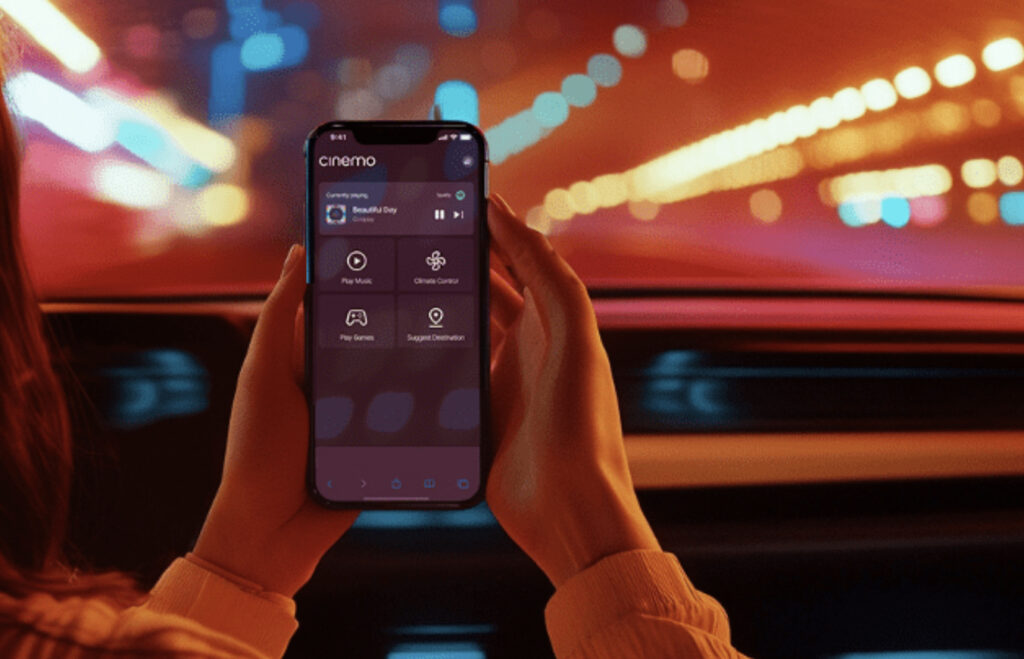
According to Carl Hibbert, Director of Research at Futuresource Consulting, the industry is currently turning “scattered signals into a clear direction of travel,” a shift led by Cinemo’s approach to redefining the in-car experience.
By integrating embedded performance with cloud-native intelligence, Cinemo is moving beyond traditional infotainment to create a “connected cabin” that serves as a high-performance entertainment hub, rivaling premium home setups.
Agentic AI and the Intelligent Cockpit
A core pillar of this evolution is the integration of Agentic AI into the vehicle. Unlike standard voice commands, these AI-driven systems are designed to understand and adapt to the specific needs of drivers and passengers in real time.
- Hyper-Personalization: The system orchestrates media discovery and recommendations based on the occupants’ preferences, moods, and real-time conditions.
- Context-Awareness: AI-powered platforms bridge the gap between home and car, ensuring a continuous digital life where routines and content move seamlessly across environments.
- Efficient Onboarding: New features facilitate collaborative trip planning and effortless device synchronization, making every interaction within the vehicle intuitive and personal.
Seamless Continuity: The Car-to-Home Bridge
The vision for 2026 centers on the concept of “digital life in motion.” This involves breaking down the barriers between different environments—car, home, and personal devices—to provide a synchronized audio and media experience.
- Multi-Device Interoperability: Cinemo’s ecosystem allows for the synchronization of audio across various platforms, ensuring that a podcast or playlist started in the kitchen continues without interruption once the driver enters the vehicle.
- Immersive In-Car Gaming: By treating the vehicle as a next-generation entertainment platform, Cinemo is enabling multi-user gaming experiences that leverage the car’s high-fidelity audio systems and multiple screens.
- Secure Car-to-Home Tech: As vehicles become increasingly connected to smart homes, the industry is focusing on balancing increased functionality with robust data safety and privacy protocols.
Mercedes-Benz: The AI-Driven Hyperscreen Experience
In the 2026 Mercedes-Benz lineup, including the all-new electric GLC and CLA models, the Cinemo-powered MBUX (Mercedes-Benz User Experience) utilizes Agentic AI to manage the massive 56-inch Hyperscreen and independent rear-seat displays.
- Predictive Personalization: The system uses “zero-layer” AI to anticipate what each passenger wants to watch or listen to based on the time of day, route, and historical preferences. For example, if a rear-seat passenger frequently watches specific Sony Pictures content via the integrated RIDEVU platform, the system will pre-load recommendations as soon as they enter the vehicle.
- Independent Audio Zones: Cinemo’s Premium Audio extension allows for the creation of distinct “acoustic bubbles.” Rear-seat passengers can enjoy high-fidelity 3D audio via Dolby Atmos through their own headsets or dedicated seat-integrated speakers, while the driver remains undisturbed or listens to separate navigation cues.
- Shared Viewing and Gaming: The platform enables “lip-synchronized” shared viewing across all screens. If a family wants to watch a movie together during an EV charging stop, the AI ensures the video and audio are perfectly aligned across the Hyperscreen and multiple rear-seat tablets, even if some are “brought-in” personal devices.
Renault: Enhanced Video in the All-New Filante
Renault has also expanded its partnership with Cinemo to enhance the digital media experience in its latest models, including the all-new Filante. This integration focuses on maximizing the utility of the vehicle’s high-resolution displays for long-distance travel.
- BYOD (Bring Your Own Device) Integration: The Renault system utilizes the Cinemo CARS Connect Suite to allow passengers to seamlessly “project” content from their smartphones to the car’s built-in screens without complex pairing apps. This is particularly effective for rear-seat passengers who want to use the vehicle’s superior sound system for their own personal streaming accounts.
- Zero-Effort Onboarding: The AI-capable platform recognizes passenger devices via biometric or proximity sensing, automatically adjusting climate control, seat position, and media presets to match the individual’s profile as they sit down.
- Collaborative Control: Passengers can use their own devices to control vehicle functions such as HVAC or navigation destinations, reducing the need for the driver to manage these tasks and turning the cabin into a truly collaborative space.
The Evolution of the “Intelligent Cockpit”
Beyond simple playback, the 2026 Cinemo CARS architecture is designed to be “future-proof” through the Cinemo ICO Agent Store. This allows OEMs to deploy new AI agents—such as specialized gaming coaches or interactive travel guides—via over-the-air (OTA) updates. By treating the cabin as a flexible software platform, Mercedes-Benz and Renault are ensuring that their vehicles’ entertainment capabilities evolve as quickly as consumer electronics, maintaining the vehicle’s status as a premium tech hub throughout its lifespan.
Would you like me to research the specific data privacy protocols Cinemo has implemented for its 2026 “Car-to-Home” link to ensure that AI agents don’t inadvertently share sensitive home security data with the vehicle’s public cloud?
Scaling the Software-Defined Vehicle (SDV)
The shift toward software-defined vehicles is moving from the experimental phase into full industrialization. This allows automotive OEMs to integrate premium services, such as native Spotify support or high-end video streaming, across their entire fleets with significantly faster development cycles.
By focusing on software scalability and life-cycle management, Cinemo enables vehicles to evolve through over-the-air (OTA) updates, ensuring that the entertainment hub remains current with the latest apps and AI capabilities throughout the car’s lifespan. This transition positions the vehicle not just as a mode of transport, but as a premium, adaptive space for living and entertainment.
