

New historical analysis by Dwayne Day in The Space Review provides a rare look into the secretive relationship between the National Reconnaissance Office and the early development of the Space Shuttle in 1976. Newly declassified documents indicate that while NASA promoted the Shuttle as a universal launch platform, the intelligence community remained deeply skeptical of abandoning its proven fleet of expendable rockets, such as the Titan III.
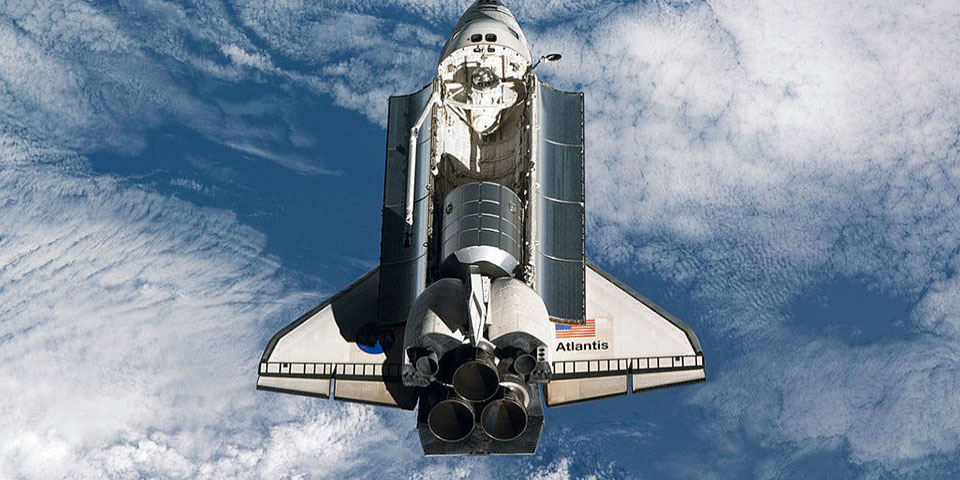
The National Reconnaissance Office was particularly concerned that the Shuttle’s design requirements, influenced by military needs for heavy-lift and cross-range landing capabilities, might actually compromise the security and reliability of its most sensitive spy satellites.
The HEXAGON and GAMBIT Legacy
In the mid-1970s, the National Reconnaissance Office was at the height of its film-return era, utilizing the massive HEXAGON search satellites and high-resolution GAMBIT systems. The declassified memos show that intelligence officials viewed the Shuttle as a potential single point of failure for national security. If a Shuttle fleet was grounded due to a technical mishap, the United States would lose its ability to replenish its “eyes in the sky,” a risk the intelligence community found unacceptable during the height of the Cold War. This led to a prolonged bureaucratic struggle over the maintenance of backup expendable launch vehicles, a strategy that was eventually validated following the Challenger disaster a decade later.
Engineering the Future of Reconnaissance
The 1976 documents also shed light on how the Space Shuttle’s massive payload bay was specifically sized to accommodate the next generation of reconnaissance satellites. The KH-11 KENNAN, the first near-real-time digital imaging satellite, was being developed during this period and achieved its first successful launch in December 1976. Designers had to ensure these school-bus-sized instruments could fit within the Shuttle’s dimensions while also maintaining the ability to launch on traditional rockets if the Shuttle program faced delays. This dual-track engineering approach laid the technical groundwork for the transition from physical film canisters to digital data transmission, which defines modern satellite intelligence.
Declassified performance metrics from this transition period reveal the revolutionary leap provided by the KH-11 KENNAN system. The satellite featured a 2.34-meter primary mirror—nearly identical in size to the later Hubble Space Telescope—allowing for a theoretical ground sample distance of approximately 15 centimeters. This electro-optical digital imaging capability eliminated the need for physical film recovery, enabling the NRO to transmit encrypted, high-resolution imagery to ground stations in near-real-time via the Satellite Data System (SDS) relay network.
Strategic Autonomy and Launch Flexibility
This historical perspective offers a direct parallel to modern trends in proliferated military space architectures. The reluctance of the 1970s intelligence community to rely on a single launch provider mirrors today’s emphasis on launch diversity and rapid reconstitution capabilities. By examining these early debates, space historians and defense analysts can better understand the origins of the United States’ current policy of maintaining multiple, redundant pathways to orbit for national security assets.
The documents further reveal that the NRO secretly studied the possibility of using the Shuttle for on-orbit servicing and film retrieval, though many of these ambitious concepts were eventually deemed too risky or expensive. These early studies represent some of the first serious investigations into satellite servicing, a field that is only now becoming a commercial and military reality in the 2020s.
