

VANDENBERG SPACE FORCE BASE, CALIF. – On Wednesday, March 11, 2026, Firefly Aerospace successfully launched its Alpha Flight 7 mission, titled “Stairway to Seven.” The Alpha rocket lifted off from Space Launch Complex 2 at 5:50 p.m. PDT, achieving a nominal orbital insertion and deploying a technology demonstrator payload for Lockheed Martin.
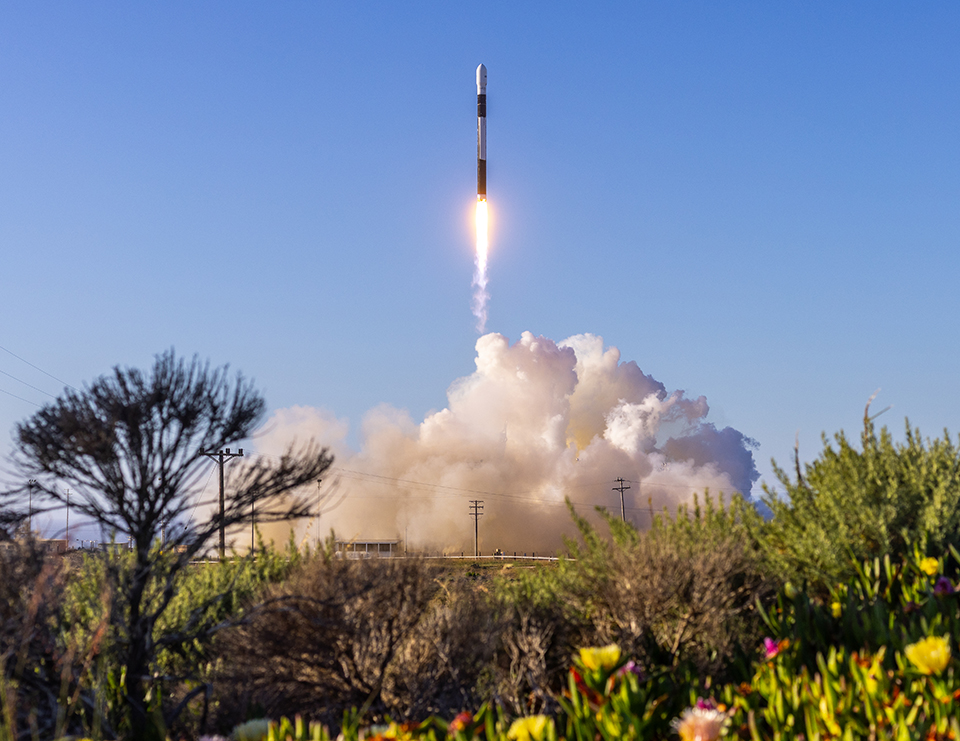
The mission marks a critical “return to flight” milestone for the company following a five-month stand-down. The pause was initiated after a September 2025 ground-test anomaly in Briggs, Texas, which was subsequently traced to minute hydrocarbon contamination in a fluid system.
Context: Process Overhaul and “Shadow Mode” Testing
Following the 2025 incident, Firefly conducted a comprehensive quality review of its engineering, production, and test integration processes. Flight 7 served as the primary validation for these improved reliability protocols.
While Flight 7 utilized the current Alpha configuration, it acted as a “pathfinder” by flying several Block II subsystems in shadow mode. This allowed the team to gain critical flight heritage for the new in-house avionics suite and an enhanced thermal protection system (TPS) before their full implementation in the upcoming Flight 8 mission.
Technical Specs: The Alpha Block II Transition
Flight 7’s success paves the way for the full Block II upgrade, which is designed to streamline manufacturability and increase vehicle performance. Key upgrades for the Block II configuration include:
- Vehicle Length: A 7-foot increase, bringing the total height to approximately 104 feet (31.7 meters).
- Avionics Suite: Transition from off-the-shelf components to a consolidated, in-house battery and avionics system shared across Firefly’s launch and orbital vehicle lines.
- Propellant Tanks: Re-optimized Liquid Oxygen (LOX) and RP-1 tank configurations to extend stage burn time.
- Structural Integrity: Enhanced carbon composite structures manufactured using Firefly’s proprietary Automated Fiber Placement (AFP) machinery in central Texas.
Operational Rationale: Responsive Space Leadership
The mission successfully deployed a demonstrator for Lockheed Martin’s LM400 satellite bus, further solidifying the multi-launch agreement between the two firms. Firefly remains the only commercial provider to have demonstrated the ability to launch a satellite to orbit with approximately 24-hour notice, a capability known as “Responsive Space.”
“Alpha Flight 7 was flawlessly executed with all mission requirements completed, further proving the resiliency, innovation, and passion of the Firefly team,” said Jason Kim, CEO of Firefly Aerospace. “We took a hard look at our processes… to ensure a higher level of quality and reliability in every Alpha we deliver and launch.”
Flight 8 in the Queue
With Flight 7 successfully in the books, the Firefly team is shifting focus to Alpha Flight 8, which will be the first vehicle to fly in the full Block II configuration. Flight 8 is currently targeted for the late second quarter of 2026.
The successful re-engagement of the Alpha program is expected to stabilize investor confidence following a series of developmental setbacks in late 2025. Firefly’s co-located engineering and manufacturing facilities in Texas are now operating at a projected cadence of one Alpha vehicle per month.
