

Targeting the operational limits of autonomous systems operating beyond continuous communications, physical artificial intelligence developer AstraQua Inc. announced on Wednesday, October 21, 2026, that it has secured a $1,274,990 Small Business Innovation Research (SBIR) Phase II contract from NASA.
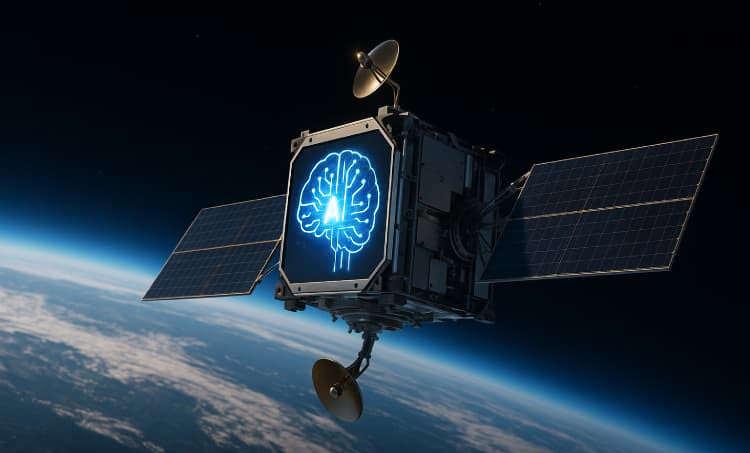
The award funds the development of AstraSense, an onboard software suite engineered to provide operational self-awareness by detecting component degradation, diagnosing emerging faults, and predicting potential failures before they compromise mission execution.
NASA SBIR Lineage and Aerospace Heritage
The Phase II award advances research initiated under a Phase I SBIR contract focused on health management and sensing technologies for sustainable aviation and autonomous platforms. AstraQua is scaling AstraSense within its modular autonomy architecture, drawing on the engineering background of founder Loay Elbasyouni, who previously served as the lead electrical engineer for NASA’s Mars Ingenuity helicopter and Perseverance rover mission systems.
The technology addresses challenges in operating autonomous platforms in edge environments where communications latency or blackouts preclude continuous cloud connectivity, aligning with aerospace initiatives in low-power artificial intelligence inference for orbital and deep-space systems.
Operational Self-Awareness and Prognostic Architecture
AstraSense shifts machine health monitoring from rigid threshold alarms to continuous predictive reasoning. Running locally on onboard processors, the software processes real-time sensor streams across electric propulsion, battery arrays, and electromechanical actuators. By evaluating early degradation signals, the system estimates remaining operational capability, providing the mission decision loop with actionable health metrics to determine whether an autonomous vehicle should continue its task, adapt its operational profile, return to base, or initiate safe recovery.
Executive Perspective on Machine Decision-Making
AstraQua leadership emphasized that operational self-awareness focuses on keeping machines functioning safely within physical constraints rather than simulating consciousness.
“A robot should know when to slow down, not just when it has broken down,” stated Loay Elbasyouni, Founder and Chief Executive Officer of AstraQua. “Using their own health to make better, safer decisions in real time ensures autonomous systems can navigate physical degradation before component failure dictates the mission outcome.”
Verification Roadmap and Multi-Domain Validation
Under the Phase II effort, AstraQua will conduct safety-focused verification and validation across hardware testbeds to benchmark fault-prediction accuracy. While the current contract targets hybrid-electric and all-electric aviation propulsion, the company is positioning the predictive health architecture across broader autonomous platforms, including autonomous planetary and lunar exploration rovers and industrial robotics.
