

On Monday, Kymeta detailed the production timeline for its KuKa 8 Series, a software-defined terminal designed to bridge the historical gap between Ku- and Ka-band satellite networks. Building on a technological breakthrough validated in June 2025, the company confirmed that the first terminal prototypes are scheduled for delivery to key customers in mid-2026, with full commercial availability slated for 2027.
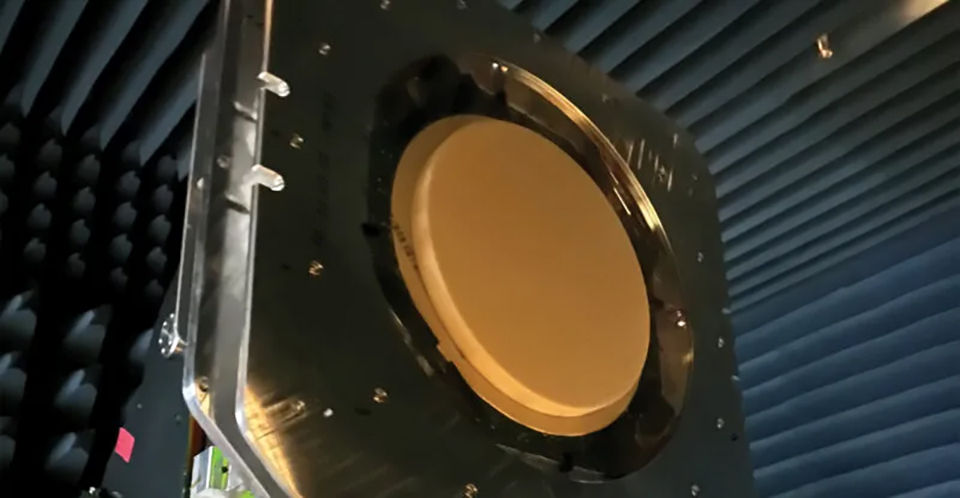
The KuKa 8 Series represents a shift toward the U.S. Space Force’s “network of networks” vision, offering a single-aperture solution capable of simultaneous operation across multiple frequency bands and orbits, including Geostationary (GEO), Medium Earth Orbit (MEO), and Low Earth Orbit (LEO).
Transition to Multi-Band Infrastructure
The development follows Kymeta’s 2025 success in demonstrating four concurrent beams—dual-transmit and dual-receive—from a single metamaterial surface. This capability addresses a primary constraint in military satellite communications (SATCOM), where operators typically required separate, bulky hardware to switch between commercial Ku-band and high-throughput Ka-band military or commercial services.
In November 2025, Kymeta appointed Manny Mora as President and CEO to lead this commercialization phase. Mora, a 40-year veteran of General Dynamics Mission Systems, was brought on specifically to align Kymeta’s flat-panel technology with the Department of Defense’s (DoD) Joint All-Domain Command and Control (JADC2) requirements.
Technical Specifications and SWaP-C
The KuKa 8 Series utilizes an interleaved sub-array architecture within the metasurface. By moving away from traditional liquid crystal tuning for this generation, the terminal aims for faster switching speeds and improved performance in extreme environmental conditions.
- Frequency Support: Simultaneous Ku-band (10.7–14.5 GHz) and Ka-band (17.7–31.0 GHz).
- Aperture: Single, flat-panel electronically steered antenna (ESA).
- Orbit Compatibility: GEO, MEO, LEO, and Highly Elliptical Orbit (HEO).
- Modem Integration: Dual-modem support to handle concurrent data streams from different bands.
Executive Perspective
“Our focus is on accelerating innovation and ensuring our solutions meet the evolving needs of our national security partners,” said Manny Mora, CEO of Kymeta. “The ability to unify Ku- and Ka-band connections through a single mobile antenna is a foundational leap toward making satellite communication as seamless and automatic as cellular networks.”
Roadmap to 2027
Following the achievement of Technical Readiness Level 6 (TRL6) milestones, Kymeta’s roadmap focuses on miniaturizing the hardware for tactical edge deployment. The mid-2026 prototype release will target specialized defense units and early adopters in the maritime and aero sectors, where Size, Weight, and Power plus Cost (SWaP-C) are critical. The 2027 commercial rollout is expected to include variants for enterprise-grade mobile backhaul and emergency response.
