

• Skip to primary navigation
  • Skip to main content
  • Skip to primary sidebar
  • Skip to secondary sidebar
  • Skip to footer
  • NEWS:
  • SatNews
  • SatMagazine
  • MilSatMagazine
  • SmallSat News
  • |     EVENTS:
  • SmallSat Symposium
  • Satellite Innovation
  • MilSat Symposium
  • SmallSat Europe

SatNews

Satellite Industry Intelligence Since 1983

Subscribe
  • LATEST
  • Missions & Constellations
    • Exploration & Science Missions
    • In-Orbit Servicing & Orbital Operations
    • LEO Constellations
    • Mission Autonomy & Onboard Systems
    • Mission Deployments & Manifests
    • Navigation & PNT
    • SmallSat
    • Spacecraft & Payload Technology
    View All in Missions & Constellations →
    Chasing Starlink, Amazon Leo strikes satellite Wi-Fi deal for future Delta flightsChasing Starlink, Amazon Leo strikes satellite Wi-Fi deal for future Delta flights
    Duagon Computing Hardware Set for Deployment to the International Space StationDuagon Computing Hardware Set for Deployment to the International Space Station
    SpaceX Loses Contact With Starlink SatelliteSpaceX Loses Contact With Starlink Satellite
    WISeSat.Space Expands IoT Constellation with 21st Satellite Launch via SpaceXWISeSat.Space Expands IoT Constellation with 21st Satellite Launch via SpaceX
  • Business
    • Contracts & Commercial Deals
    • Earnings & Financial Reporting
    • Events & Conferences
    • Funding & Venture Capital
    • Market Forecasts
    • Mergers & Acquisitions
    • Personnel Moves & Appointments
    View All in Business & Finance →
    Rocket Lab Receives Final FDI Approval to Acquire Mynaric and Launch Rocket Lab EuropeRocket Lab Receives Final FDI Approval to Acquire Mynaric and Launch Rocket Lab Europe
    Chasing Starlink, Amazon Leo strikes satellite Wi-Fi deal for future Delta flightsChasing Starlink, Amazon Leo strikes satellite Wi-Fi deal for future Delta flights
    Traditional Media and Online Video Revenues Projected to Exceed One Trillion Dollars by 2030Traditional Media and Online Video Revenues Projected to Exceed One Trillion Dollars by 2030
    GomSpace Secures 8.8 MSEK Authorization to Proceed from Unseenlabs for Next Constellation TrancheGomSpace Secures 8.8 MSEK Authorization to Proceed from Unseenlabs for Next Constellation Tranche
  • Defense
    • Counterspace & ASAT
    • Defense Budgets & Procurement
    • ISR & Reconnaissance
    • MILSATCOM
    • Missile Warning & Defense
    • National Security Programs
    • Space Domain Awareness
    View All in Military & Defense →
    SPARC AI Appoints On-Ground Referral Agent in Ukraine to Accelerate Defense EngagementSPARC AI Appoints On-Ground Referral Agent in Ukraine to Accelerate Defense Engagement
    Indra Showcases Sovereign Space and Defense Technologies at FIDAE 2026Indra Showcases Sovereign Space and Defense Technologies at FIDAE 2026
    Defense Economics and the European SmallSat MarketDefense Economics and the European SmallSat Market
    Firefly Aerospace Supports U.S. Space Force VICTUS DIEM ExerciseFirefly Aerospace Supports U.S. Space Force VICTUS DIEM Exercise
  • Gov
    • Export Controls & Compliance
    • International Space Agreements
    • National Space Policy
    • Space Law & Treaties
    • Space Sustainability & Debris Policy
    • Space Traffic Management / Debris Removal
    View All in Government & Regulation →
    The FCC Must Choose: Enforce the Rules or Preserve LEO CompetitionThe FCC Must Choose: Enforce the Rules or Preserve LEO Competition
    Space Force Reassigns Final GPS III Mission to SpaceX Following Vulcan AnomalySpace Force Reassigns Final GPS III Mission to SpaceX Following Vulcan Anomaly
    NASA Realignment ‘Ignition’ Accelerates Shift Toward Commercial Lunar EconomyNASA Realignment ‘Ignition’ Accelerates Shift Toward Commercial Lunar Economy
    SpaceX and GSO Giants Clash Over FCC Spectrum Sharing Rules and Power LimitsSpaceX and GSO Giants Clash Over FCC Spectrum Sharing Rules and Power Limits
  • Launch
    • Launch Providers
    • Launch Schedule & Calendars
    • Launch Sites & Infrastructure
    • Rocket Technology & Vehicles
    View All in Launch →
    AAC Clyde Space Expands Orbital Presence with Transporter-16 LaunchAAC Clyde Space Expands Orbital Presence with Transporter-16 Launch
    Built by Thales Alenia Space for ESA’s Celeste mission, IOD-2 Satellite lifts off today from New ZealandBuilt by Thales Alenia Space for ESA’s Celeste mission, IOD-2 Satellite lifts off today from New Zealand
    Defense Economics and the European SmallSat MarketDefense Economics and the European SmallSat Market
    Space Force Reassigns Final GPS III Mission to SpaceX Following Vulcan AnomalySpace Force Reassigns Final GPS III Mission to SpaceX Following Vulcan Anomaly
  • Software
    • Autonomous Ground Operations
    • Data Processing & AI/ML
    • Digital Twins & Modeling
    • Ground Segment & Teleports
    • Mission Planning & Simulation
    • Space Systems Software Engineering
    • Spectrum & Licensing
    View All in Software Automation & Ground Systems →
    NexSat Space Systems Debuts with ACE ‘Invisible’ Aero-Conformal AntennaNexSat Space Systems Debuts with ACE ‘Invisible’ Aero-Conformal Antenna
    Laser Communications and the Rise of Orbital Data CentersLaser Communications and the Rise of Orbital Data Centers
    ThinKom Showcases Modular MILSATCOM Architecture for Contested EnvironmentsThinKom Showcases Modular MILSATCOM Architecture for Contested Environments
    Kymeta Sets Roadmap for KuKa 8 Series Multi-Band TerminalsKymeta Sets Roadmap for KuKa 8 Series Multi-Band Terminals
  • Services & Apps
    • Climate & Environmental Monitoring
    • Disaster Response & Security Mapping
    • Earth Observation & Imaging
    • Maritime & Aviation Satcom
    • Satellite Communications
    View All in Services & Applications →
    Traditional Media and Online Video Revenues Projected to Exceed One Trillion Dollars by 2030Traditional Media and Online Video Revenues Projected to Exceed One Trillion Dollars by 2030
    AAC Clyde Space Expands Orbital Presence with Transporter-16 LaunchAAC Clyde Space Expands Orbital Presence with Transporter-16 Launch
    The FCC Must Choose: Enforce the Rules or Preserve LEO CompetitionThe FCC Must Choose: Enforce the Rules or Preserve LEO Competition
    CubeSpace Challenges Vertical Integration with Record ADCS Production MilestoneCubeSpace Challenges Vertical Integration with Record ADCS Production Milestone
  • SatNews Events
  • Magazines
  • Calendar

The Dumb Pipe Is Dead: Why Physics Is Forcing AI Into Orbit

February 11, 2026

By Abbey White, Staff Writer, SatNews

Dispatch from SmallSat Symposium. Coverage and analysis from across the conference, tracking the forces shaping the next phase of the SmallSat market.
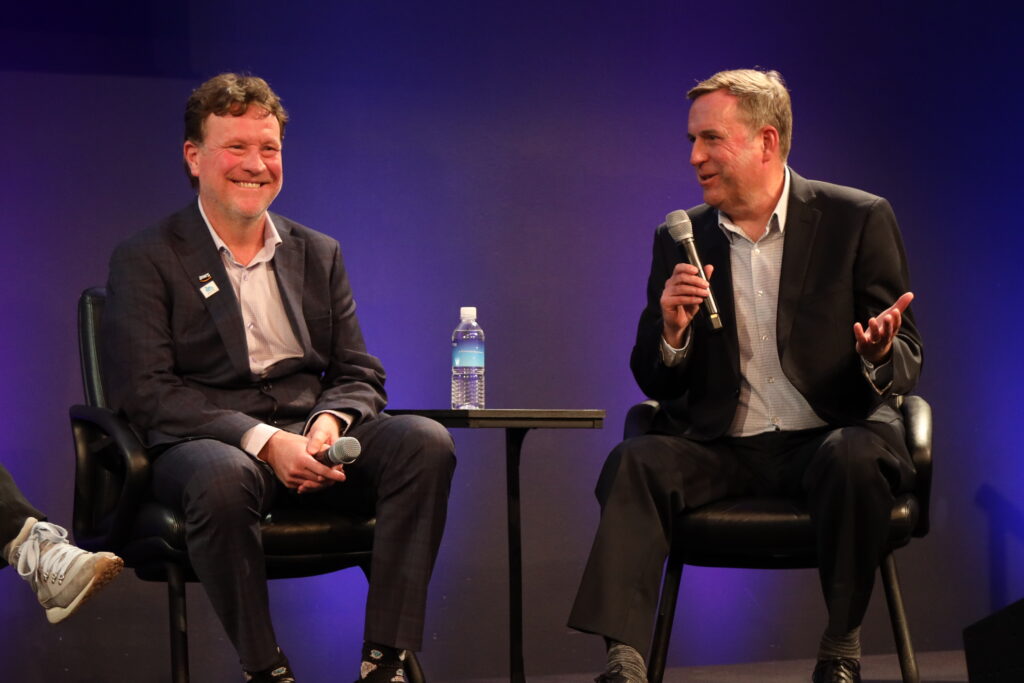
MOUNTAIN VIEW. The concept of the satellite as a simple relay, serving as little more than a shiny mirror reflecting data to control rooms in Houston or Darmstadt, is extinct. At the Computer History Museum, the panel on Autonomy and AI in Space Operations delivered a eulogy for the dumb pipe era and a baptism for the intelligent edge. The consensus among the engineers and operators on stage was absolute. We aren’t automating space operations because it is trendy; we are doing it because the physics of the new orbital environment leaves us no choice.

The industry has hit a wall where human reaction times are physically incapable of managing the chaos we have created. The CRASH Clock, which measures the statistical window before a collision becomes inevitable, has collapsed from 121 days in 2018 to just 2.8 days in 2026. Consequently, the human-in-the-loop, rather than being a safety feature, has become a liability.

Survival in the Clam Chowder

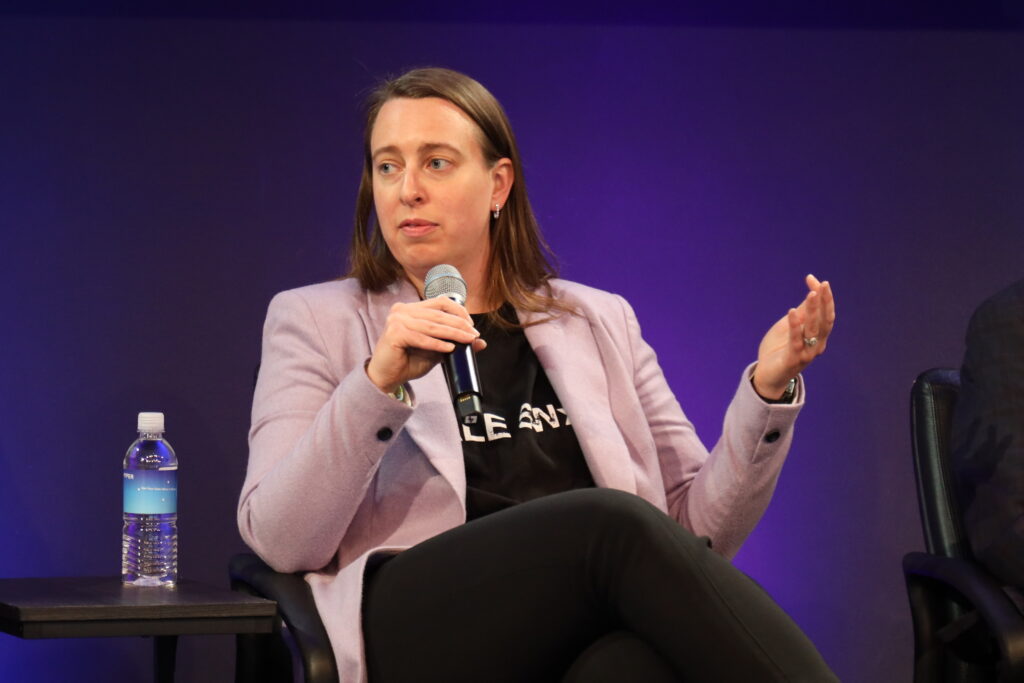
Katherine Monson, CEO of Hale SWx, framed the engineering challenge with a visceral analogy that cut through the usual dry technical jargon. Describing the Very Low Earth Orbit (VLEO) environment where many next-gen constellations operate, she noted that atmospheric drag is no longer a constant variable.

“It’s the difference,” she said, “between swimming through chicken broth and clam chowder.” 

In the clam chowder, density spikes caused by solar activity can drag a satellite out of its operational orbit in hours rather than weeks. A ground-based operator waiting for a telemetry pass to upload a maneuver command is already too late. Monson warned, “4x drag is not something you can come back from if you have electronic propulsion and you were not already orbit-raising before the drag is heating up.”

This scenario represents the killer app for orbital AI. It isn’t about generating poetry; it implies a satellite sensing the weather and firing thrusters instantly to survive. Monson noted the goal is for satellites to utilize very simple logic trains to orbit-raise always when conditions degrade, without asking or waiting for permission.
The Efficiency Guillotine

Physics drives the survival requirement, but economics drives adoption. Ian Canning, CEO of Eutelsat Network Solutions, offered a brutal look at the mathematics of mega-constellations. Eutelsat has aggressively automated its fleet operations, a move that has decimated the traditional mission control headcount.

Canning revealed the scale of this shift: “Plan for 50-plus operators down to five.”

This reduction is not mere cost-cutting; it marks the only way to scale. You cannot hire 50 operators for every 100 satellites when you are launching thousands. However, Canning admitted that the transition creates a trust gap with legacy customers who still find comfort in a crowded control room. When Eutelsat pitched this lean, automated model to government clients, “they completely dismissed our ability to manage that number of satellites with that number of people although we’ve been doing it for three years.”

Breaking the Fairing

Perhaps the most radical engineering vision came from Joe Landon of Rendezvous Robotics, which is utilizing autonomy to break aerospace’s most fundamental constraint: the rocket fairing. For sixty years, everything put in space has had to fold up like an expensive tent to fit inside a cylinder.

Landon argued, “Everything we’ve ever sent to space has had to fit into a rocket. That’s what we’re trying to change.”

His solution involves launching stacks of flat, modular tiles that use autonomy to self-assemble in space into massive structures. Such structures will include antennas and power generation systems far larger than anything a rocket could carry monolithically. This is a technical breakthrough in its purest form, using software to cheat the limits of hardware.

Landon also pushed back against the instinct to over-regulate these interactions before they even exist. When pressed on standards for these autonomous agents, he countered, “Maybe we don’t need standards.” He pointed to terrestrial agents that negotiate protocols in real-time, suggesting a future where satellites handshake and coordinate without a pre-written rulebook.

The Verification Trap

The lingering question in the room concerned verification. How do you trust a neural network with a billion-dollar asset? Alan Campbell, a Principal Solutions Architect at AWS, argued for a pragmatic, layered approach to trust, which he called the “on the tin test.”

Campbell insisted that every autonomous agent must have a verifiable signature. He summarized the logic simply: “if it’s not what it says in the tin, stop.”

He described a shift where operators build instrumentation directly into the agent-to-agent logic to monitor performance in real-time. This is critical because AI models now upgrade at breathtaking rates. An algorithm that worked yesterday might behave differently after a morning update. The engineering challenge is building a wrapper that ensures a consistent output even as the model evolves.

The Integration Task

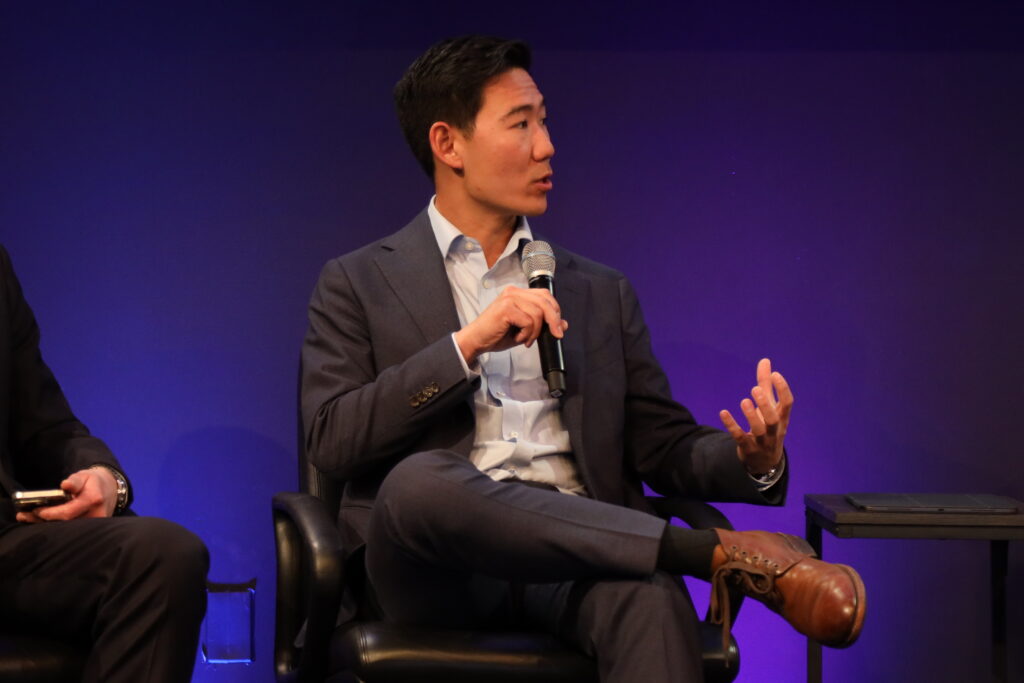
The industry is moving past the shiny object phase of AI. As Ghonhee Lee of Katalyst Space noted, “The groundbreaking research has been done for us.” The task now is integration.

Lee, who is preparing to launch a mission to autonomously dock with an unprepared target (the NASA Swift observatory) later this year, dismissed the idea that trust is the primary bottleneck. “I really don’t think trust is the limiting factor here when we’re talking about autonomy,” Lee argued. He pointed to the long history of autonomous cruise missiles as proof that we know how to validate these systems.

The message from Mountain View is clear. The bottleneck is no longer technology; it is architecture. We are moving from a world of bespoke, hand-flown satellites to a world of swarms, self-assembling structures, and edge-computing nodes that think for themselves. The dumb pipe is dead, and the smart satellite has arrived just in time to rescue us from the clam chowder.

Filed Under: Business & Finance, Mission Autonomy & Onboard Systems, Software Automation & Ground Systems Tagged With: SmallSat Symposium 2026

Primary Sidebar

Coverage

  • Missions & Constellations
  • Business & Finance
  • Military & Defense
  • Launch
  • Software Automation & Ground Systems
  • Government & Regulation
  • Services & Applications

Most Read Stories

  • The Iran Precedent: Operation Epic Fury and the Law of Armed Conflict in Space
  • Rheinmetall Withdraws From Mynaric Bidding Process; Rocket Lab Acquisition Clears Major Competitive Hurdle
  • L3Harris Unveils XL-300P: The First P25 Handheld with 5G and Satellite Direct-to-Device Connectivity
  • Rheinmetall Walked Away. Germany Should Take the Hint.
  • Guardians in the Kill Chain: How the Space Force Led the Opening Salvo of Operation Epic Fury

Secondary Sidebar

Footer


Satnews is a leading provider of satellite news, events, publications, research and other satellite industry information in both commercial and military enterprises worldwide.

Stories By Category

  • Business & Finance
  • Government & Regulation
  • Launch
  • Military & Defense
  • Missions & Constellations
  • Services & Applications
  • Software Automation & Ground Systems
  • Spectrum & Licensing
  • Startups & NewSpace Business

About Us

  • Leadership & Editorial Team
  • SatNews History
  • Free Satnews Subscription
  • SatNews Events
  • Magazines

Navigation

  • Latest Stories
  • Magazines
  • Events
  • Contact
  • Cookie & Privacy Policy for Satnews

We use cookies to ensure that we give you the best experience on our website. If you continue to use this site we will assume that you are happy with it.
x
Sign up Now (For Free)
Access daily or weekly satellite news updates covering all aspects of the commercial and military satellite industry.
Invalid email address
Notify Me Regarding ( At least one ):
We value your privacy and will not sell or share your email or other information with any other company. You may also unsubscribe at anytime.

Click Here to see our full privacy policy.
Thanks for subscribing!