

The German Federal Ministry for Economic Affairs and Climate Action officially granted Foreign Direct Investment (FDI) approval on March 30, 2026, for Rocket Lab to complete its acquisition of Munich-based laser communications specialist Mynaric AG. This regulatory milestone clears the final hurdle for a deal valued at approximately 150 million dollars, with the formal closing scheduled for mid-April 2026.
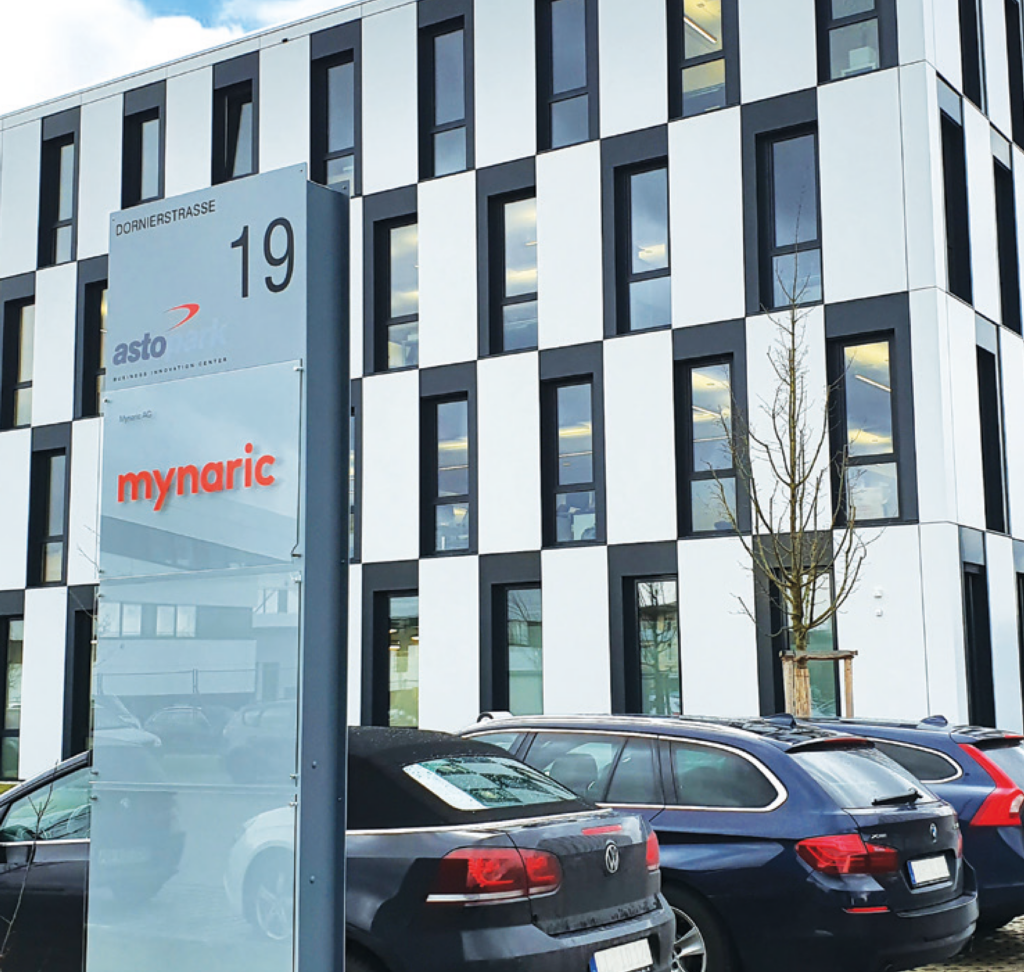
As previously reported here, Mynaric was in a squabble over the intervention by Rheinmetall and a “national solution” narrative that would portend to align with growing German regulatory resistance to foreign ownership of critical dual-use space technology.
The approval marks the beginning of a new chapter for the company, structurally establishing Rocket Lab Europe. By maintaining Mynaric’s headquarters in Munich and its existing workforce, Rocket Lab has successfully navigated European concerns regarding strategic autonomy and the retention of critical optical communication technology within the continent.
Vertical Integration and the SDA Constellation
A primary driver for this acquisition is Rocket Lab’s massive 515 million dollar prime contract with the U.S. Space Development Agency (SDA) to build and operate 18 satellites for the Tranche 2 Transport Layer. Mynaric’s Condor Mk3 optical terminals are the gold standard for the laser mesh networks required by these military constellations.
By bringing Mynaric in-house, Rocket Lab is mitigating significant supply chain risks. Previously, Mynaric had faced production bottlenecks and financial hurdles that threatened delivery timelines. Rocket Lab intends to implement its proven high-volume manufacturing processes to scale Mynaric’s output, ensuring that both U.S. defense contracts and burgeoning European commercial needs are met on schedule.
Positioning for IRIS2 and German Defense Contracts
The formation of Rocket Lab Europe is a calculated move to qualify as a “sovereign” entity for major European Union and European Space Agency (ESA) programs. Most notably, this includes the IRIS2 (Infrastructure for Resilience, Interconnectivity and Security by Satellite) constellation, which requires high levels of European industrial participation.
With the FDI approval, Rocket Lab is now positioned to compete for:
- The 6 billion euro IRIS2 sovereign multi-orbit constellation.
- Next-generation German military secure communication satellites.
- European LEO-PNT (Positioning, Navigation, and Timing) technology demonstrations.
Competitive Landscape and Local Support
The path to approval was cleared in mid-March 2026 after the German defense contractor Rheinmetall withdrew its competing bid for Mynaric. While there was initial political pressure to keep Mynaric under purely German ownership, Rocket Lab’s commitment to invest in the Munich facility and expand local R&D was seen as the most viable path to saving the struggling company and advancing the local space ecosystem.
Rocket Lab CEO Peter Beck noted that this acquisition is not just about technology, but about creating a global powerhouse that combines American speed with European engineering excellence. The company expects Rocket Lab Europe to eventually function as a semi-autonomous division capable of seeking its own direct co-investment from European sovereign wealth funds.
Mynaric Acquisition Timeline
| Milestone | Date | Status |
| Initial Acquisition Announcement | Late 2025 | Completed |
| Rheinmetall Withdraws Competing Interest | March 15, 2026 | Completed |
| German FDI Approval Granted | March 30, 2026 | Completed |
| Official Closing of Acquisition | April 2026 | Pending |
| Formal Launch of Rocket Lab Europe | Q2 2026 | Projected |
