

As Amazon Leo (formerly Project Kuiper) approaches its end-of-Q1 commercial deadline, the company is accelerating its launch cadence to challenge Starlink’s market dominance. On March 29, 2026, United Launch Alliance (ULA) is scheduled to launch the LA-05 (Leo Atlas 5) mission, carrying 29 broadband satellites into Low Earth Orbit (LEO) from Cape Canaveral Space Force Station.
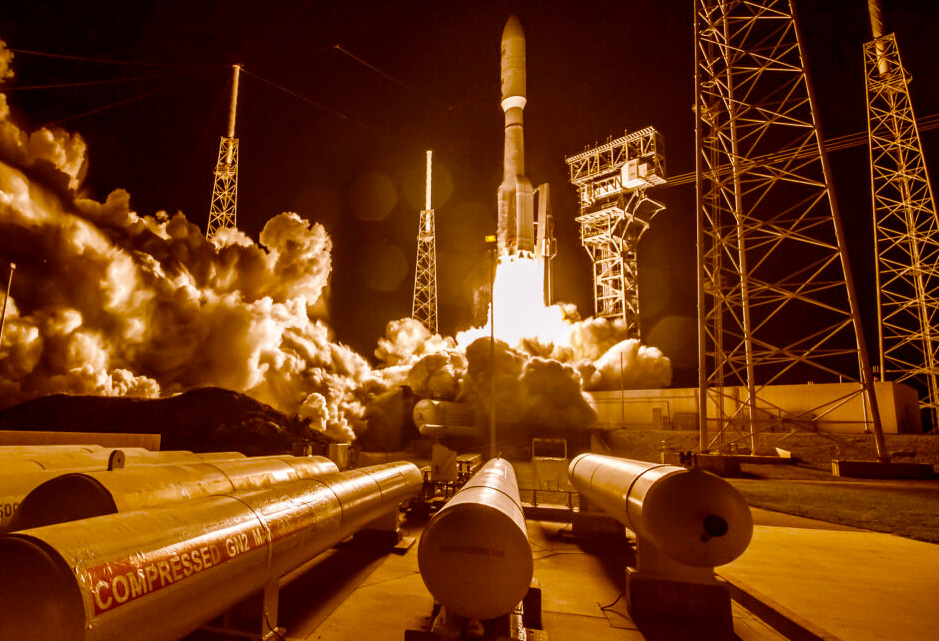
This mission follows the successful February deployment of 32 satellites aboard the first Ariane 6 heavy-lift flight of 2026. With over 200 production satellites now in orbit, Amazon is transitioning from technical validation to service delivery, having initiated an Enterprise Preview for select business customers in late 2025.
Strategic Rebrand and Commercial Rollout
In November 2025, Amazon rebranded the initiative to Amazon Leo to align with its broader consumer and enterprise service identity. The company aims to offer continuous broadband coverage in its five initial markets—the United States, United Kingdom, Canada, Germany, and France—by March 31, 2026.
While the constellation is currently a fraction of the size of SpaceX’s Starlink, Amazon is leveraging its vertically integrated retail and AWS ecosystems to secure early partnerships. Recent milestones include a deal with JetBlue for high-speed in-flight Wi-Fi and a commitment of $19.5 million to expand satellite processing facilities at Florida’s Kennedy Space Center.
The FCC Deadline and Launch Bottlenecks
Despite the aggressive schedule, Amazon faces significant regulatory pressure. Under its FCC license, the company must launch and operate 1,618 satellites (50% of its planned Gen1 constellation) by July 30, 2026.
In January 2026, Amazon filed for a 24-month extension of this milestone, projecting it will only reach approximately 700 satellites in orbit by the original deadline. The company cited a global shortage of heavy-lift launch vehicles and manufacturing disruptions as the primary drivers for the shortfall. To mitigate these risks, Amazon secured an additional 10 Falcon 9 and 12 New Glenn launch contracts earlier this year.
Technical Specifications
The Amazon Leo Gen1 satellites are manufactured at a high-volume facility in Kirkland, Washington, designed to produce up to four satellites per day.
- Mass: Approximately 600–700 kg per satellite.
- Architecture: Software-defined payloads with inter-satellite optical links.
- User Terminals: Three models, including the 100 Mbps Standard and the gigabit-speed Ultra antenna.
- Orbits: Operational altitudes of 590 km, 610 km, and 630 km.
Executive Perspective
“We are moving as fast as the launch market will allow us,” said a spokesperson for Amazon Leo. “By the end of this month, we will have established the foundational capacity needed to serve our first five international markets. Our focus is now on scaling production at our Kirkland facility to match the increased launch availability coming from our multi-provider strategy.”
Launch Schedule to July 2026
| Mission | Rocket | Date | Status |
| LE-01 | Ariane 64 | Feb. 12, 2026 | Success (32 Sats) |
| LA-05 | Atlas V 551 | March 29, 2026 | Scheduled (29 Sats) |
| LE-02 | Ariane 64 | H1 2026 | Planned (32 Sats) |
| LV-01 | Vulcan Centaur | Mid-2026 | TBD (Pending Investigation) |
| LN-01 | New Glenn | Late 2026 | Planned (48 Sats) |
