

In a move to streamline the deployment of Synthetic Aperture Radar (SAR) infrastructure, EnduroSat and MetaSensing announced a strategic partnership in March 2026. The collaboration integrates MetaSensing’s high-resolution radar payloads with EnduroSat’s FRAME satellite platforms, offering a fully European, “constellation-as-a-service” solution.
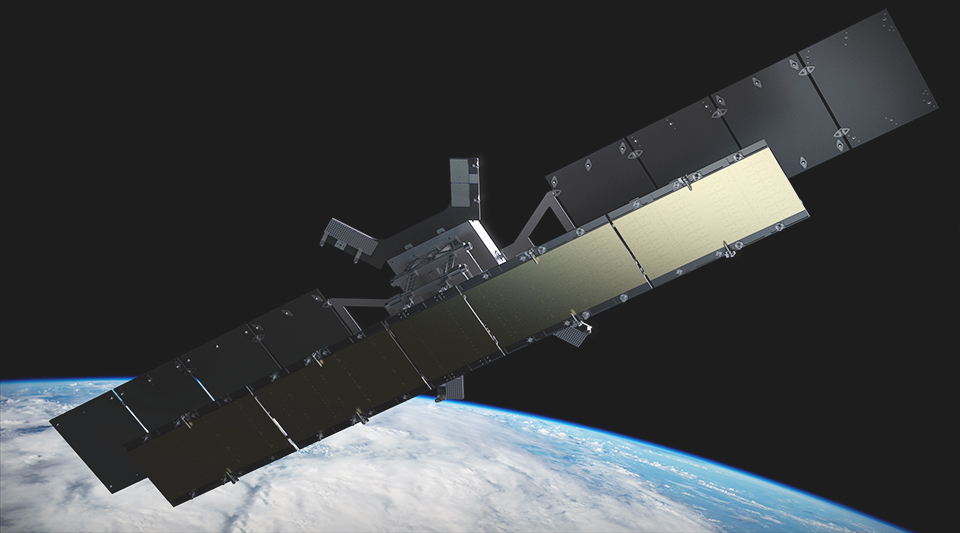
The initiative targets defense, government, and commercial operators seeking to bypass the high costs and fragmented supply chains traditionally associated with SAR deployment.
Traditional SAR systems are often hindered by bespoke engineering and long development cycles. This partnership addresses these barriers by utilizing a standardized, modular architecture that reduces time-to-capability from years to months. By providing an end-to-end service—covering mission design, integration, launch, and in-orbit operations—the companies aim to lower the cost per gigabyte of radar data.
Bridging the SAR Capability Gap
SAR intelligence has become essential for modern security and environmental monitoring due to its ability to provide imagery through cloud cover, smoke, and darkness. For national security, SAR enables persistent situational awareness of borders and maritime zones, while commercial sectors use it for infrastructure monitoring and disaster response.
The partnership leverages a fully European supply chain, a critical factor for sovereign government agencies requiring autonomy over their data processing pipelines and mission operations. This “Clean Room” approach to sovereign infrastructure ensures that operators maintain full control over sensitive intelligence assets.
High-Resolution Radar and Modular Platforms
MetaSensing provides two distinct X-band SAR payloads tailored for different mission requirements. Both are designed for seamless integration into EnduroSat’s software-defined satellites.
- PhoeniX: A compact, modular payload weighing between 40 and 60 kg. It is optimized for microsatellites and delivers up to 0.5-meter resolution in Stripmap and Spotlight modes.
- StarSAR-X: A high-performance, fully phased-array instrument featuring advanced electronic beam steering. It supports multi-channel operations and provides resolutions ranging from 0.125 meters to 1 meter.
These payloads are hosted on EnduroSat’s FRAME-15 and FRAME-24 (ESPA-class) satellites. The FRAME architecture features a patented cableless design that allows a single technician to complete assembly, integration, and testing (AIT) in just eight hours. This industrial approach to satellite manufacturing is a key enabler for the rapid scaling of multi-satellite constellations.
Executive Perspectives
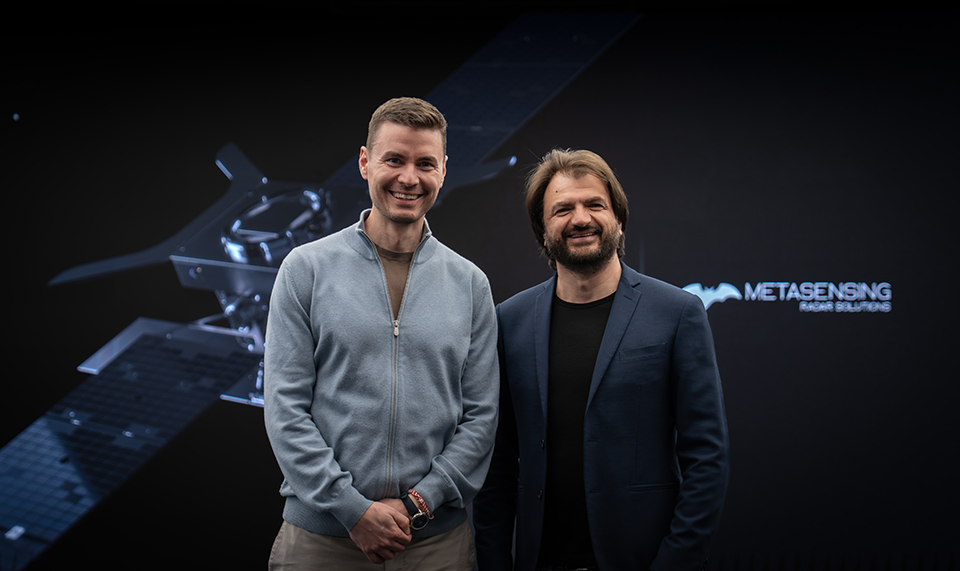
“The partnership between MetaSensing and EnduroSat represents a concrete step toward a more accessible and industrially sustainable SAR model,” said Adriano Meta, Founder and CEO of MetaSensing. “By combining mature radar payloads with a proven satellite platform and service, we provide operators with a reliable solution that can be deployed rapidly while remaining fully under their control.”
“I am really proud of this partnership, improving accessibility to SAR intelligence by eliminating complexity, significantly shortening timelines, and reducing the risk of deploying SAR capabilities,” added Raycho Raychev, Founder and CEO of EnduroSat. “We enable space companies to focus on what really matters—their service for national security, governmental, and commercial applications.”
Outlook for Distributed Radar Constellations
The partnership is positioned to capitalize on the growing trend of “Proliferated Military Space Architectures,” where resilience is achieved through large numbers of smaller, lower-cost satellites. EnduroSat’s recent €104 million funding round in late 2025 has already accelerated the production of the ESPA-class platforms required for these missions.
As the first integrated units head toward flight qualification in late 2026, the joint offering is expected to compete directly with vertically integrated incumbents. By offering a standardized “off-the-shelf” path to SAR capability, the partners anticipate significant adoption from allied nations looking to establish sovereign orbital monitoring without the overhead of traditional prime contractor programs.
