

In a comprehensive strategy update released Wednesday, April 8, 2026, Lockheed Martin (NYSE: LMT) detailed the primary technology trends driving its space division, ranging from proliferated military architectures to deep-space exploration.
The report arrives during a high-tempo operational month for the company, following the successful launch of the crewed Artemis II mission.
Proliferated Architectures and Mass Production
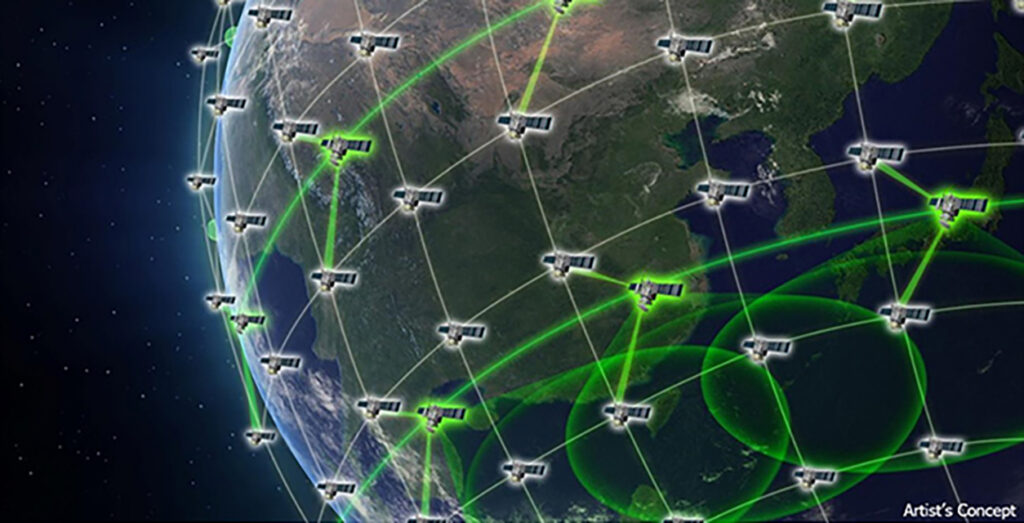
Lockheed Martin is pivoting toward proliferated space network architectures, which utilize hundreds of smaller satellites across multiple orbits to ensure mission resilience against kinetic and cyber threats. To support this shift, the company is leveraging its Small Satellite Processing & Delivery (SPD) Center. The facility currently operates six parallel assembly lines capable of producing up to 180 spacecraft per year.
This infrastructure is a critical component of the Space Development Agency (SDA) Proliferated Warfighter Space Architecture. As of early 2026, Lockheed Martin is actively manufacturing 18 Tranche 2 Tracking Layer satellites, which are scheduled for launch on SpaceX Falcon 9 rockets starting in the fourth quarter of 2026. These satellites will feature advanced infrared sensors designed to detect and track hypersonic missile threats.
Navigation and Global Security Milestones
The update also highlighted advancements in the Global Positioning System (GPS). On January 27, 2026, Lockheed Martin successfully launched GPS III SV09, which is now undergoing operational testing. This vehicle is the first in the constellation to host a laser retroreflector array to improve coordinate system measurements.
Production has now shifted entirely to the next-generation GPS IIIF satellites. These follow-on vehicles are designed to provide 60 times greater anti-jamming capabilities compared to legacy systems, ensuring uninterrupted positioning, navigation, and timing (PNT) for warfighters in contested environments.
Executive Perspective
“Today’s launch is just the beginning of this mission, where we look forward to testing the Orion systems and proving it will be capable of transporting crews to the lunar surface and return them home,” said Robert Lightfoot, President of Lockheed Martin Space, following the April 1 launch of Artemis II. “This historic moment marks a renewed journey to the Moon and a critical step toward future crewed landings.”
On-Orbit Servicing and Modular Design
A significant technical milestone highlighted in the roadmap is the progress of the Mission Augmentation Port (MAP). The pathfinder for the MAP-C specification, known as ASPIN-C (Augmentation System Port Interface), is currently undergoing a test campaign to reach Technology Readiness Level (TRL) 6.
The MAP standard provides an open-source, standardized mechanical interface that allows satellites to be upgraded or serviced after launch. By equipping spacecraft with these docking adapters, operators can add new mission capabilities at the speed of technology rather than waiting for the next launch cycle. This shift toward modularity aligns with Lockheed Martin’s broader transition toward firm-fixed-price, industry-led services for lunar and orbital exploration.
Future Propulsion and Nuclear Power
Looking beyond 2026, the company is investing in advanced propulsion to enable sustained lunar presence and interplanetary travel. Current development programs include Fission Surface Power (FSP) for lunar base electricity and Nuclear Thermal Propulsion (NTP). These systems are designed to provide the high energy density required for long-duration missions to Mars while reducing overall travel time for crewed vehicles.
