

On Wednesday, April 8, 2026, Firefly Aerospace confirmed that assembly and environmental testing are accelerating for its second lunar mission, Blue Ghost Mission 2. The update follows the landmark success of Blue Ghost Mission 1, which on March 2, 2025, became the first commercial spacecraft in history to achieve a fully successful soft-landing on the Moon.
Strategic Context and Program Expansion
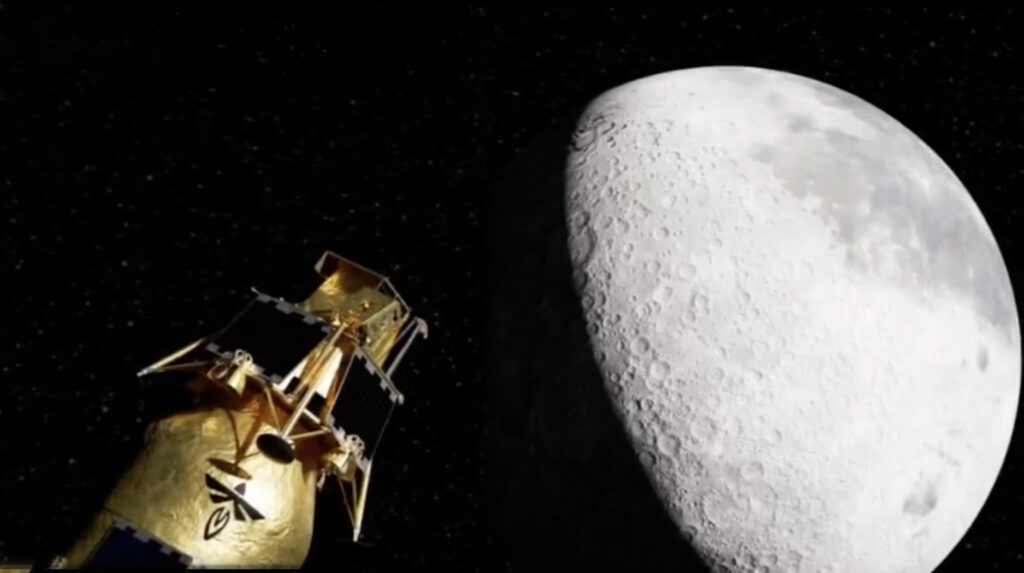
Mission 2, currently scheduled for launch no earlier than late 2026 aboard a SpaceX Falcon 9, represents a significant scale-up in mission complexity and international cooperation. Under the NASA Commercial Lunar Payload Services (CLPS) program, Firefly is transitioning from a single lander mission to a dual-spacecraft architecture designed to provide long-term cislunar infrastructure.
To support this increased mission frequency, Firefly announced on April 2, 2026, that it has amended its senior secured revolving credit facility, increasing lender commitments by $45 million to a total of $305 million. This capital expansion is directly tied to the growth of its Cedar Park, Texas, production facilities and the development of the Elytra orbital transfer vehicle (OTV), which will play a central role in Mission 2.
International Payloads and Far Side Operations
Unlike the first mission to Mare Crisium, Blue Ghost Mission 2 is targeting a landing site on the lunar far side. This location provides a radio-quiet environment essential for the mission’s primary scientific instrument, the Lunar Surface Electromagnetic Experiment at Night (LuSEE-Night).
The mission manifest includes several international and commercial payloads:
- Rashid Rover 2: Developed by the UAE Mohammed Bin Rashid Space Centre (MBRSC), this rover will demonstrate lunar surface mobility and dust durability.
- SPIDER: A seismic payload from Australia’s Fleet Space Technologies designed to search for subsurface water ice.
- Lunar Pathfinder: A communications satellite from the European Space Agency (ESA) that will serve as a relay for far-side data.
- LightPort: A technology demonstration from Canada’s Volta Space Technologies testing wireless surface power distribution.
Technical Specifications and Configuration
Mission 2 debuts a stacked configuration that stands 22 feet (6.9 meters) high—more than three times the height of the Mission 1 lander. The Elytra Dark orbital vehicle serves as the “space tug” for the stack, responsible for inserting both the lander and the Lunar Pathfinder satellite into lunar orbit.
Following the landing, the Blue Ghost vehicle will support surface operations for at least 10 days before powering down to avoid electromagnetic interference with the LuSEE-Night telescope. The telescope is expected to operate on the lunar surface for up to two years, while the Elytra vehicle remains in orbit for five years to provide Firefly’s “Ocula” lunar imaging service.
Executive Perspective
“Firefly’s Blue Ghost Mission 2 will deliver both NASA and international commercial payloads to further prove out technologies for Artemis and help enable a long-term presence on the Moon,” said Ray Allensworth, Firefly’s spacecraft program director, during a recent testing milestone at NASA’s Jet Propulsion Laboratory. “The extensive spacecraft environmental testing we did at JPL for Mission 1 was a critical step in Firefly’s test campaign for our historic lunar mission. Now we’re collaborating again to support a successful repeat on the Moon.”
Cislunar Growth
With the structural qualification unit recently completing vibration and acoustic testing at JPL, Firefly is shifting focus to the flight hardware assembly. The company’s trajectory is aimed at establishing a recurring cadence of lunar deliveries. By combining landing capabilities with the multi-year orbital presence of the Elytra vehicle, Firefly is positioning itself as a core provider for the burgeoning cislunar economy and future crewed Artemis operations.
