

Astroscale Japan has announced a groundbreaking new mission, ISSA-J1, which will perform the world’s first commercial multi-orbit inspection of multiple retired satellites. This mission is being developed under Japan’s Small Business Innovation Research (SBIR) program and represents a significant advancement in space situational awareness and in-orbit servicing capabilities.
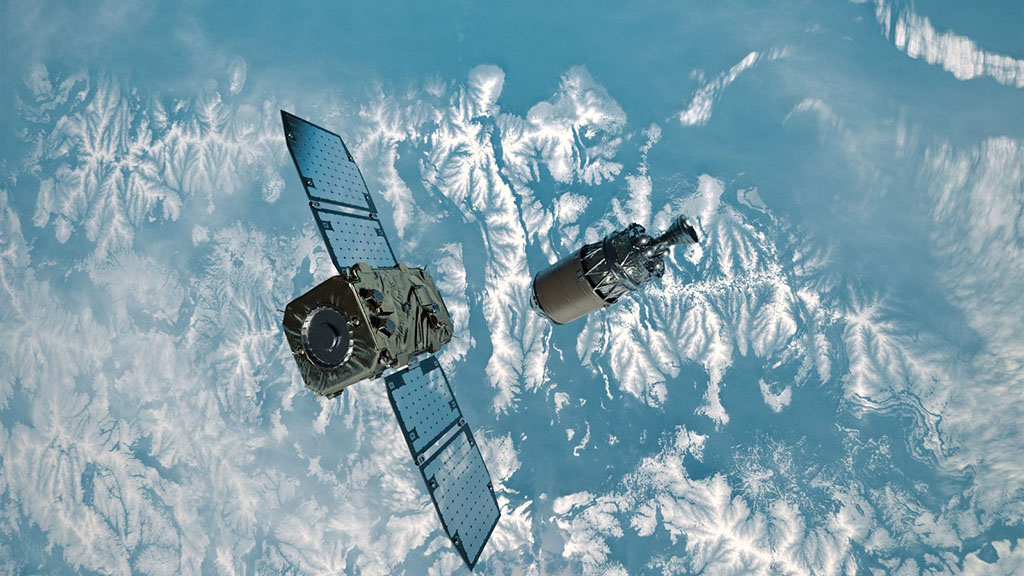
The primary objective is to demonstrate that a single servicer spacecraft can navigate between different orbits to approach and characterize multiple “non-cooperative” targets—satellites that were not designed to be docked with or serviced.
The ISSA-J1 mission will target two specific legacy Japanese spacecraft: the Advanced Land Observing Satellite (ALOS), which has been retired since 2011, and the Advanced Earth Observing Satellite-II (ADEOS-II), which failed shortly after launch in 2003. By approaching these satellites, Astroscale’s inspection craft will capture high-resolution imagery and sensor data to assess their structural integrity and rotational motion. This data is critical for the future of orbital sustainability, as it provides the baseline information needed to plan safe removal or recycling missions for large pieces of space debris.
This announcement comes as Astroscale scales its global operations, including a highly anticipated hydrazine refueling mission for the United States Space Force scheduled for the summer of 2026. These parallel efforts highlight a shift in the commercial space industry toward a circular orbital economy, where satellites are no longer treated as disposable assets but as objects that can be inspected, repaired, or safely decommissioned.
The ability to move between multiple orbits to perform these tasks is a key technical hurdle that ISSA-J1 aims to overcome, proving that in-orbit servicing can be both versatile and cost-effective.
By documenting the condition of satellites that have been drifting in the harsh environment of space for decades, Astroscale is providing the international community with a better understanding of how materials degrade over time in orbit.
This mission aligns with increasingly strict global regulations regarding orbital debris mitigation and the long-term carrying capacity of Earth’s orbits. As space becomes more crowded, the technologies pioneered by missions like ISSA-J1 will become essential for ensuring that critical orbital paths remain safe and accessible for future generations of satellites.
