
United Launch Alliance (ULA) and the U.S. Space Force (USSF) are investigating a technical anomaly that occurred during the launch of the USSF-87 mission on February 12, 2026.
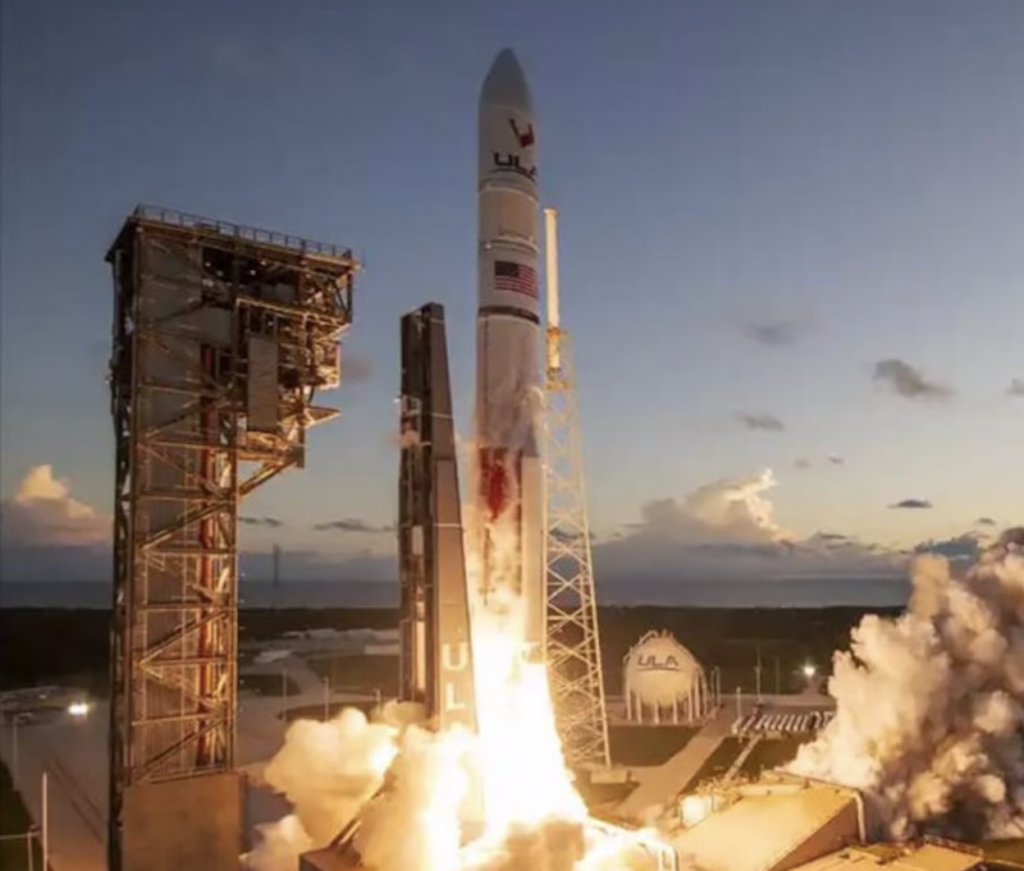
While the mission successfully deployed its primary payloads—the seventh and eighth satellites of the Geosynchronous Space Situational Awareness Program (GSSAP)—into their intended orbits, data analysis has identified a performance deviation that may impact the upcoming launch manifest.
Specifically, the anomaly is being evaluated for potential manufacturing defects that could delay the launch of the next Global Positioning System (GPS) III satellite, currently scheduled for March 2026.
Flight Performance and Vulcan’s Operational Record
The USSF-87 flight represented the second operational national security mission for the Vulcan Centaur rocket, following its NSSL certification and the successful USSF-106 mission in August 2025. This latest incident is the second performance “off-nominal” event in the vehicle’s first four flights. ULA’s engineering teams are currently focused on the Centaur V upper stage performance data to determine if the issue is systemic or isolated to a specific batch of hardware. The scrutiny comes at a critical time for ULA, which is transitioning to a high-rate production model to meet a backlog of over 80 missions for both government and commercial clients.
Leadership and Strategic Continuity
The investigation is being led under the interim leadership of John Elbon, who assumed the role of CEO following the departure of Tory Bruno in early 2026. During a recent briefing at the Air and Space Forces Association (AFA) Warfare Symposium, Gen. B. Chance Saltzman, Chief of Space Operations, emphasized the importance of launch reliability and the Service’s ability to pivot its manifest when technical risks emerge. The Space Force has previously demonstrated this flexibility by exchanging GPS missions between Vulcan and Falcon 9 to maintain orbital replenishment schedules.
Timeline for March GPS III Launch
The primary concern for Space Systems Command (SSC) is the GPS III SV-10 mission, which is the final satellite in the GPS III series before the transition to the GPS IIIF (Follow-on) block. If the investigation confirms a manufacturing defect in the Vulcan’s core or upper stage, the March liftoff from Cape Canaveral may be postponed. A final flight readiness review is expected to conclude by early next month, which will determine if the vehicle is cleared for the high-priority Positioning, Navigation, and Timing (PNT) mission or if a hardware replacement is required.