

Roughly 12,550 miles above Earth, a constellation of U.S. global positioning satellites orbits the planet. GPS satellites also carry a sophisticated system designed to detect above ground nuclear detonations anytime, anywhere.
The Global Burst Detection system, developed by Sandia and Los Alamos national laboratories, carries a suite of sensors and instruments capable of identifying signals from nuclear detonations and providing real-time information to the U.S. military and government.
The final system in the current block of eight systems launched into space in May of 2025. Meanwhile, the next series, scheduled for initial deployment in 2027, already has several units completed and will soon be ready for integration with the host satellites.
This mission has endured for more than 60 years at the Labs. Teams of engineers, scientists and technologists work a decade ahead to develop new complex technologies that can withstand the harsh space environment while countering evolving threats.
The Global Burst Detection system serves as part of the space-based component of the U.S. Nuclear Detonation Detection System. This network of satellites, sensors and ground stations can detect, time-stamp and record electromagnetic pulse energy in specific bands, and X-ray and optical signals. This information helps the U.S. Air Force precisely determine the location, time and yield of a nuclear detonation.
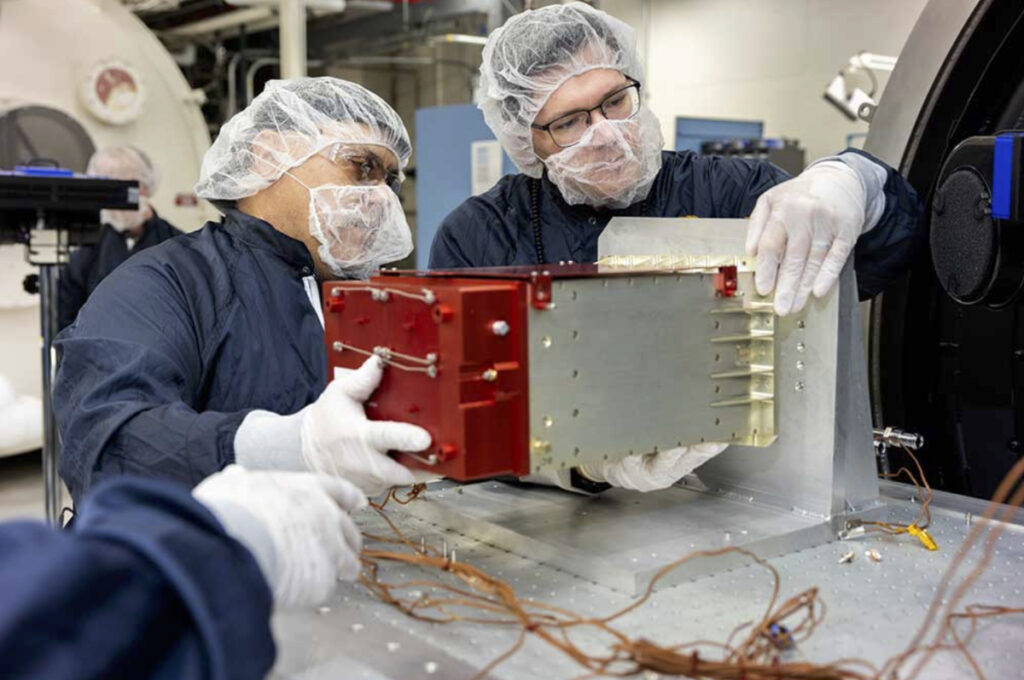
Funded by the National Nuclear Security Administration (NNSA), the sensors undergo rigorous testing and mission assurance processes to ensure they perform reliably during their 15-plus-year mission. Sandia performs a series of qualification tests, including shock, thermal, thermal vacuum, vibration and prompt X-ray tests, to demonstrate the system’s ability to survive launch, deployment and operation in space. Sandia and Los Alamos design and produce the system’s five subsystems, with Sandia integrating them into a complete detection system.
The last IIIA series Global Burst Detector launched into space from Cape Canaveral on May 30. Teams from Sandia, Los Alamos and the U.S. Space Force calibrated the system in June and conducted early on-orbit testing to verify functionality. For the final phase, the team will share the configuration and setting information with the U.S. Nuclear Detonation Detection System team for integration into the current satellite network.
In 2024, Sandia and Los Alamos delivered the first two flight systems for the next generation of detectors, the IIIF, to Lockheed Martin for installation on GPS satellites. The first unit is scheduled to launch in 2027.
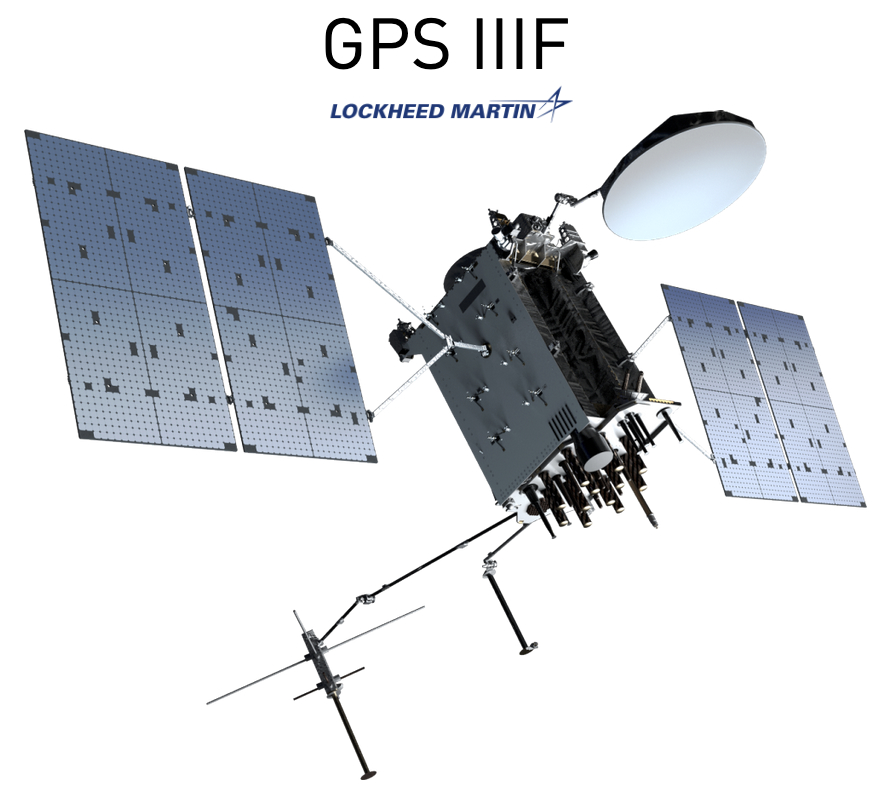
Teams from Sandia and Los Alamos worked together for 12 years to design and qualify the new system.
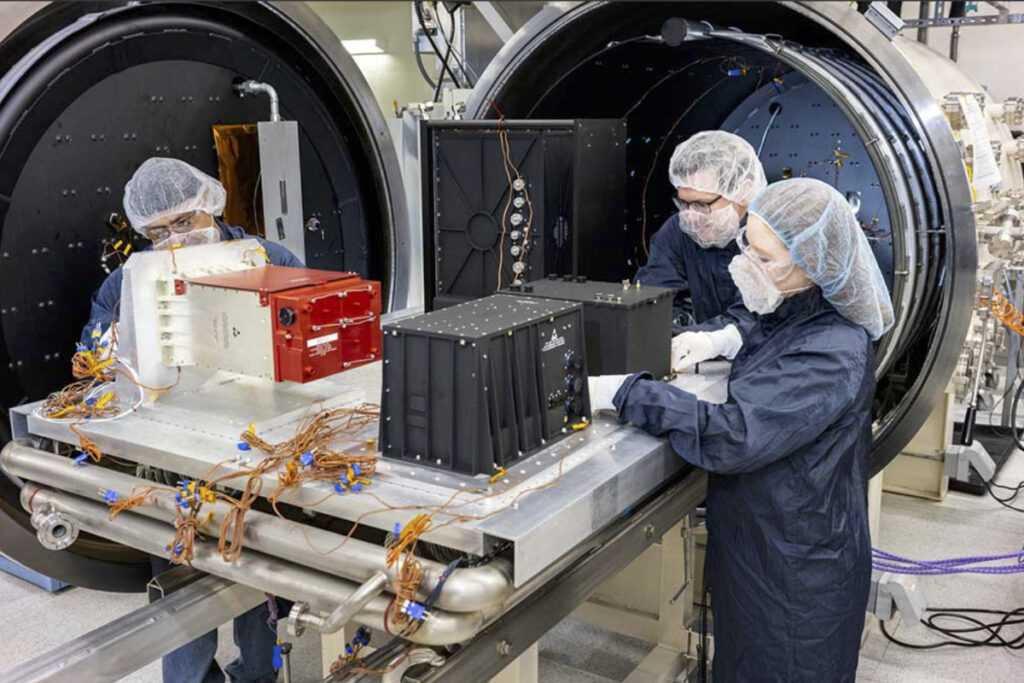
A key component of the IIIF series, the Spectral Imaging Geolocation Hyper-Temporal Sensor, or SIGHTS, has roots in Sandia’s Laboratory Directed Research and Development program. More than a decade ago, researchers conducted basic science to push the boundaries of remote sensing. That work laid the foundation for a new megapixel-density optical sensor, capable of capturing tens of thousands of frames per second. This enables the sensor to better differentiate between legitimate signals and false positives.
Over the next decade, Sandia and Los Alamos plan to deliver, integrate and launch more IIIF Global Burst Detector systems to continue the mission.
The launch of the final IIIA series Global Burst Detector marks an important milestone in our efforts to enhance nuclear detection capabilities,” Sandia manager Andrew Stuart said. “The collaboration between Sandia National Laboratories and Los Alamos National Laboratory has been key to developing this advanced system, which will significantly contribute to our national security by improving our ability to detect nuclear detonations from space.”
Marc Kippen, program manager for Space Systems and Science at Los Alamos, said, “The May launch is a testament to the decades of effort that it takes to maintain uninterrupted national security space capability. Los Alamos National Laboratory is proud to contribute to this important and enduring mission.”
