

On Monday, March 2, 2026, shares of APT Satellite Holdings Limited (01045.HK) surged by more than 7% following reports of SpaceX’s strategic pivot toward lunar-based manufacturing. The market reaction underscores the growing interconnectivity between Western commercial lunar ambitions and the valuation of major Asian satellite operators.
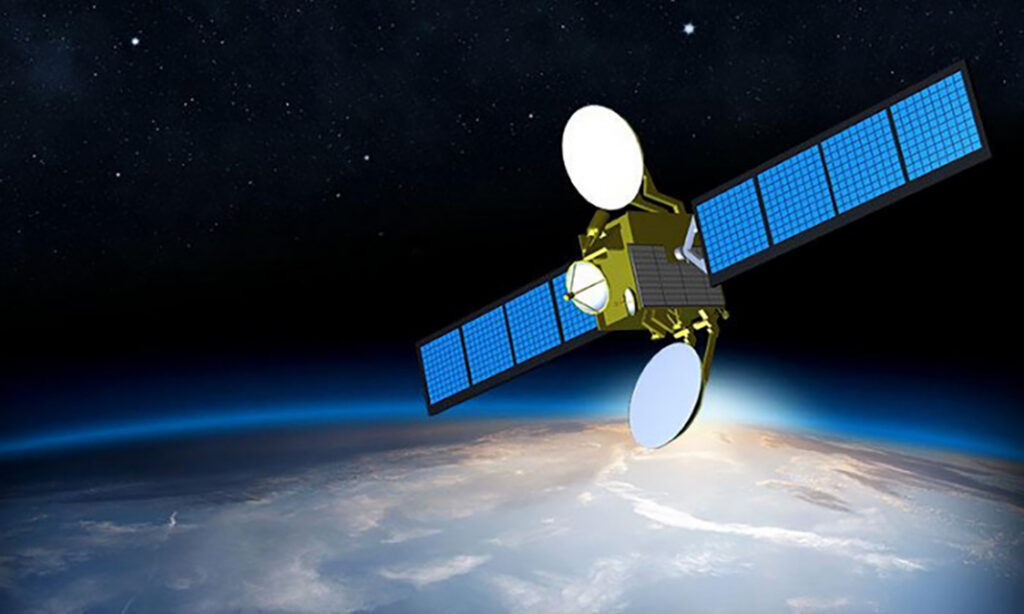
APT Satellite, a key subsidiary of the state-owned China Satellite Communications Corporation, is currently positioning its next-generation fleet to interface with emerging orbital data infrastructures.
The Lunar Electromagnetic Catapult Concept
The volatility in satellite stocks follows a series of February 2026 updates from SpaceX CEO Elon Musk, who outlined plans to establish a permanent satellite assembly facility on the lunar surface. To minimize the high costs of Earth-to-orbit logistics, the facility would utilize an electromagnetic catapult (mass driver) several kilometers long to launch satellites into Earth’s orbit or toward deep-space destinations. This system leverages the Moon’s lack of atmosphere and 1/6th Earth gravity, which theoretically reduces the energy required for launch by approximately 90%, bringing costs down to an estimated $500 per kilogram.
AI-Native Satellite Networking
A primary driver for the lunar factory is the deployment of a “Galactic Brain” network—a constellation of up to one million satellites equipped with high-performance AI processors. These satellites are designed to function as in-orbit data centers, supporting real-time edge computing and terrestrial AI inference. By manufacturing these units on the Moon using lunar regolith and solar power, SpaceX intends to bypass the supply chain bottlenecks of Earth-based aerospace manufacturing. APT Satellite, while not a direct partner in the SpaceX proposal, is viewed by investors as a prime candidate for regional data relay and ground-segment integration as these megaconstellations mature.
Market Context and Financial Performance
Despite the recent share price surge, APT Satellite previously reported a projected 31% year-on-year decrease in shareholder profit for the 2025 fiscal year. To counter this, the group is leveraging its associated network resources under China SatCom to strengthen core market development. The company has officially initiated preparations for next-generation advanced satellites that feature increased spectral efficiency and “inter-satellite link” (ISL) capabilities, aligning with the industry trend toward hybrid sovereign-commercial architectures.
Next Steps and 2026 Milestones
The feasibility of the lunar catapult will depend heavily on the success of the Artemis II and Artemis III missions, currently scheduled for March 2026 and 2027, respectively. SpaceX’s Starship is a critical component of the Artemis architecture, and its performance in delivering initial “Starlink-Lunar” relay nodes later this year will serve as a technical proof-of-concept for the proposed factory. Meanwhile, APT Satellite is expected to finalize its 2026 procurement roadmap for its new high-throughput satellite (HTS) units by late Q2.
