

On Sunday, March 1, 2026, industry analysts confirmed reports that SpaceX is preparing to file confidential paperwork for an initial public offering (IPO) with the U.S. Securities and Exchange Commission (SEC) as early as this month.
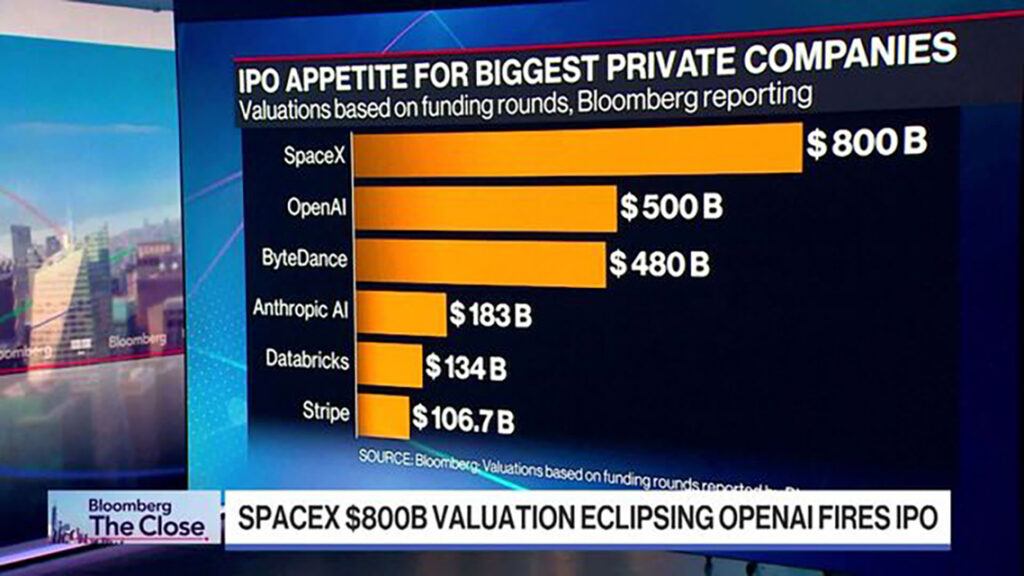
The move, first reported on Friday, positions the world’s most valuable aerospace entity for a potential public market debut in June 2026, with a targeted valuation exceeding $1.75 trillion.
The Evolution of a Space Monopoly
The shift toward public markets follows a massive surge in the company’s internal valuation, which has more than doubled since July 2025. In December 2025, SatNews reported that the company was targeting a $1.5 trillion valuation ahead of secondary share sales. This valuation has been bolstered by the recent all-stock merger with Elon Musk’s artificial intelligence venture, xAI, which integrated SpaceX’s orbital infrastructure with high-performance AI computing. The combined entity now controls over 95% of the domestic launch market and maintains more than $22 billion in active government contracts.
Starlink as a Financial Utility
While the Falcon and Starship launch vehicles remain the company’s most visible assets, the $1.75 trillion valuation is primarily driven by the maturation of the Starlink satellite internet service. By the end of 2025, Starlink reported 9.2 million active subscribers, effectively doubling its user base in 15 months. The business unit surpassed $10 billion in revenue last year, with analysts from Quilty Space and Bloomberg projecting 2026 revenues between $15.9 billion and $24 billion. This “software-like” margin profile has allowed SpaceX to transition from an industrial aerospace contractor to a global telecommunications utility.
Operational Rationale and Market Timing
The decision to utilize a “confidential filing” allows SpaceX to address regulatory and financial disclosure requirements with the SEC privately before initiating a public roadshow. Analysts note that this strategy is essential given the complexity of the xAI integration and the inherent volatility of the Starship development timeline. “The legal load and pressure for short-term results for a public company are very high,” noted CEO Elon Musk in prior statements regarding the IPO window. However, the requirement for multi-billion dollar capital infusions to support the “Golden Dome” missile defense layer and lunar Starship variants has reportedly outweighed the benefits of remaining private.
The upcoming weeks are critical for the company’s dual-track strategy. In addition to the financial filing, SpaceX is expected to execute a major test launch of its next-generation Starship vehicle in late March. A successful orbital mission would provide the technical validation required to secure institutional backing for the June IPO. If the timeline remains stable, the offering could raise up to $50 billion in primary capital, setting a new global record for public market proceeds.
