
In the aerospace sector, the success of orbital delivery and recovery cycles is fundamentally dependent on the equilibrium between Newtonian mechanics and Pascal’s principle.
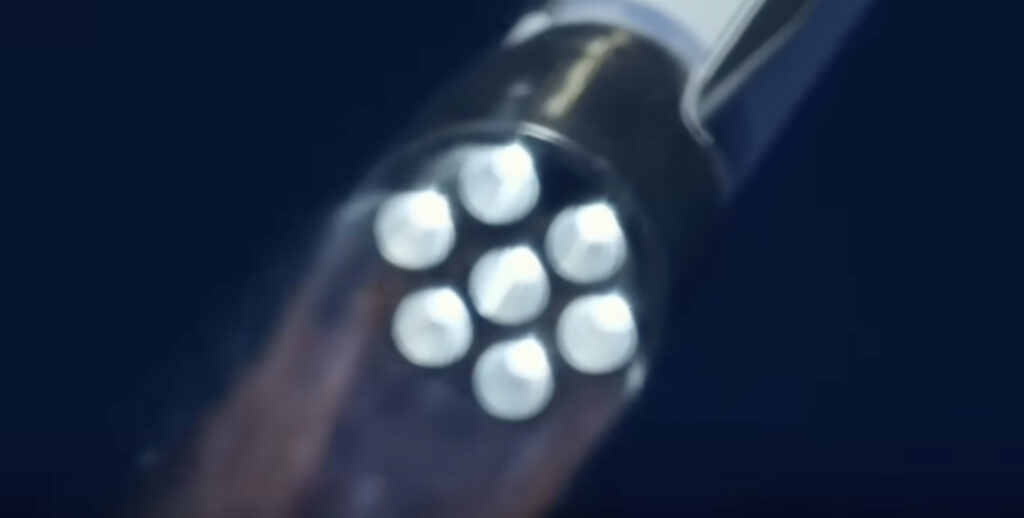
During the launch phase, Isaac Newton’s Second Law (F=ma) governs the transition from the pad, where the vehicle’s thrust must exceed its total weight to overcome inertia. As propellant is consumed and the rocket’s mass decreases, acceleration increases exponentially, requiring precise throttle control to manage structural loads.
The “Fairing” Problem
One of the most dangerous applications of Pascal’s Law occurs during ascent. As the rocket climbs, the outside air pressure drops to near zero. If the air trapped inside the Payload Fairing (the nose cone) isn’t vented quickly enough, the internal pressure will be much higher than the external pressure. This pressure differential can cause the fairing to “pop” like a balloon, an undesirable condition.
This macro-level motion is mirrored during landing maneuvers, where Newton’s Third Law—the principle of equal and opposite reaction—is utilized through retro-propulsive engine pulses to decelerate the vehicle. The landing struts must ultimately absorb the force of impact, translating kinetic energy into the structural frame without exceeding material yield limits.
Newton vs. Pascal
| Phase | Newton’s Effect (Force) | Pascal’s Effect (Pressure) |
| Ignition | Thrust must overcome weight (F > mg). | Fuel lines must be pressurized to prevent cavitation. |
| Ascent | Acceleration increases as fuel is consumed. | Max Q: Aerodynamic pressure peaks in the atmosphere. |
| Steering | Engine gimbaling changes the direction of the force vector. | Hydraulic actuators use fluid pressure to tilt engines. |
| Landing | Leg struts absorb the force of impact (F = ma). | Hydraulic/Pneumatic shocks compress to dampen the landing. |
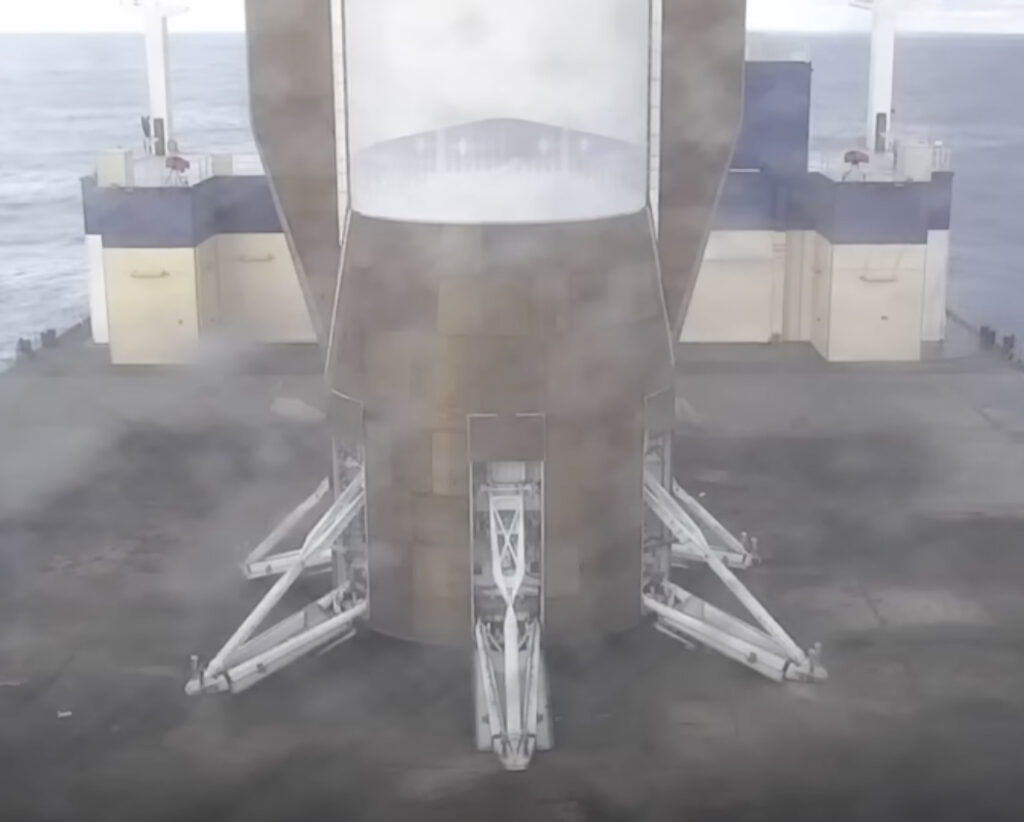
While Newtonian physics dictates the flight path, Blaise Pascal’s Law concerning fluid pressure manages the internal and external stresses acting upon the airframe. Internally, hydraulic systems utilize Pascal’s principle to transmit force through enclosed fluids, allowing small actuators to gimbal massive engine bells with high precision to steer the vehicle.
Externally, the vehicle must navigate “Max Q,” or maximum dynamic pressure, where the density of the atmosphere and the velocity of the rocket create peak aerodynamic stress. Measured in Pascals (Pa), this threshold represents the mission-critical point where structural failure is most likely if the airframe’s composite structures are not engineered to withstand the fight against gravity and atmospheric loads.
Furthermore, engineers must account for pressure differentials within the payload fairing; as the rocket ascends into the vacuum of space, internal pressure must be vented at a specific rate to prevent a structural breach. This constant interplay of force and pressure ensures that the complex architectures of contemporary launch vehicles remain intact from ignition through recovery.