
In an announcement released January 22, 2026, Markham-based aerospace startup NordSpace confirmed it is receiving advisory services and up to $335,000 in funding from the National Research Council of Canada Industrial Research Assistance Program (NRC IRAP).
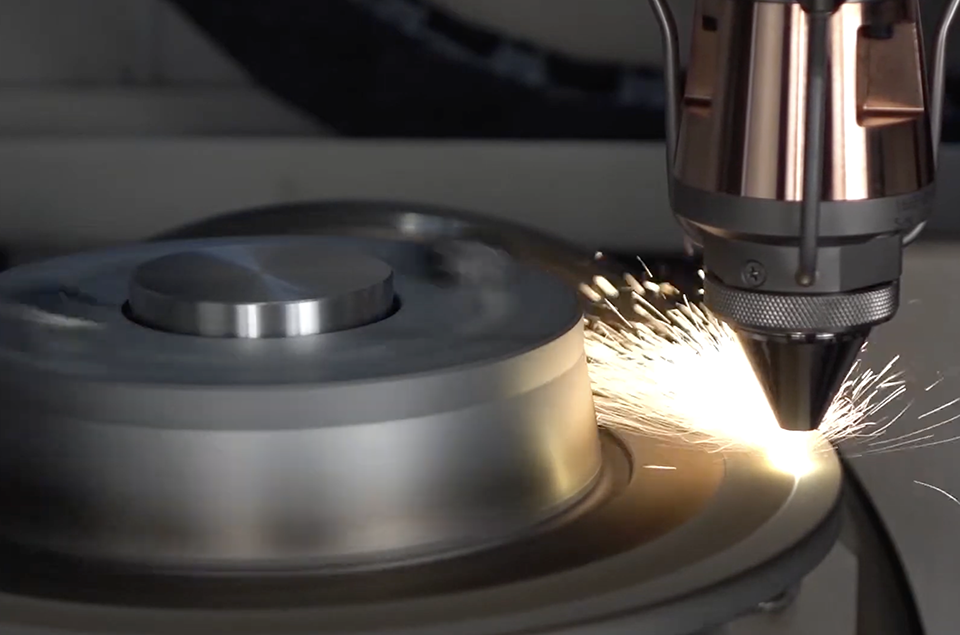
The funding supports a bilateral research and development project focused on advancing large-format, multi-material additive manufacturing (3D printing) for medium-lift rocket engines.
Scaling Canada’s Sovereign Launch Fleet
The project marks a significant expansion of NordSpace’s technological roadmap, which aims to transition from light-lift capabilities to domestic medium-lift orbital launch. The company’s current vehicle lineup includes the Tundra and Tundra+ light-lift rockets, capable of delivering 500 kg and 1,100 kg to Low Earth Orbit (LEO), respectively. These systems are intended to serve as the technological baseline for the Titan, a medium-lift vehicle designed to carry over 5,000 kg to LEO by the early 2030s.
“Canada’s growing demand for responsive medium-lift space launch requires continuous investment in disruptive manufacturing technologies that shorten timelines, boost reliability, and reduce costs,” said Rahul Goel, CEO of NordSpace.
Cross-Border Engineering and Software Optimization
The R&D collaboration integrates specialized expertise from two German partners:
- Fraunhofer Institute for Laser Technology (ILT): Providing its world-leading EHLA (Extreme High-Speed Laser Material Deposition) capability, which allows for high-speed, high-resolution multi-metal deposition.
- SWMS Systemtechnik Ingenieurgesellschaft mbH: Deploying its CAESA software, an artificial intelligence-powered platform for advanced manufacturing planning and optimization.
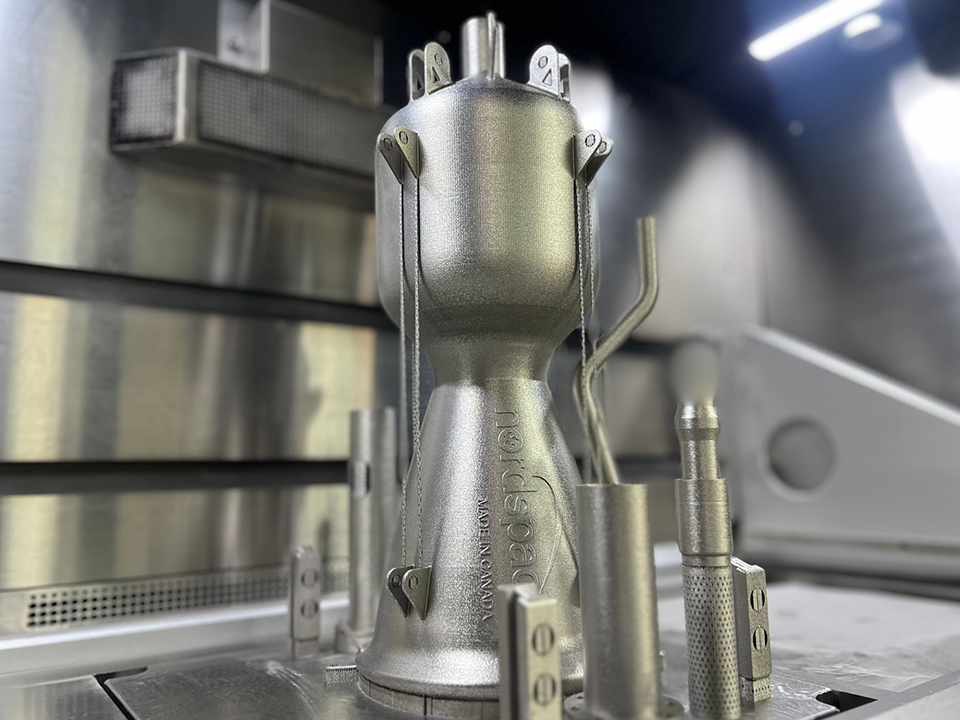
These technologies will be housed within NordSpace’s recently inaugurated Advanced Manufacturing for Aerospace Lab (AMA Lab). The facility is dedicated to perfecting the Hadfield and Garneau series of liquid rocket engines, which are the only commercial orbital-class liquid engines currently under active development in Canada.
Technical Specifications and Propulsion Materials
The additive manufacturing project focuses on high-volume, multi-material deposition to create functionally graded materials. By utilizing multi-alloy composites, NordSpace aims to optimize regeneratively cooled liquid engines for extreme cryogenic and thermal environments. This approach is intended to reduce the part count and mass of the thrust chamber assemblies while increasing structural integrity for high-cadence flight profiles.
Strategic Timeline to 2030
The advancements derived from this R&D cycle are expected to be integrated into the flight qualification of the Tundra vehicle. Following the successful integrated test of the Taiga sub-orbital rocket on January 6, 2025, NordSpace is positioning itself to provide a “full spectrum” launch solution. This includes the development of the Atlantic Spaceport Complex (ASX) in Newfoundland and Labrador, which recently received environmental approval to support future orbital missions.