
WASHINGTON — NASA announced on Monday, Dec. 29, that it will cease publication of The Earth Observer, the agency’s long-running Earth Science newsletter, effective Dec. 31, 2025. The closure of the 36-year-old publication marks a symbolic transition for the agency, which also confirmed plans to retire its three major Earth Observing System (EOS) flagship satellites—Terra, Aqua, and Aura—possibly as early as the end of 2026.
According to the announcement released by the NASA Science Mission Directorate, the newsletter’s final online content will be posted at the close of the year. The decision aligns with the broader operational wind-down of the EOS era, as the agency shifts resources toward the next-generation Earth System Observatory (ESO).
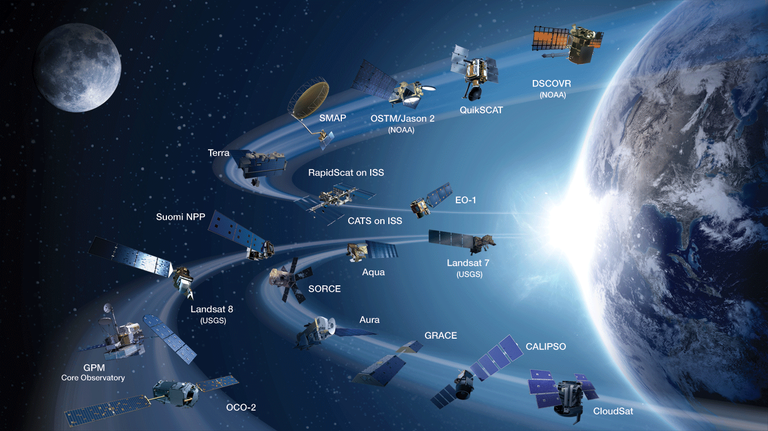
Figure credit: NASA
End of the EOS Era
The Earth Observer was established in March 1989 to chronicle the development of the EOS program, serving as a primary link between NASA leadership and the global science community before the internet was widely available. Its history paralleled the deployment of NASA’s foundational Earth science assets:
- Terra (launched 1999): Currently drifting from its operational orbit since 2020.
- Aqua (launched 2002): Drifting in correlation with Terra to maintain data continuity.
- Aura (launched 2004): Monitoring atmospheric chemistry.
While the satellites have outlived their designed six-year lifespans by nearly two decades, NASA’s Dec. 29 statement indicated that the “painful process” of shutting down key instruments has begun. The agency noted that while EOS was “much more than its satellites,” the platforms provided the iconic imagery and data continuity that defined modern Earth science for nearly 30 years.
Transition to Future Systems
The retirement of the EOS flagships and their accompanying newsletter clears the stage for NASA’s new architecture, the Earth System Observatory. This future constellation is designed to provide three-dimensional, holistic data on climate change, disaster mitigation, and agricultural processes.
“The newsletter evolved in parallel with NASA’s Earth Observing System,” the editorial staff wrote in the final missive. “It is almost impossible to speak of this newsletter without mentioning EOS.”
The archives of The Earth Observer, containing decades of programmatic history and technical documentation, will remain accessible online as a historical record.