
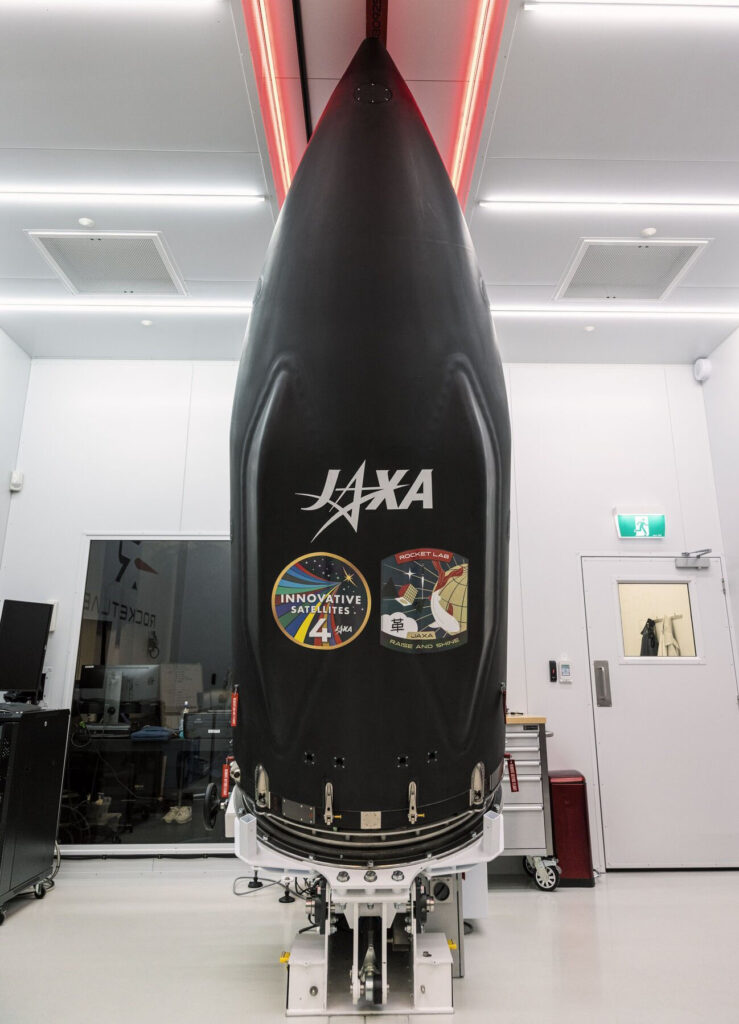
When Rocket Lab’s Electron vehicle lifted off from the Mahia Peninsula, carrying the “RAISE and Shine” satellite for the Japan Aerospace Exploration Agency (JAXA), the mission profile appeared standard on paper. However, the successful orbital insertion of the “RAISE-4” (RApid Innovative payload demonstration SatellitE-4) payload signals a profound shift in the aerospace dynamics of the Pacific Rim. This was not merely a transaction between a launch provider and a client; it was a demonstration of geopolitical utility and commercial hegemony. By securing and executing a dedicated mission for a premier national space agency like JAXA, Rocket Lab has effectively declared the Asian small-satellite market as its own territory, bridging a critical gap that domestic Asian launch programs have struggled to close.
The significance of this mission lies in the distinction between a rideshare and a dedicated launch. In a rideshare scenario, a customer is merely a passenger on a bus, beholden to the schedule and orbital destination of the primary payload. JAXA, however, required the equivalent of a private charter. By contracting a dedicated Electron mission, the Japanese agency secured precise control over the launch timing and specific orbital parameters essential for their payload. This level of service is generally the domain of massive, legacy aerospace contractors, yet Rocket Lab delivered it with the speed and economic efficiency of a startup. This capability is particularly attractive to Asian markets, where rapid technology demonstration and earth observation constellations are becoming national priorities for countries ranging from Japan and South Korea to Singapore.
Furthermore, this mission validates the strategic advantage of Rocket Lab’s unique launch complex on the Mahia Peninsula in New Zealand. Geographically positioned to access a wide range of orbital inclinations, the site offers a logistical proximity to Asian clients that competitors launching from Florida or California cannot easily match. For JAXA, the ability to launch from a partner nation within the Pacific rim reduces logistical friction and aligns with broader regional alliances. It signals to the rest of the Asian market that Rocket Lab is not merely a distant American vendor, but a regional neighbor capable of supporting high-stakes national missions. This is a critical differentiator as the company competes against emerging Chinese commercial launch startups and the state-backed heavy lift capabilities of India.
The successful delivery also underscores a shift in how major space agencies view commercial providers. Historically, agencies like JAXA or NASA would rely exclusively on domestic heavy-lift vehicles for their prestigious missions. However, the bottleneck created by the scarcity of these large rockets has stifled innovation. By entrusting a mission to Rocket Lab, JAXA has acknowledged that the Electron is no longer a risky venture but a matured asset. This “stamp of approval” from a risk-averse government entity is invaluable currency. It effectively de-risks the platform for other Asian corporations and governments who may have been hesitant to move their payloads away from domestic options.
Looking beyond the launch itself, this success feeds into Rocket Lab’s broader “Space Systems” strategy. The company is aggressively moving toward becoming an end-to-end space company, building satellites as well as launching them. Establishing a high-trust relationship with JAXA opens the door for future contracts where Rocket Lab could potentially design, build, and launch spacecraft for Asian clients, rather than acting solely as a freight service.
Ultimately, the JAXA mission is a testament to the maturity of the Electron program. In an industry littered with “paper rockets” and unfulfilled promises, Rocket Lab continues to execute with metronomic regularity. By securing the trust of Japan’s premier space agency, they have not only captured a single contract but have effectively encircled the Asian small-sat market, proving that the road to orbit for the Pacific Rim runs through Mahia.